
Goodenough College
MICA is refurbishing a terrace of five Grade II listed Georgian townhouses at 43-47 Mecklenburgh Square, transforming historic buildings into high-quality, sustainable student accommodation while safeguarding their architectural and cultural significance for future generations.Client
Goodenough College
Dates
2022 - 2026
Value
£10m
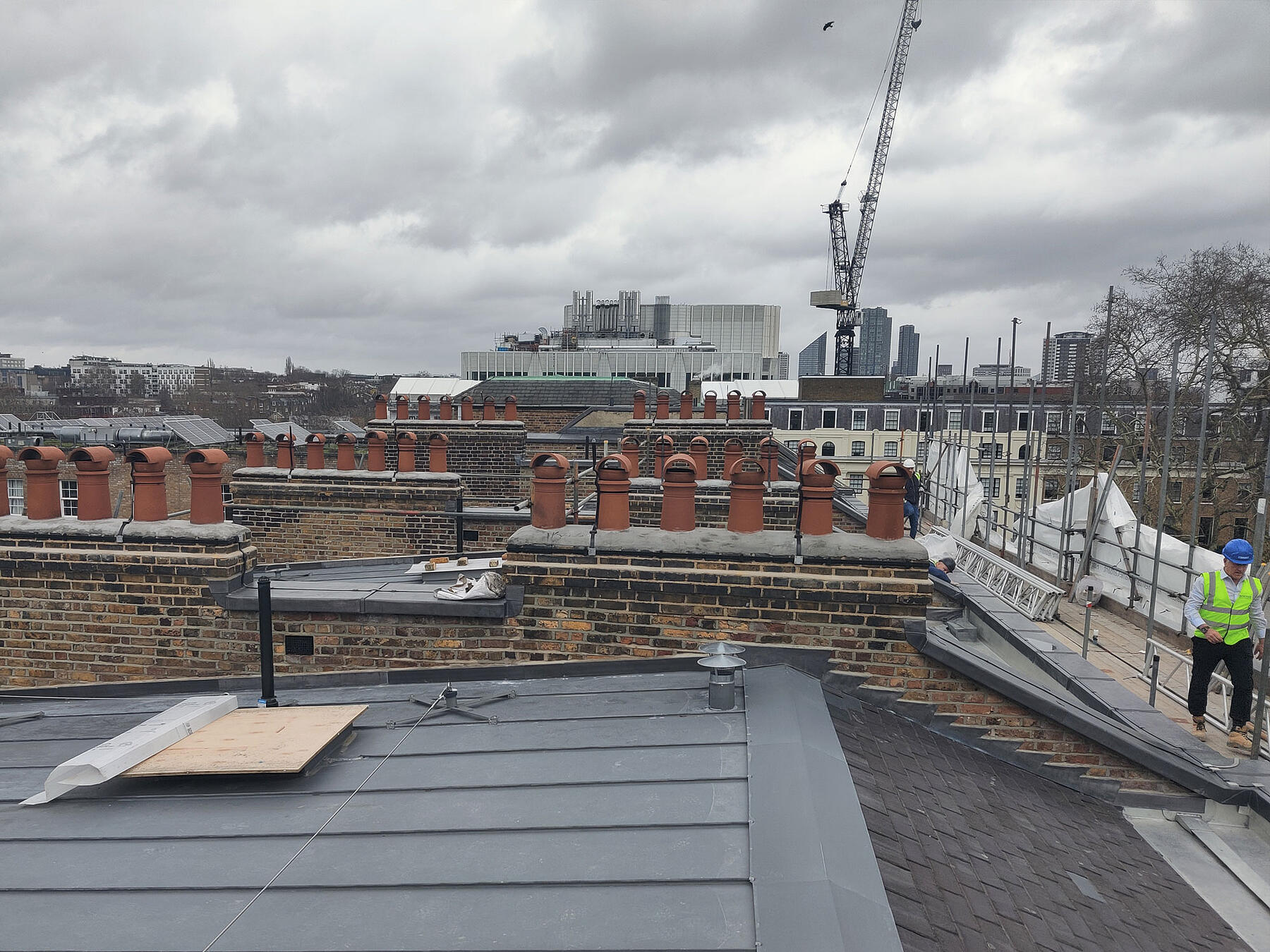
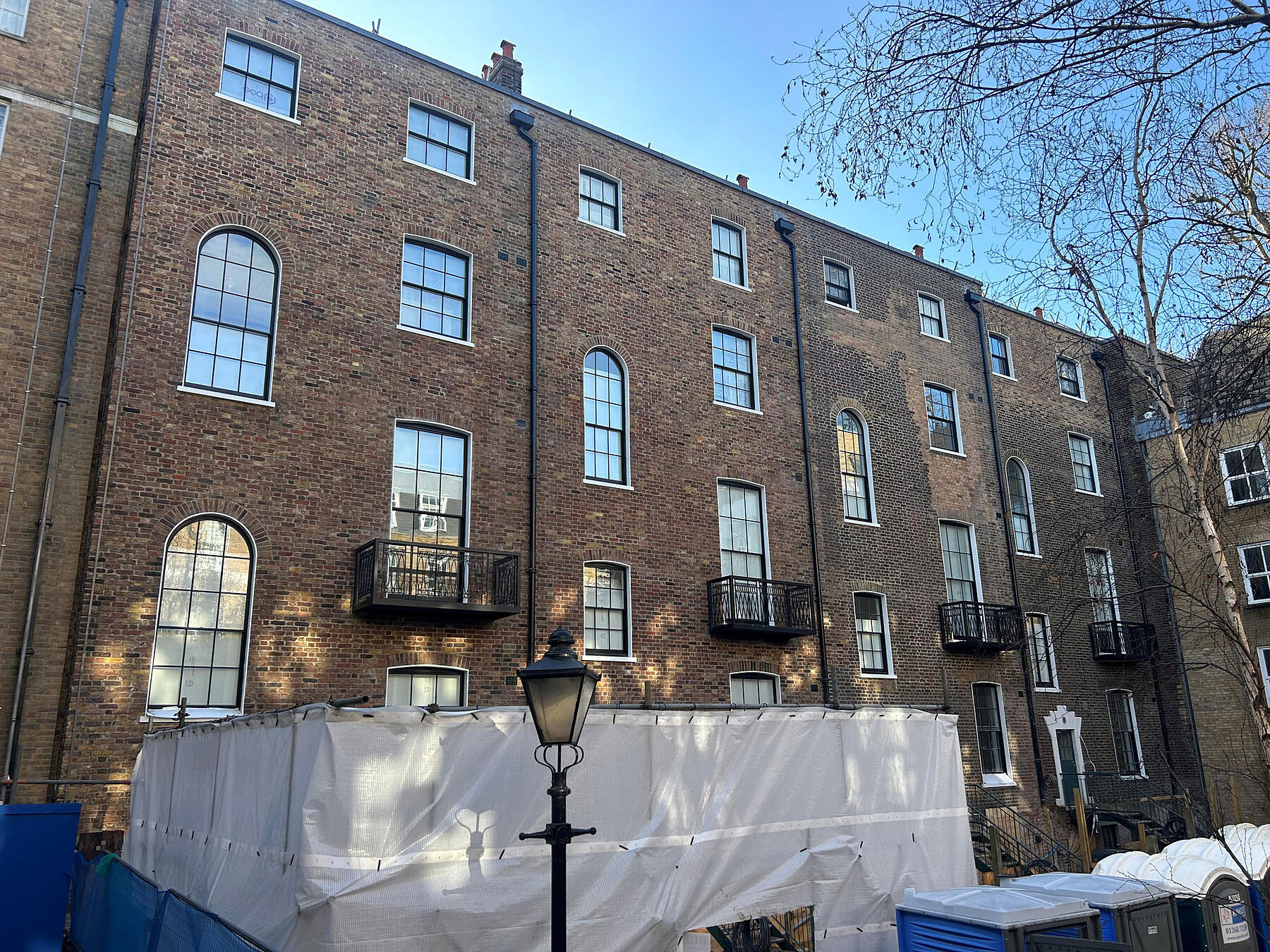
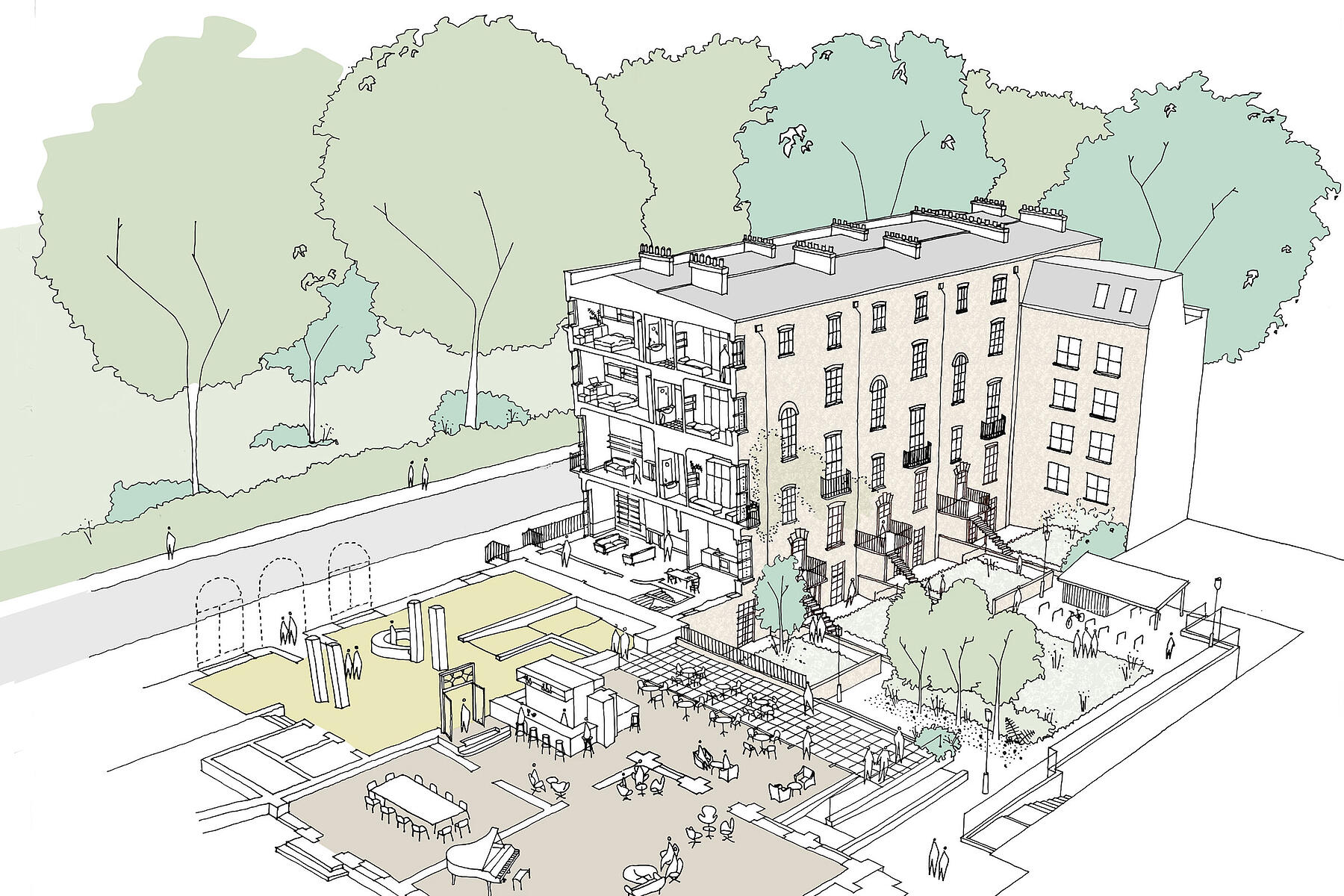
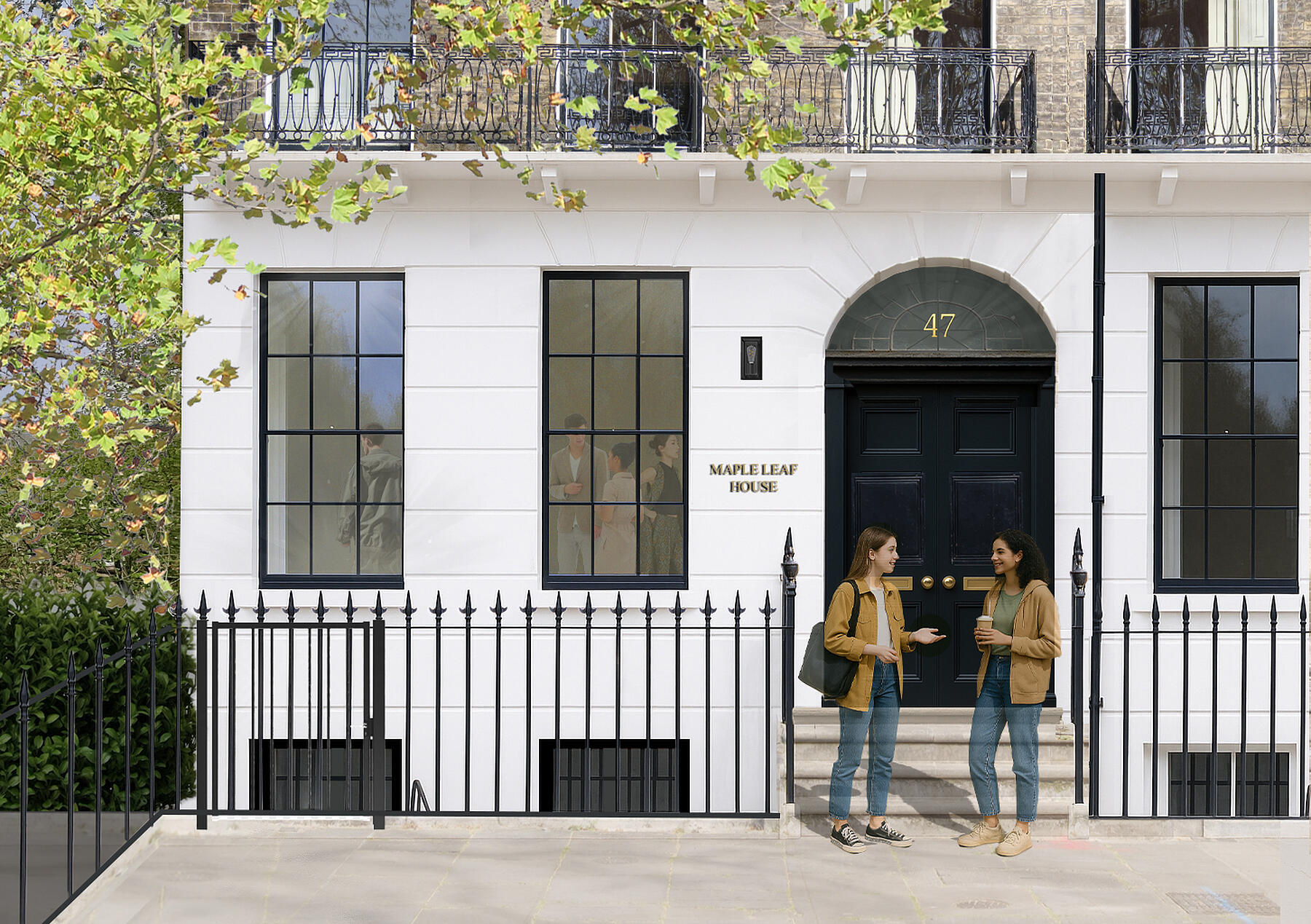
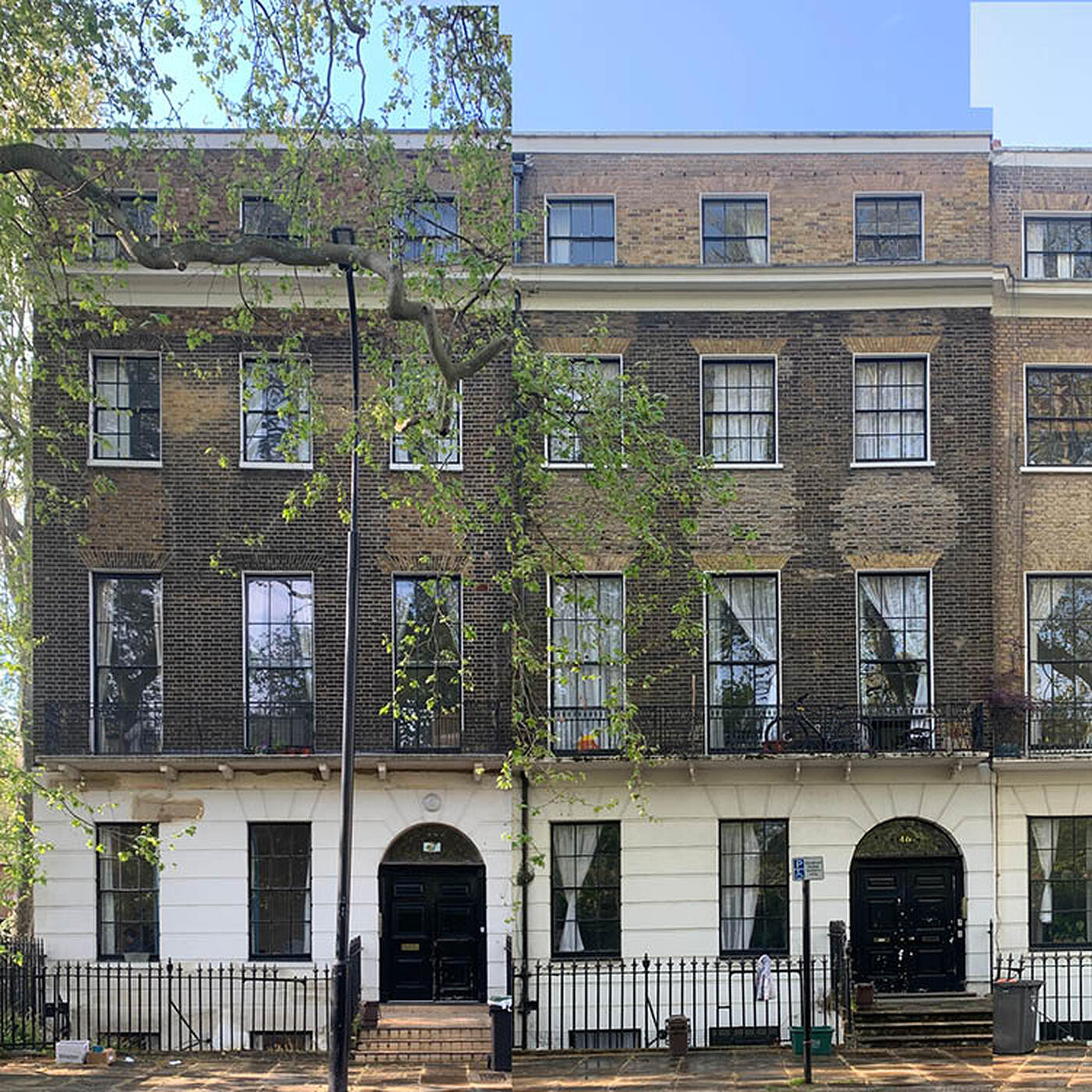
MICA was appointed by Goodenough College to provide Architectural, Conservation and Principal Designer services for the refurbishment of five Grade II listed townhouses located on the northern side of Mecklenburgh Square, Camden.
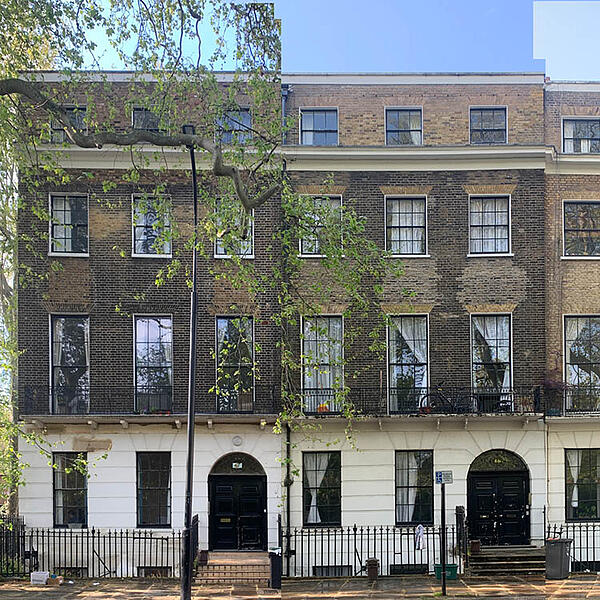
Completed in 1824, the Georgian terrace forms an important part of the historic square. Although the buildings retain much of their original character, they have experienced significant change over time, including extensive wartime bomb damage and subsequent repair works. Prior to refurbishment, the houses were occupied by Lowe Guardians (Nos. 43-46) and College residents (No. 47) before being vacated in March 2024.
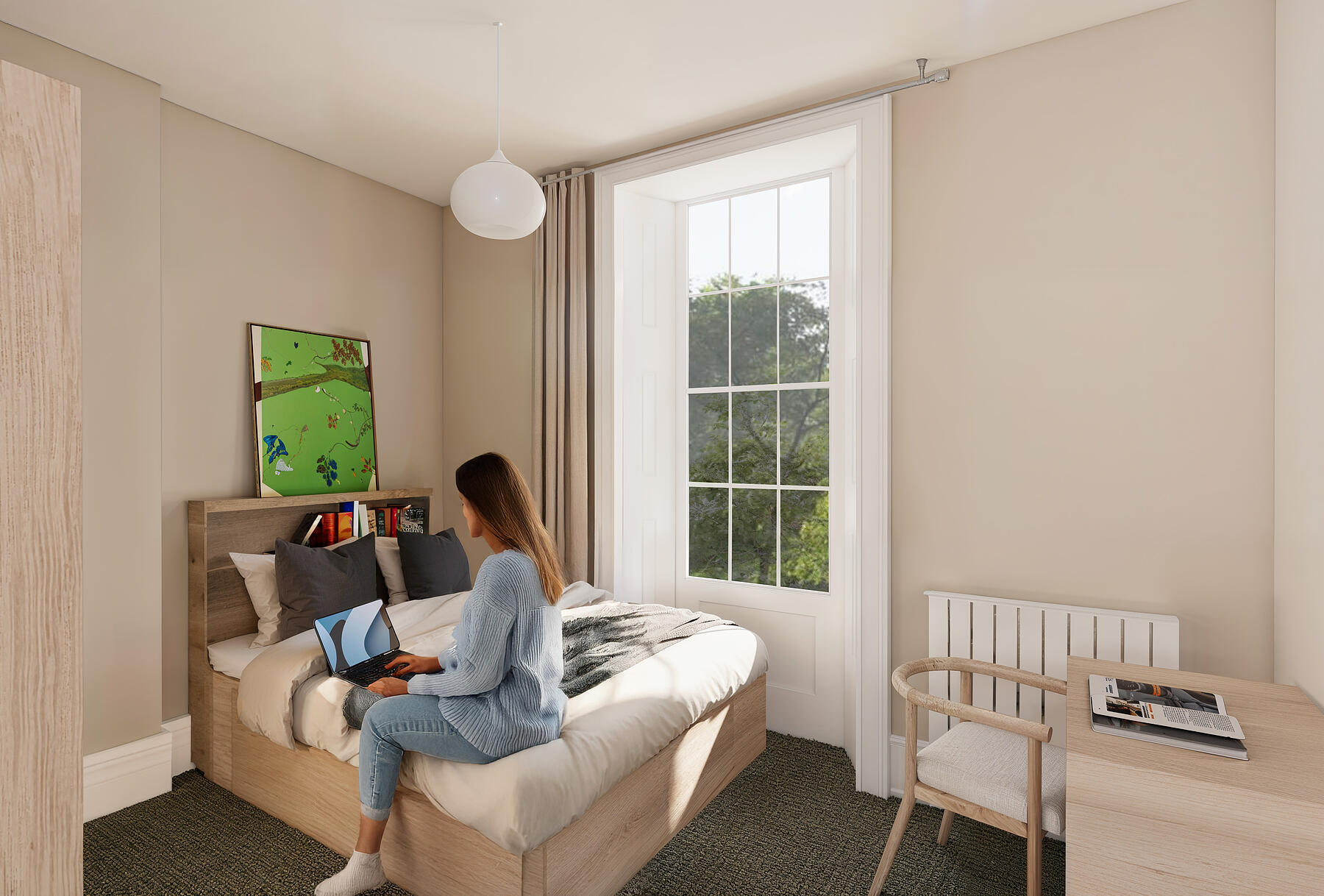
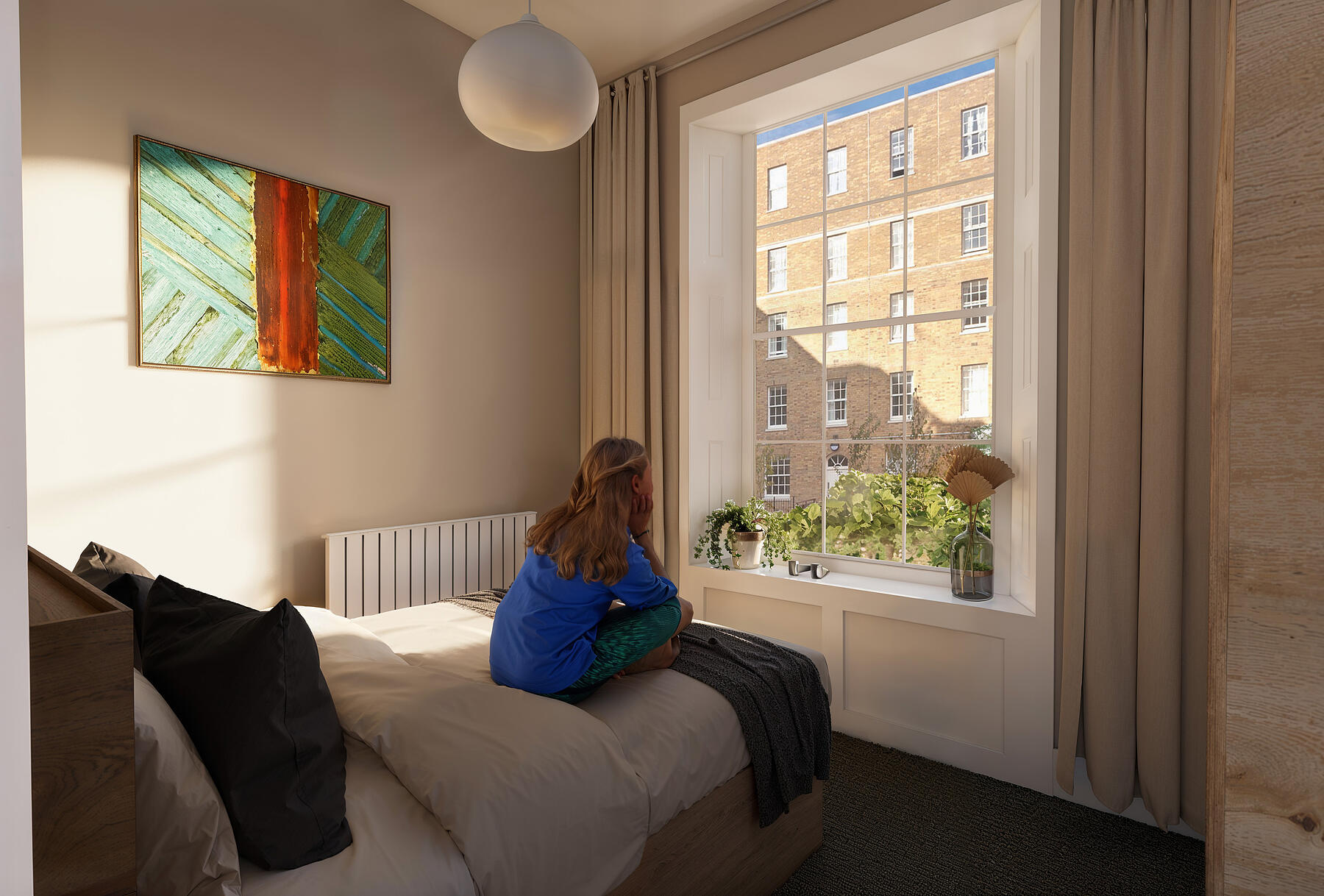
The project will bring the buildings up to modern standards of compliance, safety and environmental performance while enhancing the quality of student living accommodation. Internal layouts have been carefully reconfigured to improve circulation, maximise usable space and provide a diverse mix of room types that support both the College's commercial and charitable objectives.
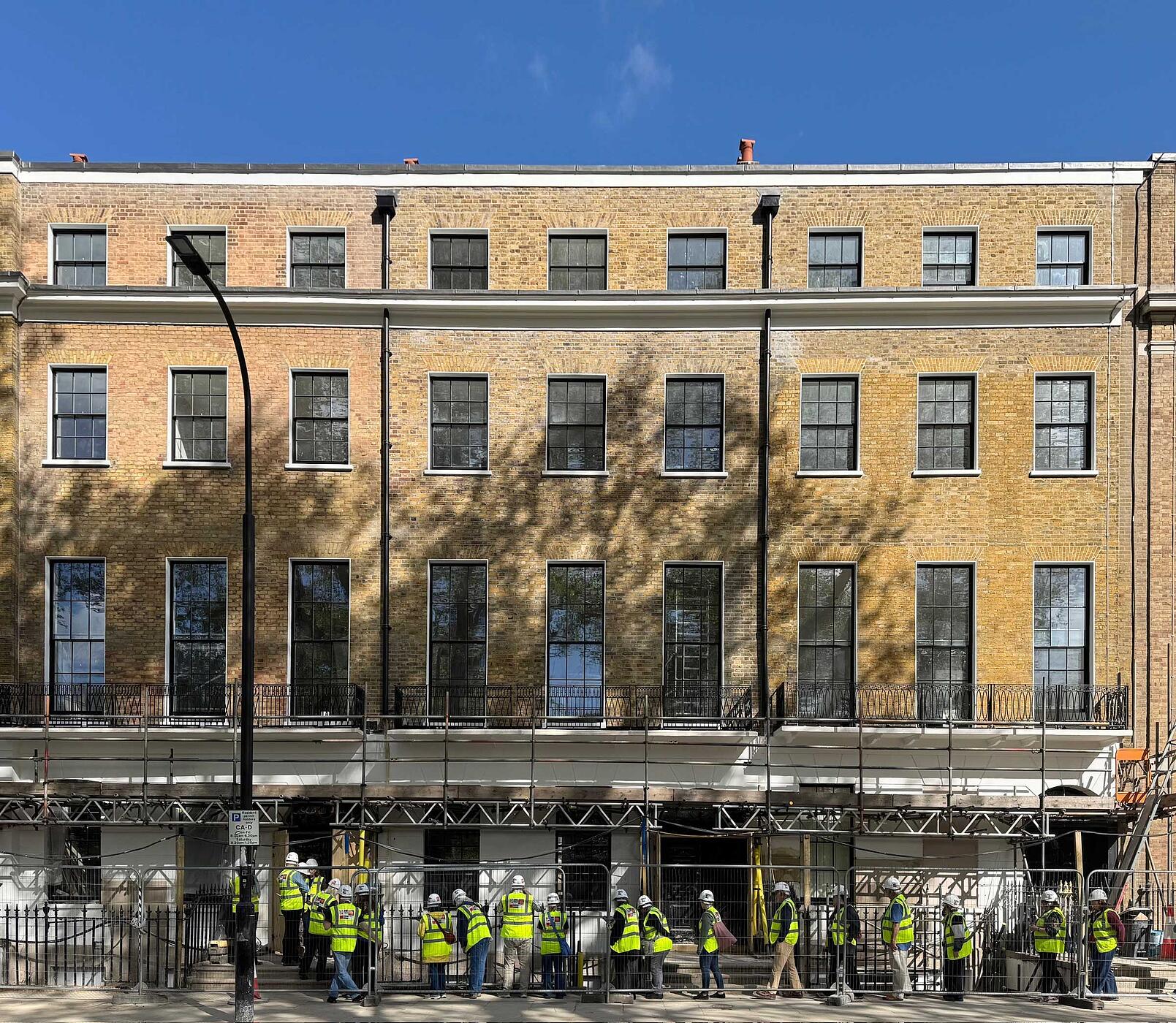
Construction commenced on site in April 2024, with occupation by College members anticipated from September 2026.
Heritage Strategy & Approach
The project adopts a heritage-led regenerative design approach, balancing the preservation of historic character with the performance requirements of contemporary student accommodation.
MICA's conservation team undertook extensive archival research and site analysis to establish the cultural significance of the buildings and understand how successive phases of alteration, including wartime damage, post-war rebuilding and late twentieth-century adaptations, have shaped the terrace.
This evidence-based approach informed a conservation strategy that carefully identifies where change can be accommodated and where significant historic fabric requires protection. Existing structures and materials have been retained wherever possible, reducing embodied carbon while preserving the cultural value inherent within the buildings.
MICA worked closely with Goodenough College, Camden Council's Conservation Officer, specialist consultants and archive teams throughout the design process. Early discussions focused on balancing heritage considerations with the College's ambitions for long-term stewardship, operational efficiency and resident wellbeing.
Extensive archival investigations were undertaken using College records, Camden archives and published historic sources. Through a collaborative process of research, assessment and consultation, a clear understanding of the buildings' significance was established, enabling proportionate and justified interventions to be developed.
Regular consultation with stakeholders ensured that proposals carefully balanced conservation priorities with practical operational requirements and future estate aspirations.
Sustainability
The refurbishment demonstrates how existing historic buildings can contribute to a low-carbon future through careful and considered retrofit.
The sustainability strategy focuses on improving environmental performance while respecting the architectural character of the listed buildings. Key measures include:
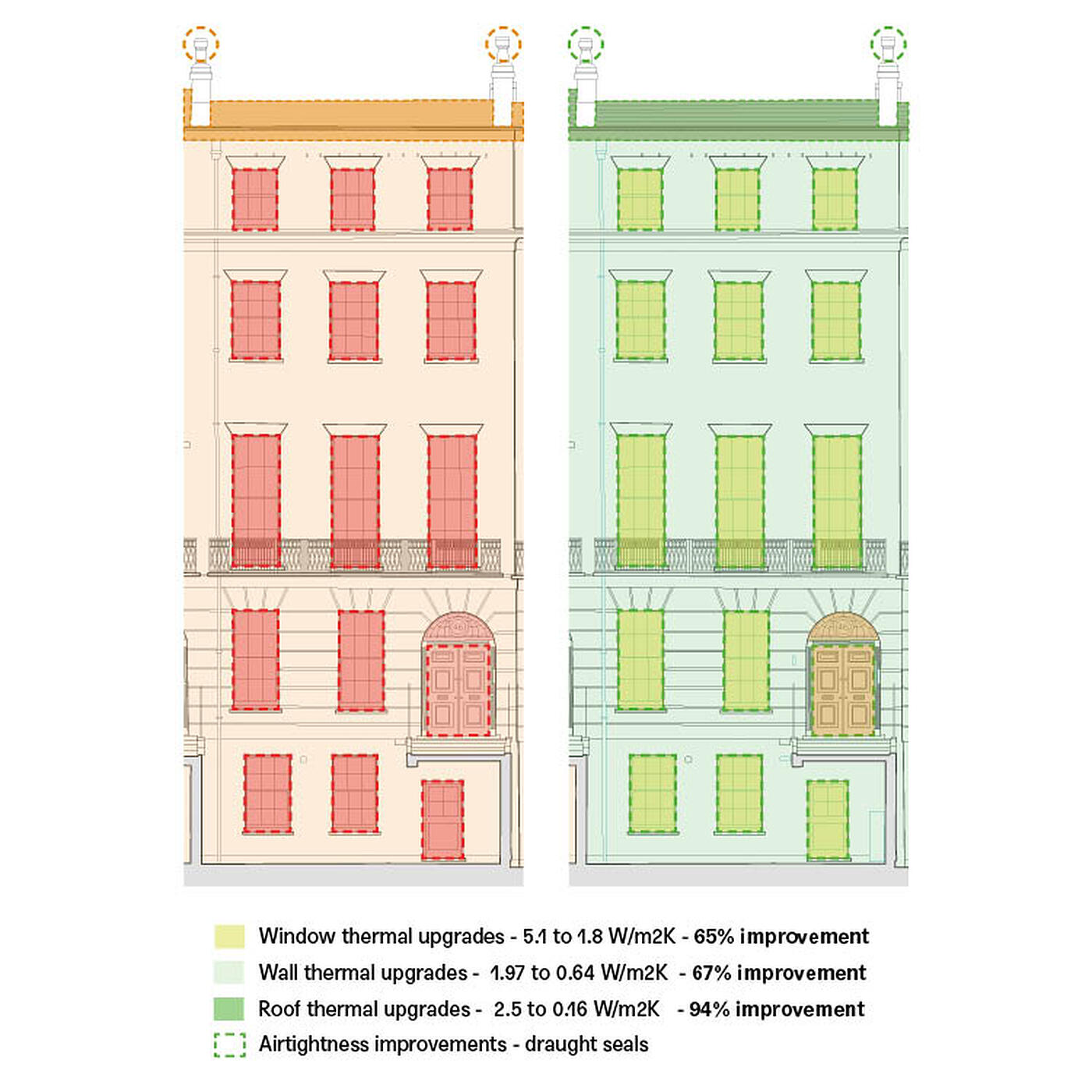
– Upgrading insulation and improving airtightness to enhance thermal comfort and acoustic performance.
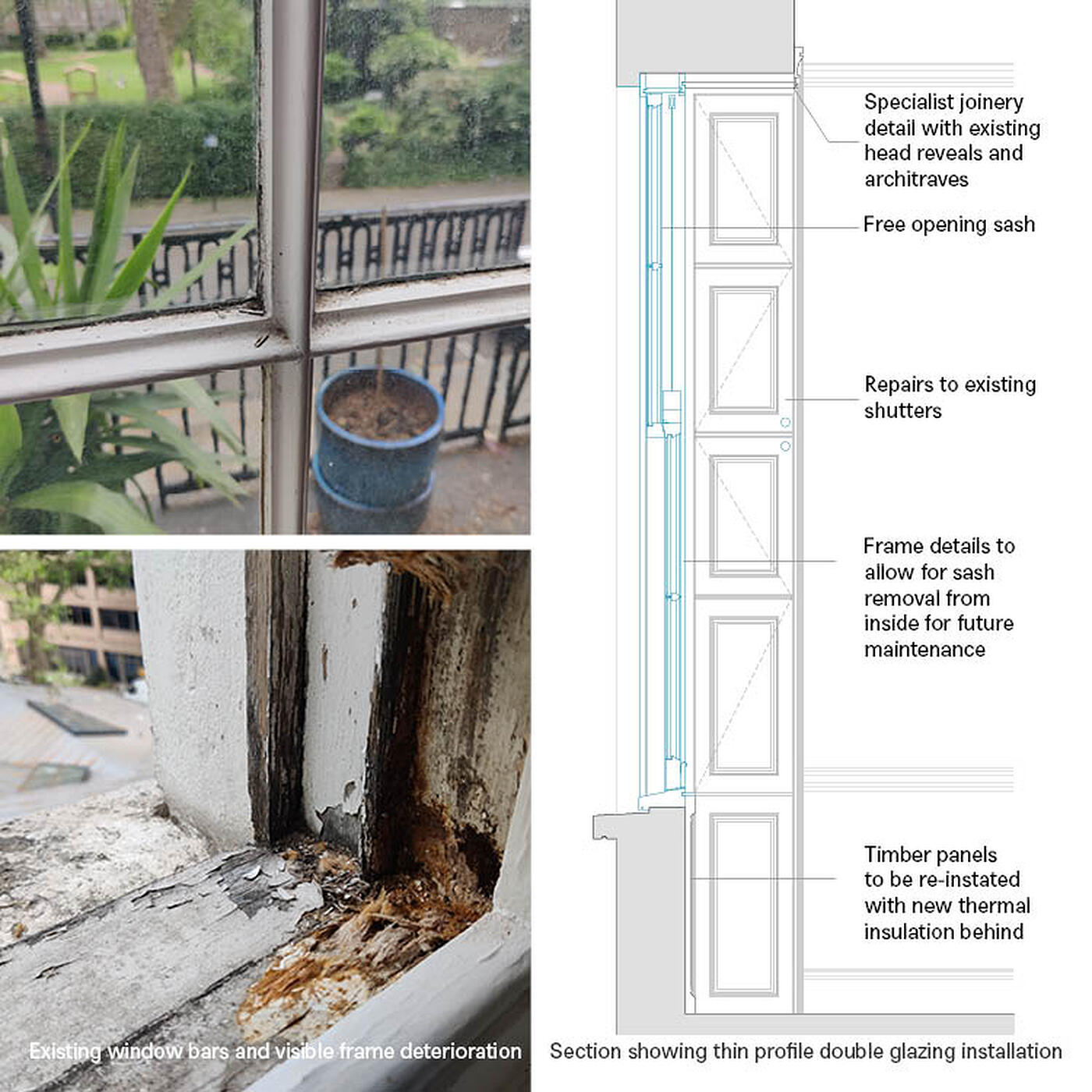
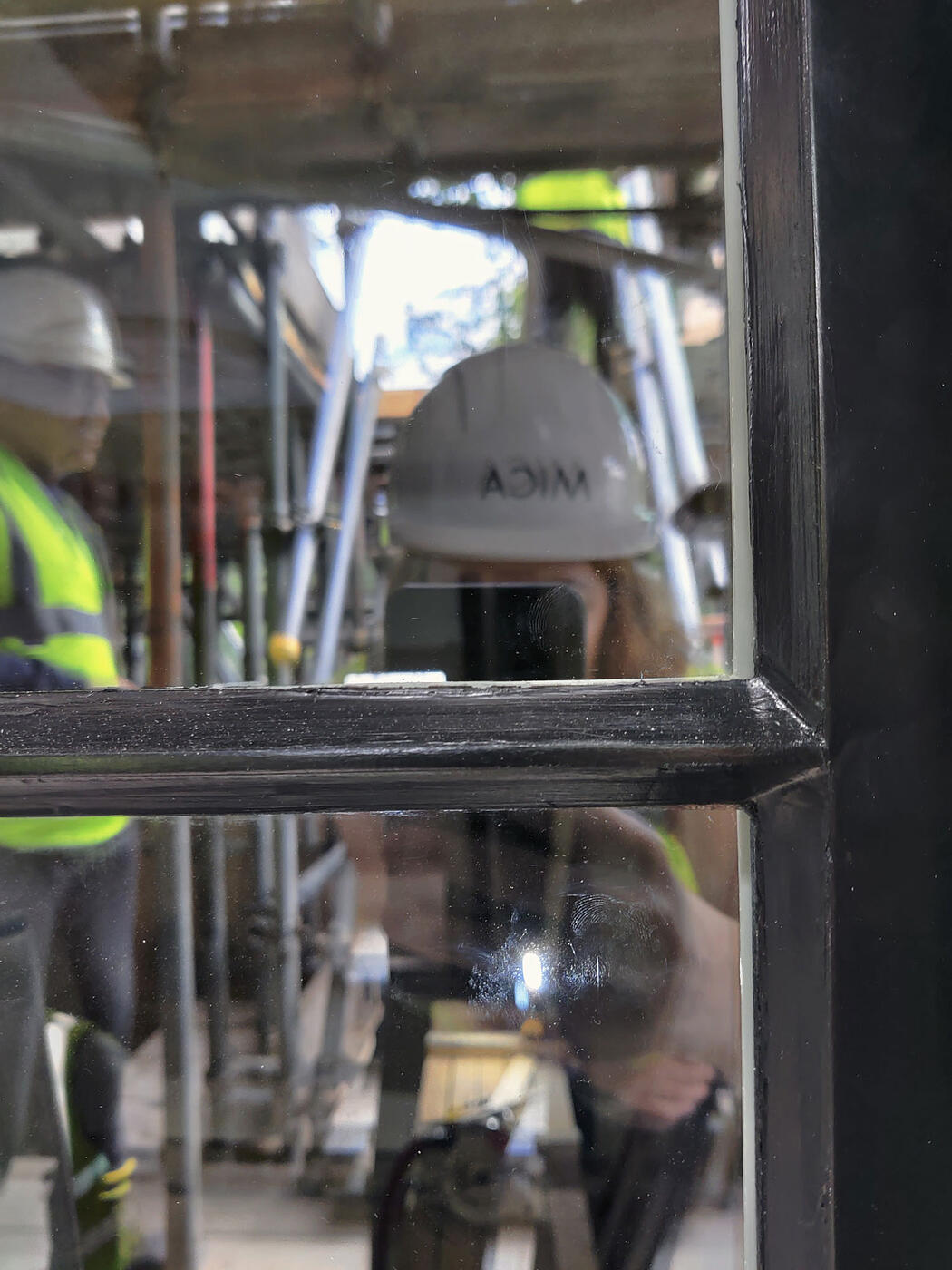
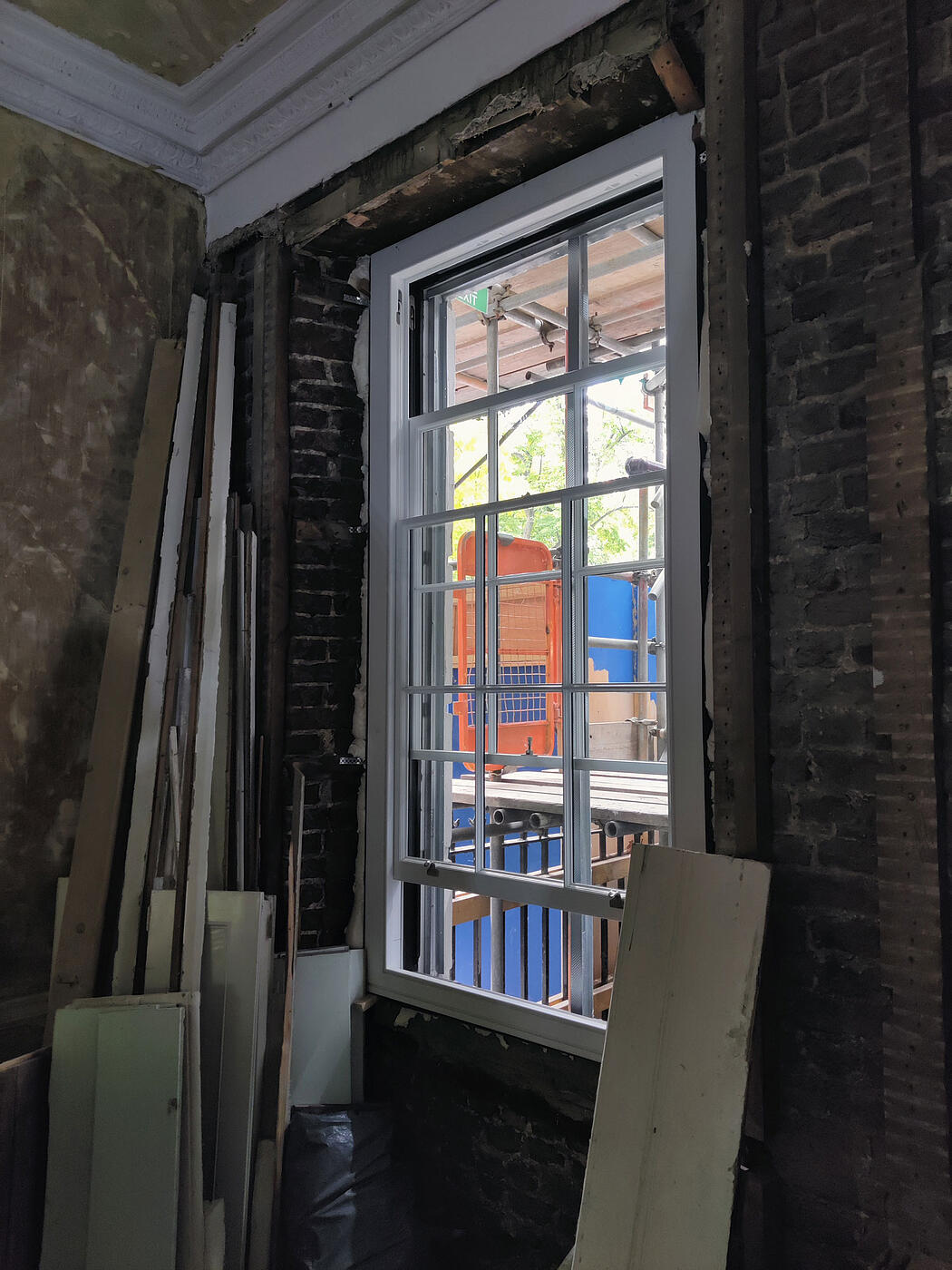
– Introducing high-performance, thin-profile double glazing to historic windows, improving thermal performance by approximately 65% while preserving original appearance.
– Enhancing wall and roof insulation to improve overall building performance by approximately 67%.
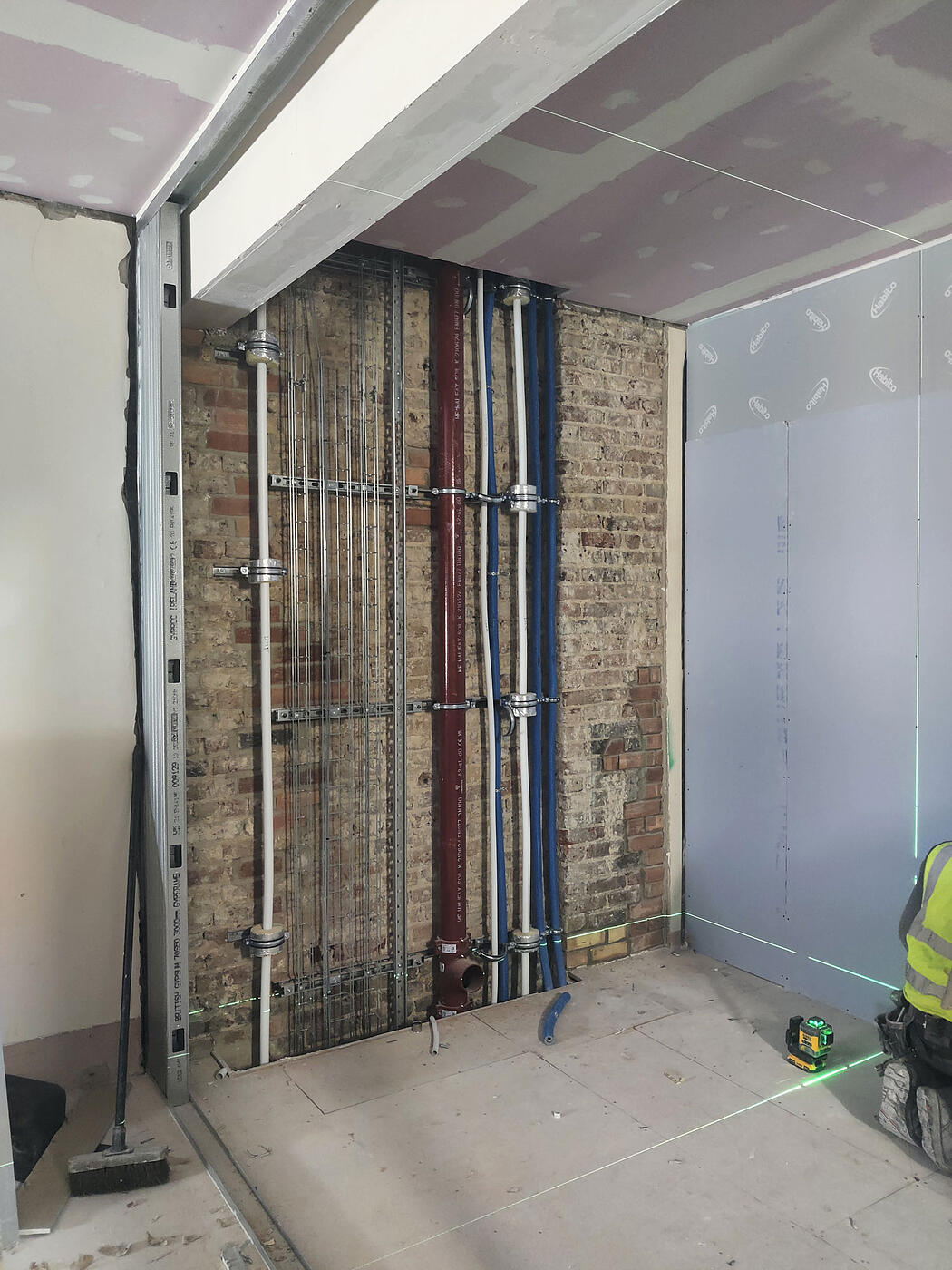
– Replacing existing gas-fired heating with air source heat pump technology, creating a fully electric heating system.
– Upgrading building services and appliances to the highest practicable efficiency standards.
– Prioritising the retention and repair of existing building fabric to reduce embodied carbon.
– Utilising natural and compatible materials that support both building longevity and heritage significance.
– Working closely with Camden's Conservation Officer, the project secured approval for innovative glazing solutions that achieve substantial performance improvements while maintaining the character of the listed buildings.
Conservation
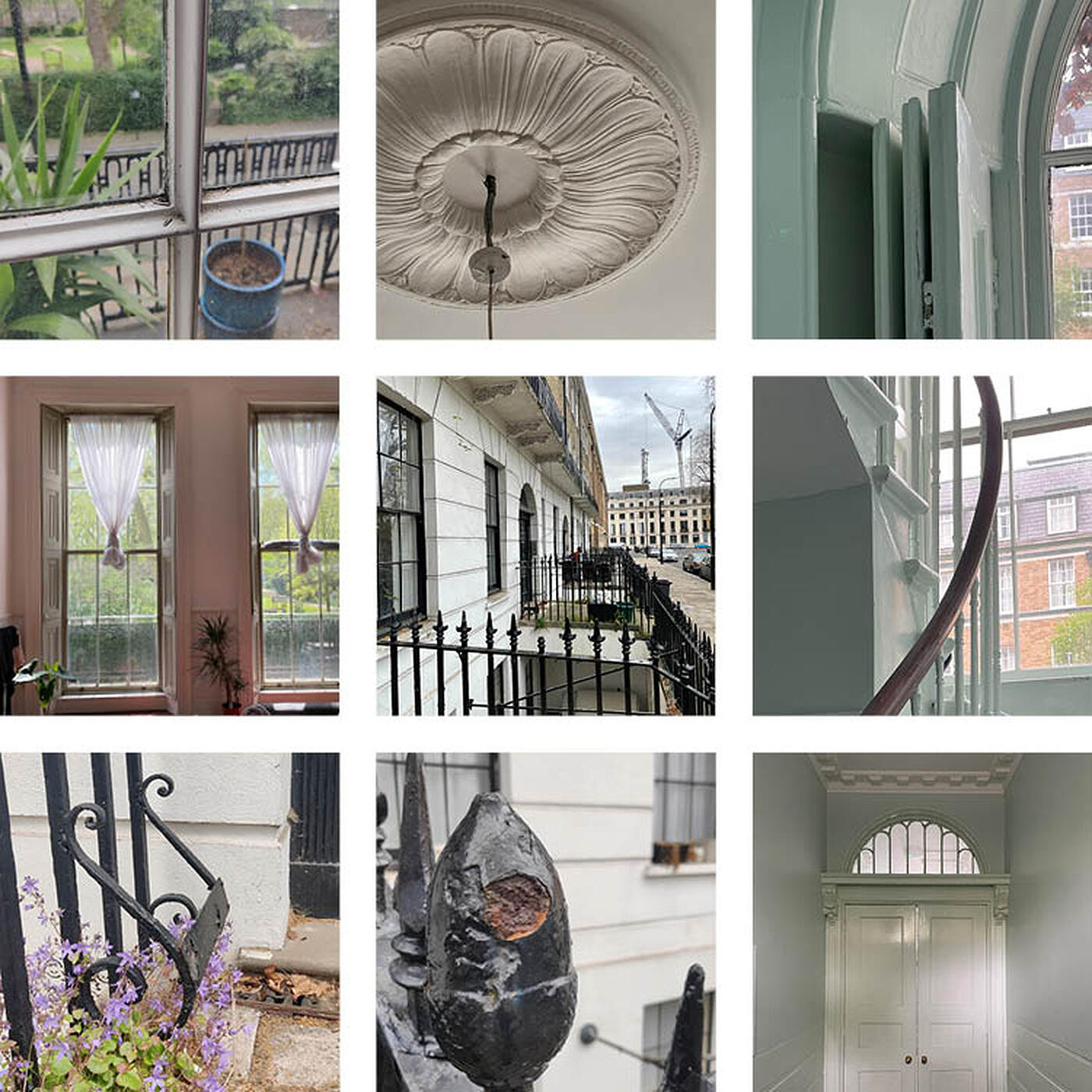
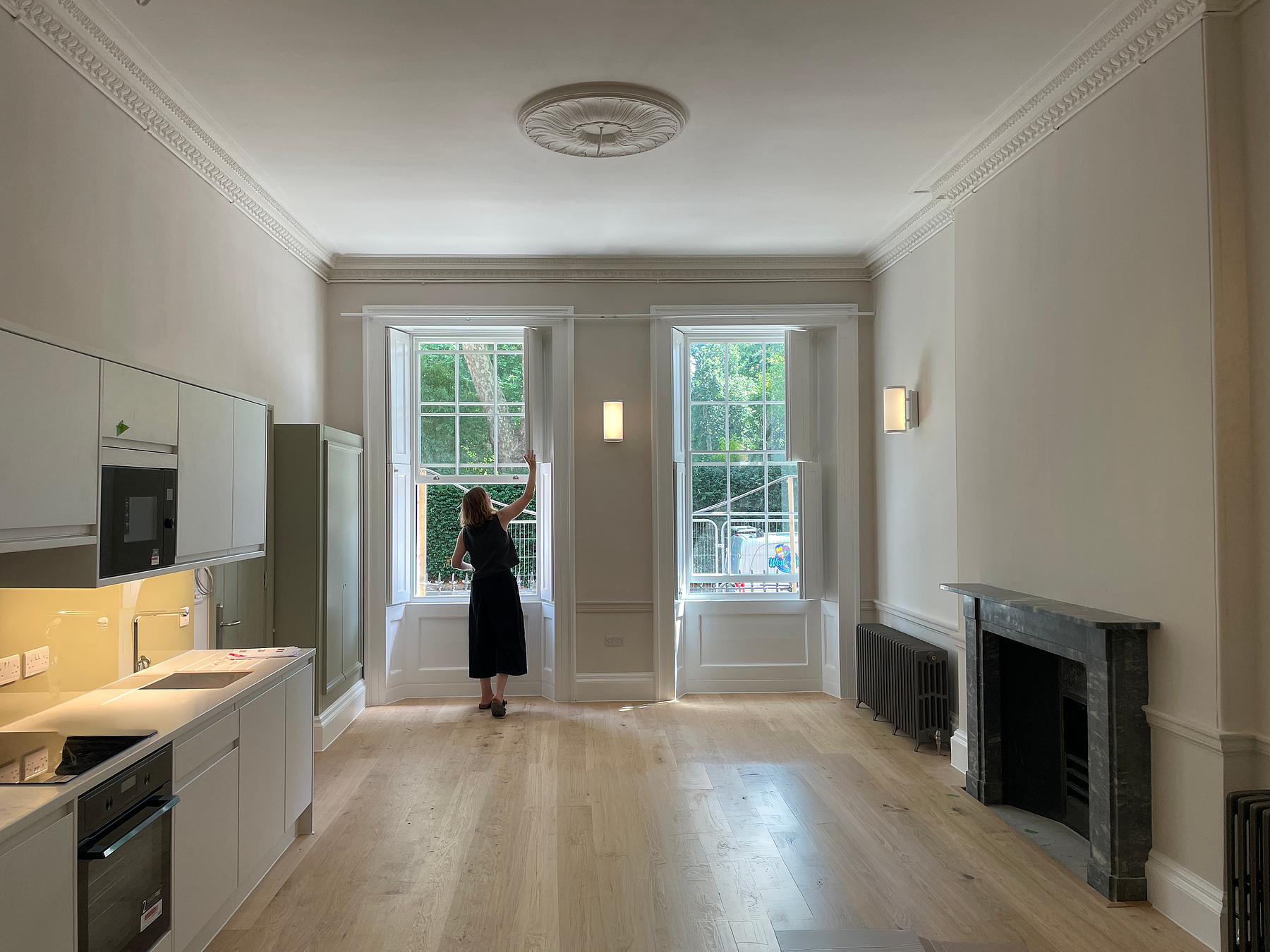
Original architectural features, including doors, fanlights, staircases, fireplaces, decorative ceilings and front railings, are being retained and repaired using traditional techniques and materials. Historic elements lost through previous alterations are being carefully reinstated where appropriate, including cornices, skirtings, shutters and panelling.
New interventions have been introduced with equal care. Enhanced fire protection, insulation measures, rooflights and contemporary building services have been integrated sensitively to minimise impact on historic fabric while improving functionality, safety and performance.
A detailed condition survey was undertaken across all five houses to document the building fabric, record defects and establish a robust evidence base for conservation decision-making. The findings directly informed repair strategies, design development and discussions with Camden's Conservation Officer.