

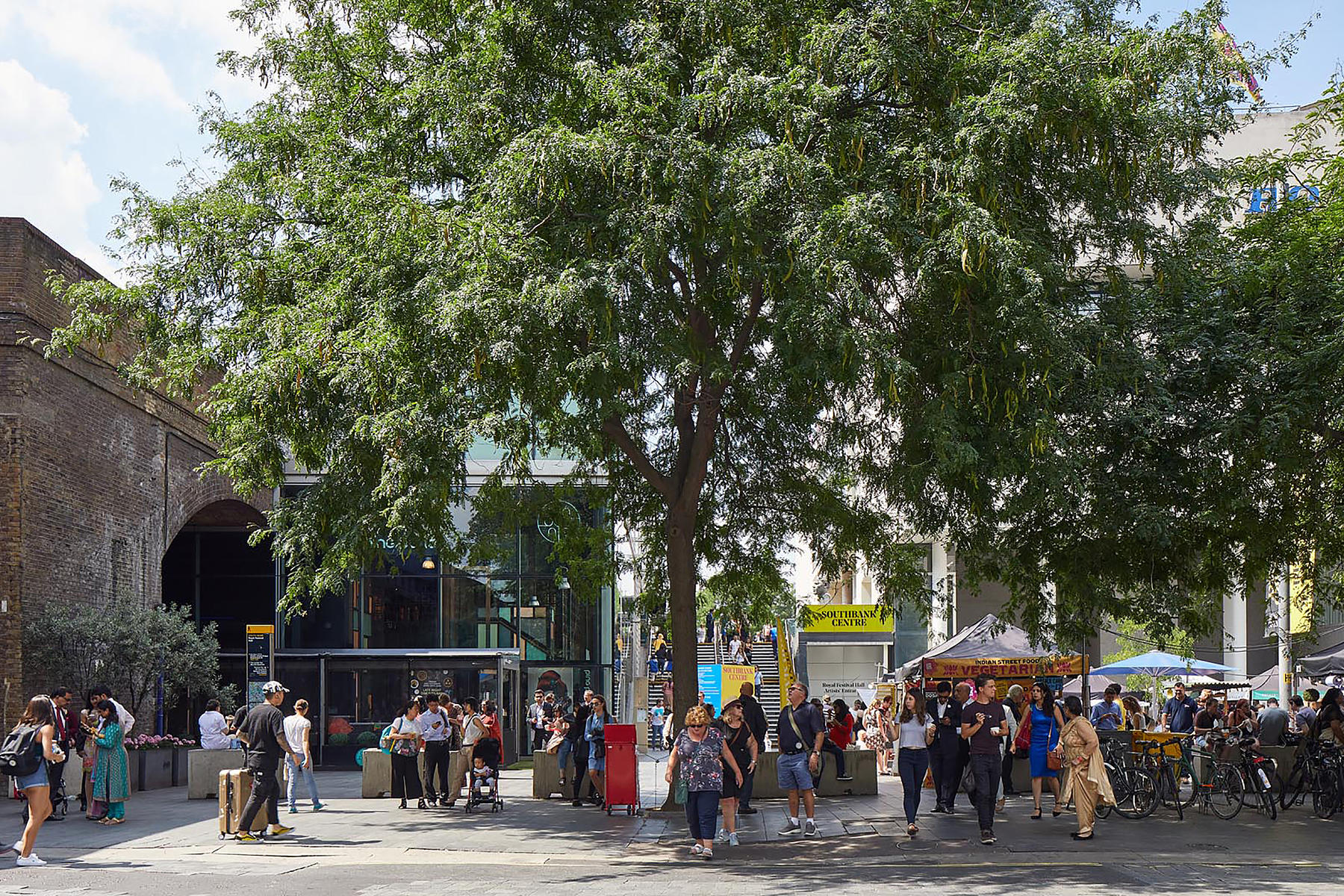
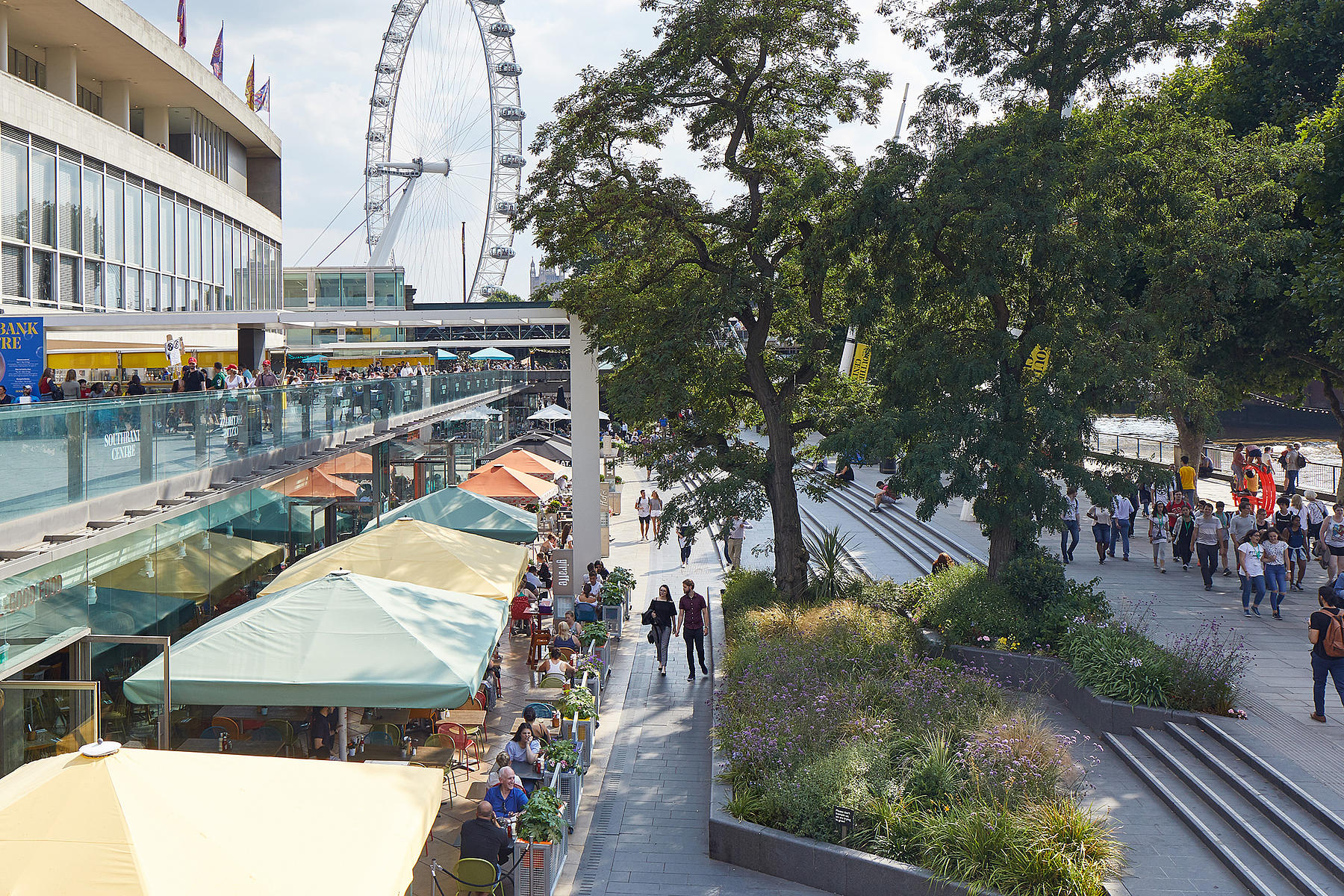
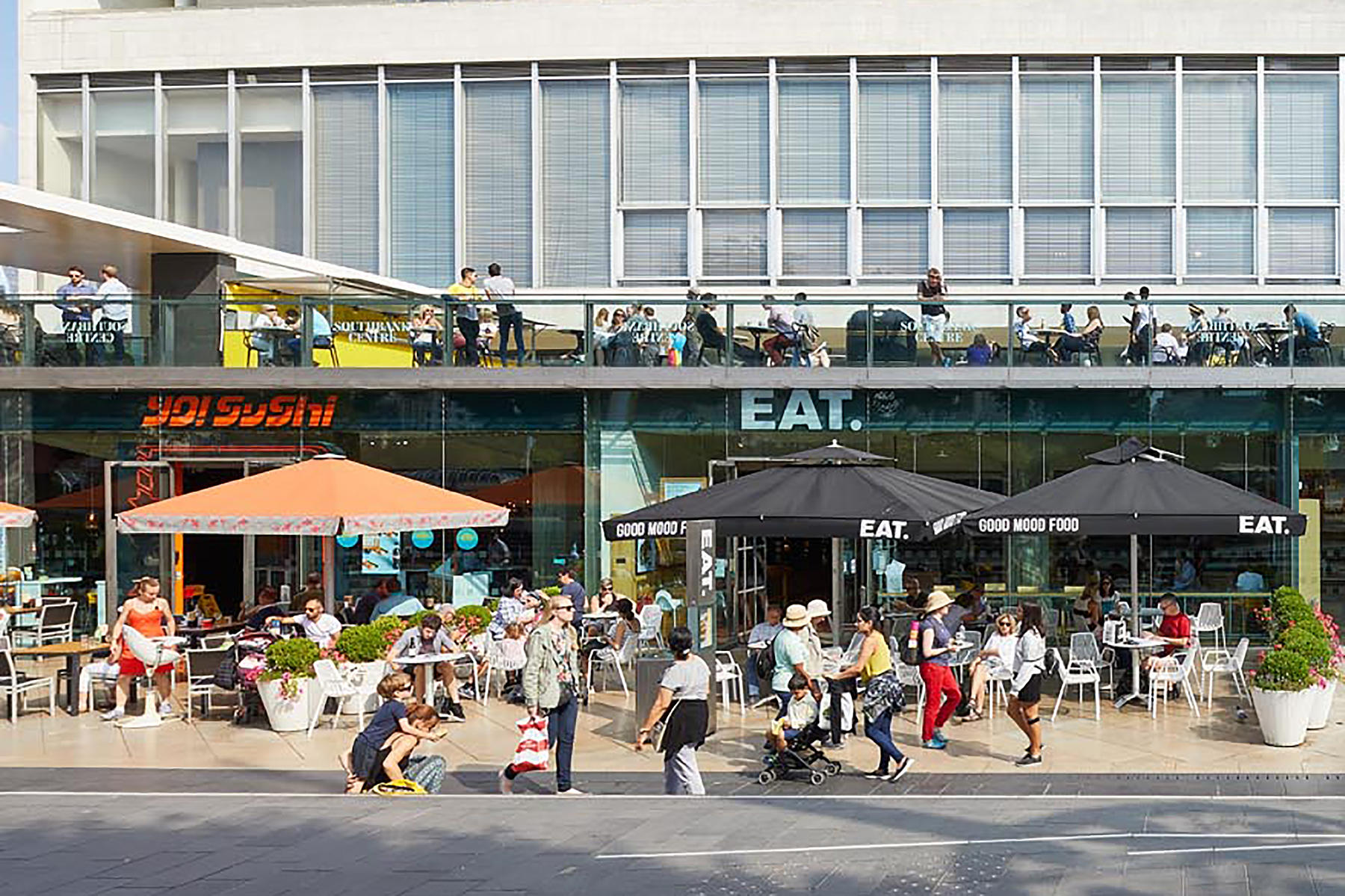
Southbank Masterplan
The transformation and rich vibrancy of the Southbank Centre has been achieved through the careful weaving and development of a series of cumulative interventions.Client
Southbank Centre
Location
London, UK
Size
7.7 ha
Value
c.£200m
Dates
2008–2019
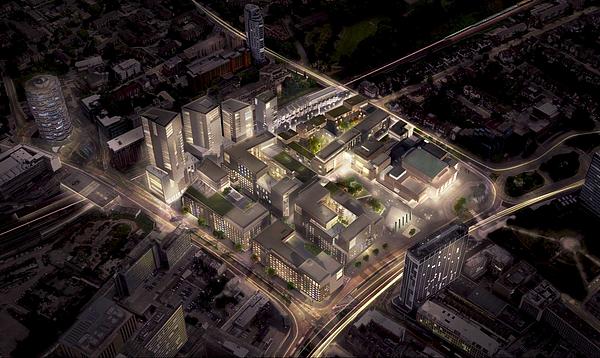
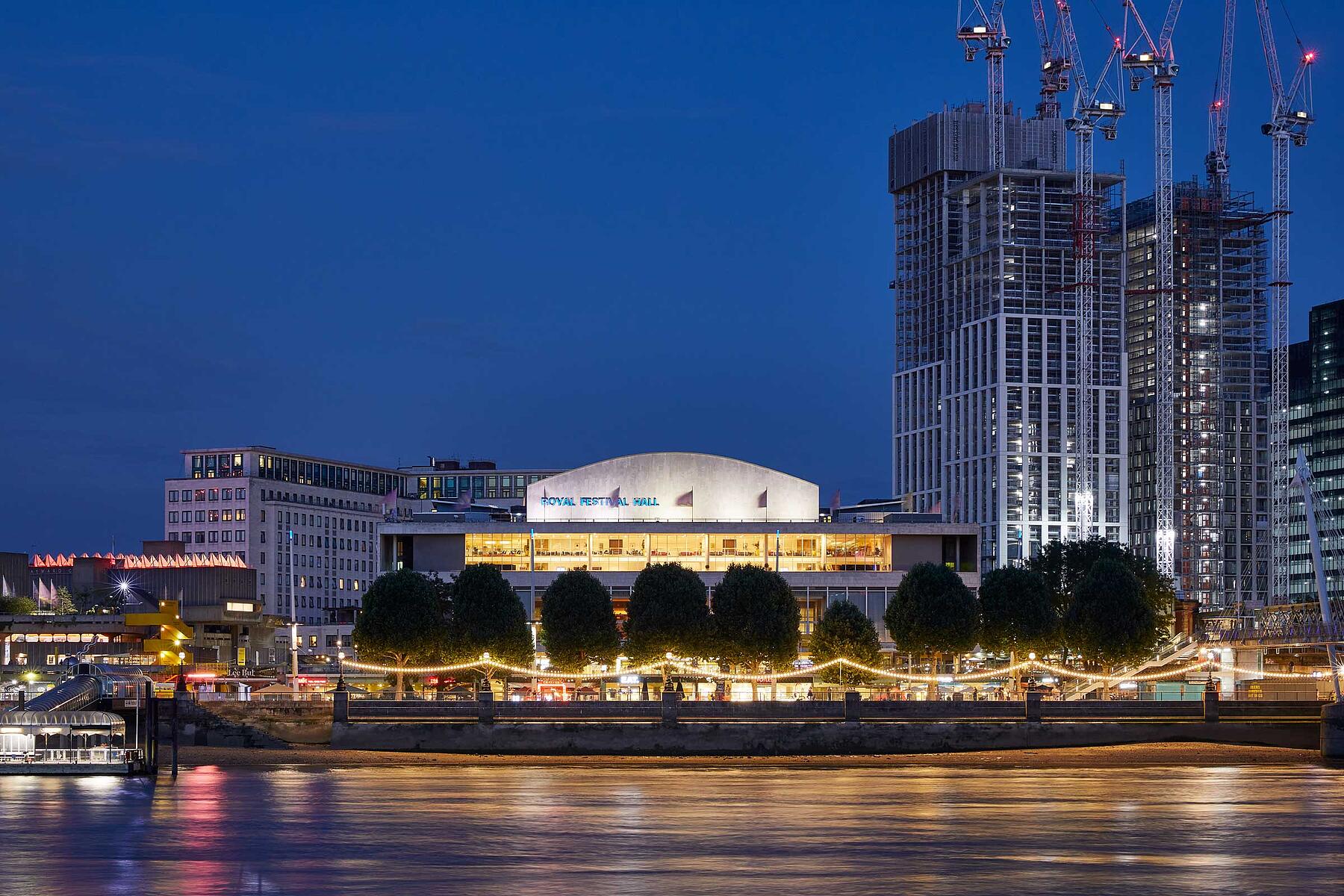
Selected through an international competition involving more than 70 practices, Rick Mather Architects was appointed to develop a long-term masterplan for London's Southbank Centre, one of the world's largest cultural complexes. Spanning over 12 hectares between Waterloo Bridge and the London Eye, the masterplan has guided the transformation of the South Bank for more than two decades through a strategy of carefully sequenced interventions rather than comprehensive redevelopment.
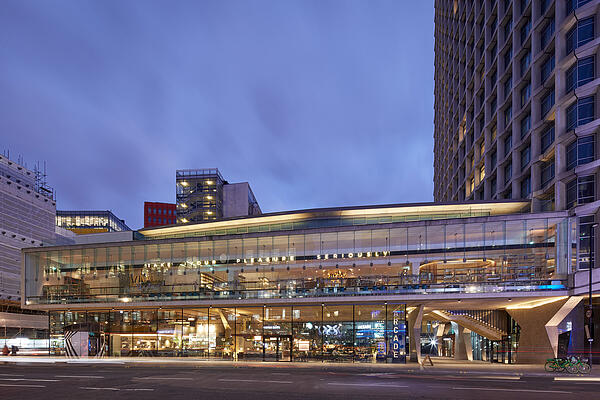
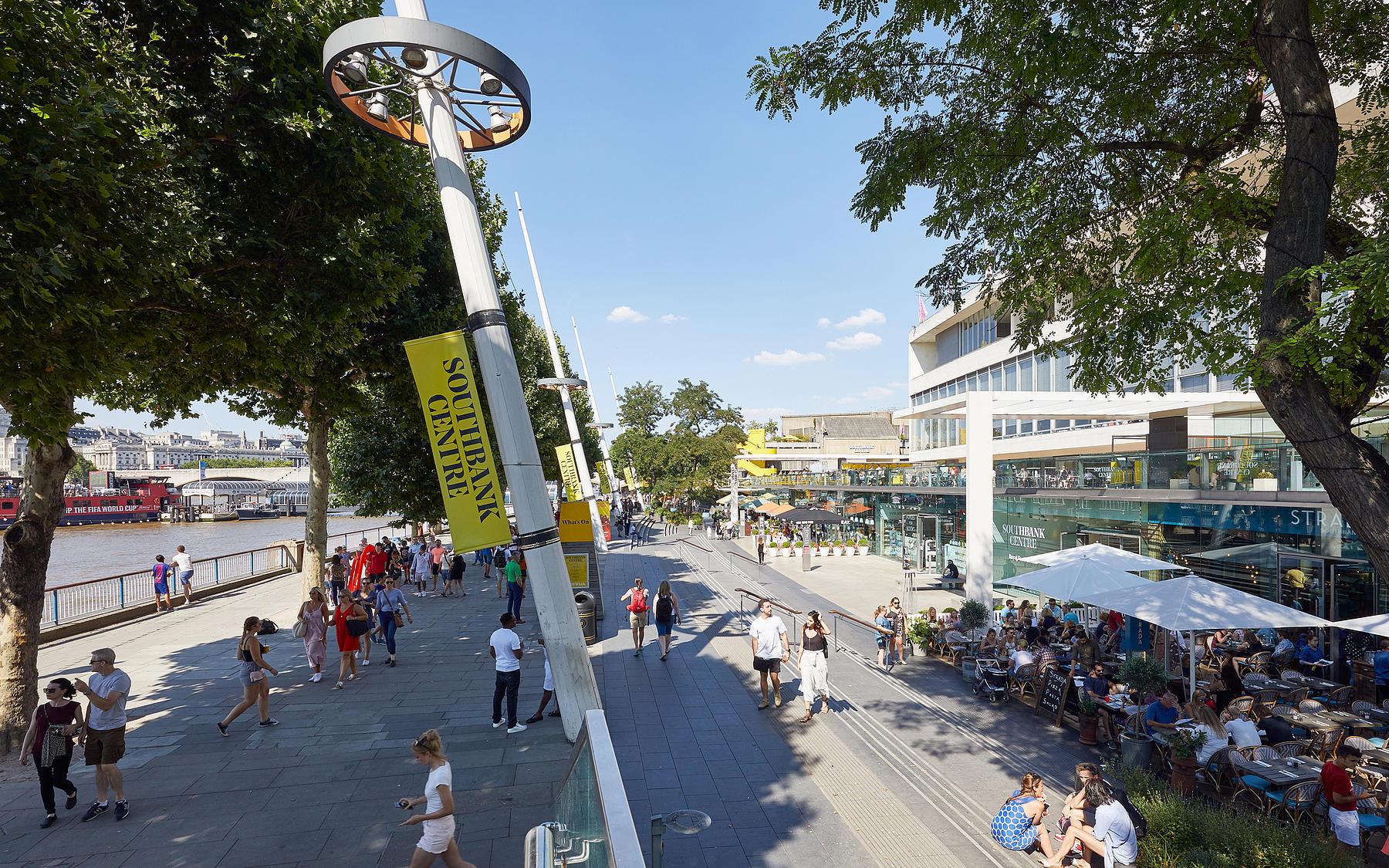
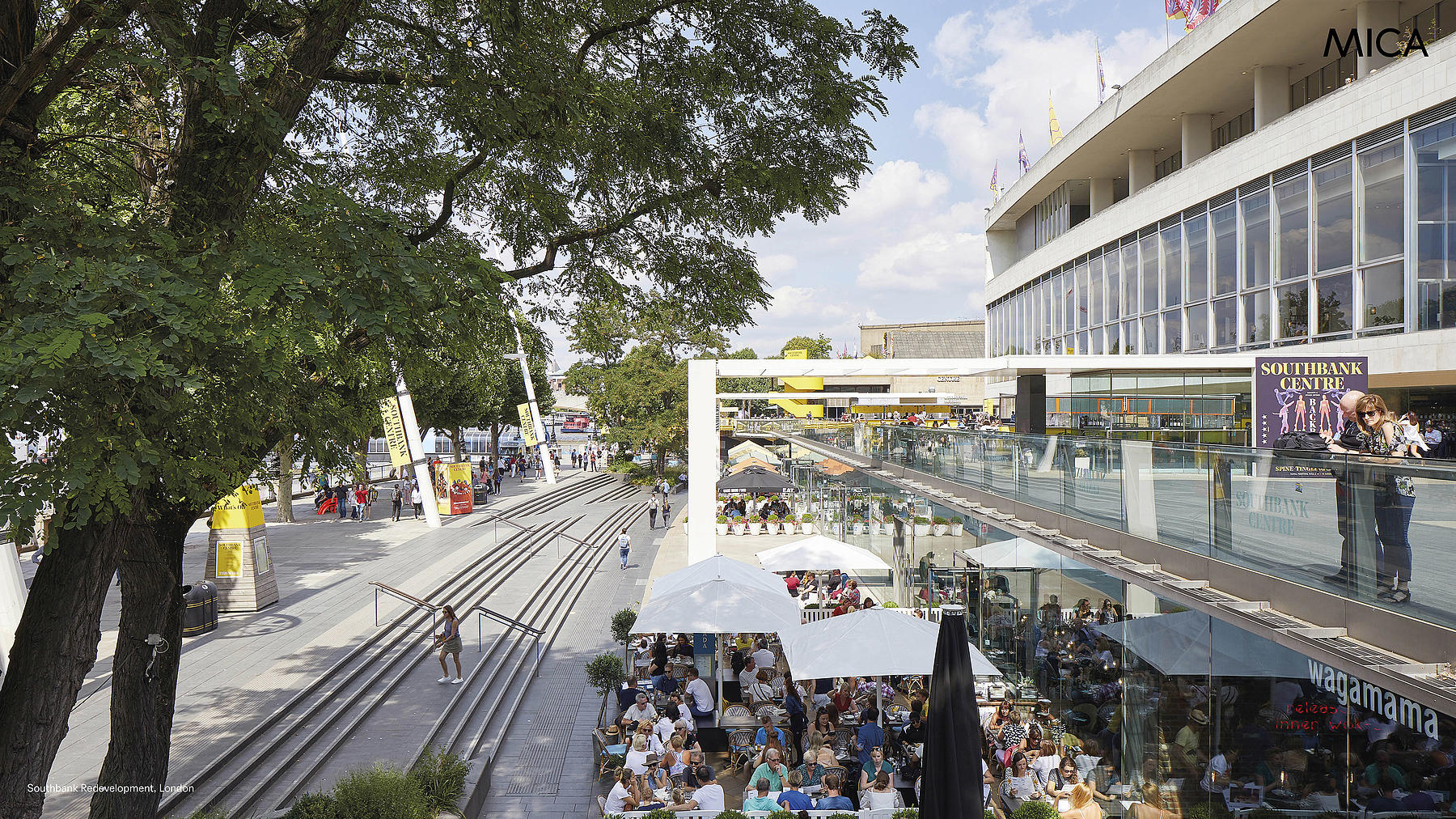
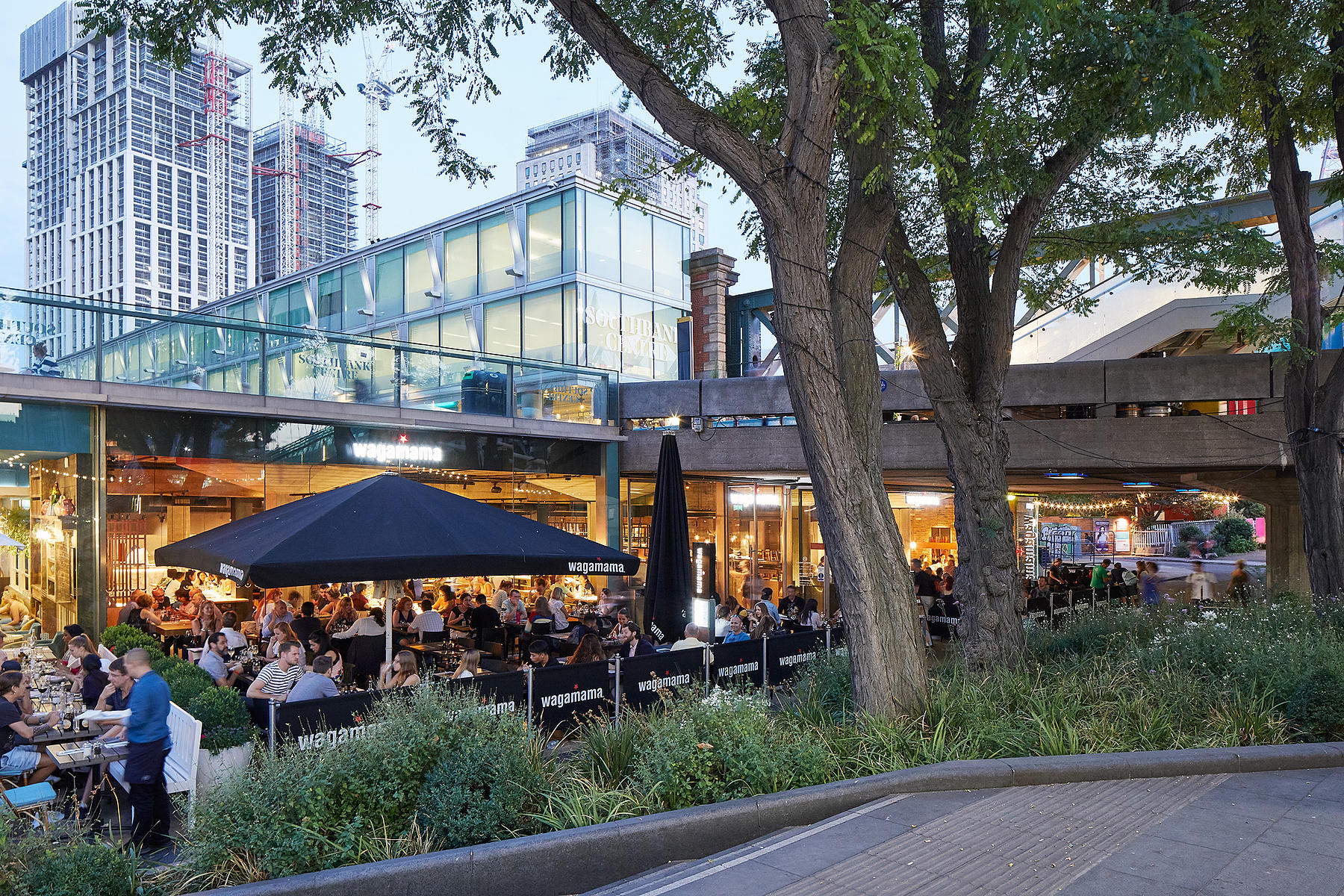
The masterplan established a clear urban design framework centred on accessibility, public life and cultural exchange. New routes and entrances improved legibility and movement across the estate, servicing was reorganised to prioritise pedestrians, and active frontages, cafés, restaurants and cultural spaces reconnected the Southbank Centre with the city and the River Thames. The refurbishment and extension of the Grade I listed Royal Festival Hall, together with significant public realm improvements, transformed the visitor experience, increasing footfall by more than 600% and restoring the Royal Festival Hall to its role as London's 'People's Palace'.
Drawing on the legacy of the 1951 Festival of Britain, the strategy created a flexible framework capable of evolving alongside the Southbank Centre's artistic programme. Temporary festivals, installations and cultural events informed permanent improvements including new terraces, staircases, undercrofts and landscape interventions, allowing the estate to continually adapt while supporting music, performance, dance, visual arts and large-scale public events.
Rather than prescribing a fixed end state, the masterplan was conceived as a living framework capable of responding to changing artistic ambitions, governance, funding opportunities and public expectations. Over more than twenty years the practice continued to guide its evolution, ensuring that each intervention strengthened the wider vision while allowing the estate to grow organically.
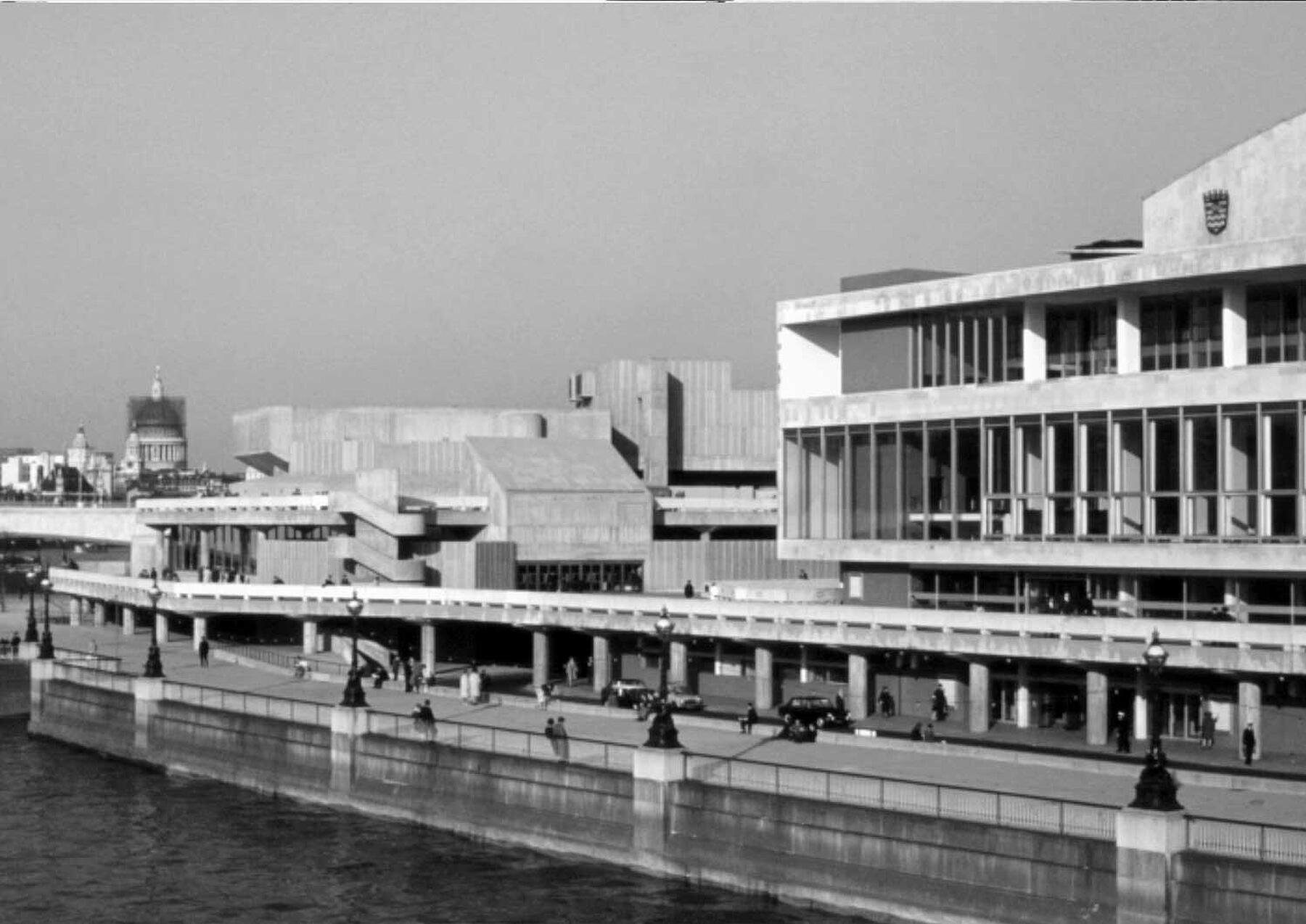
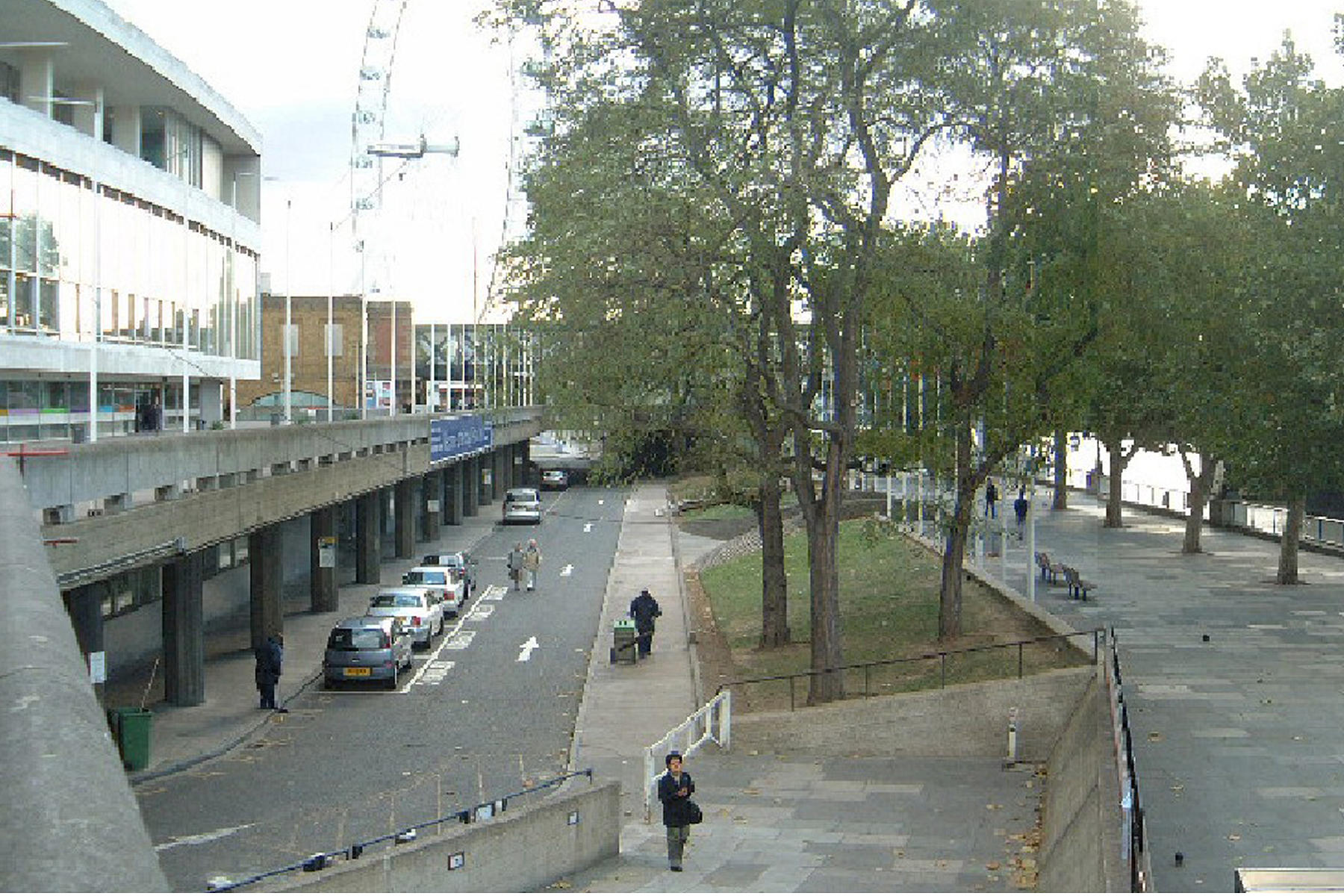
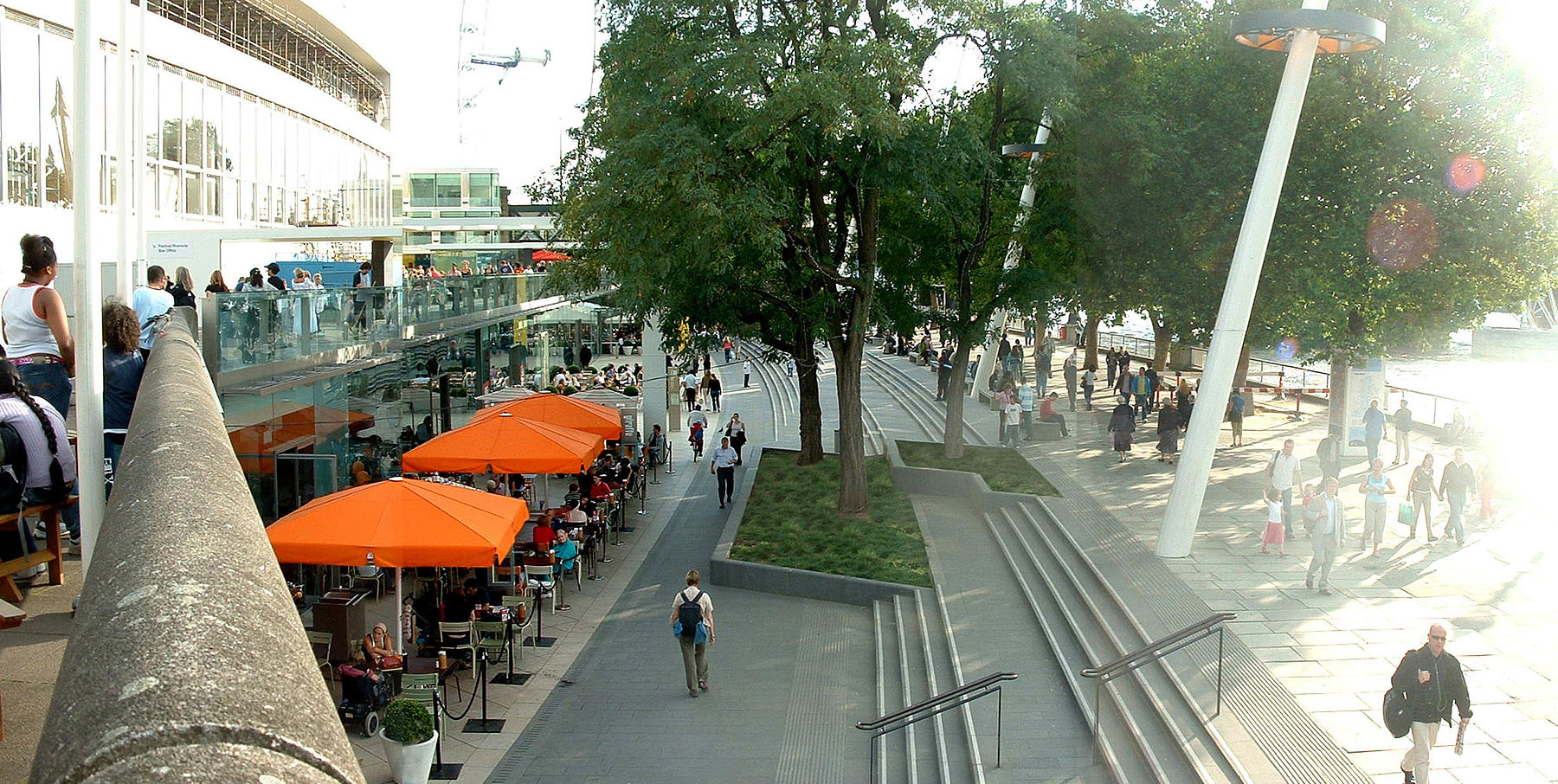
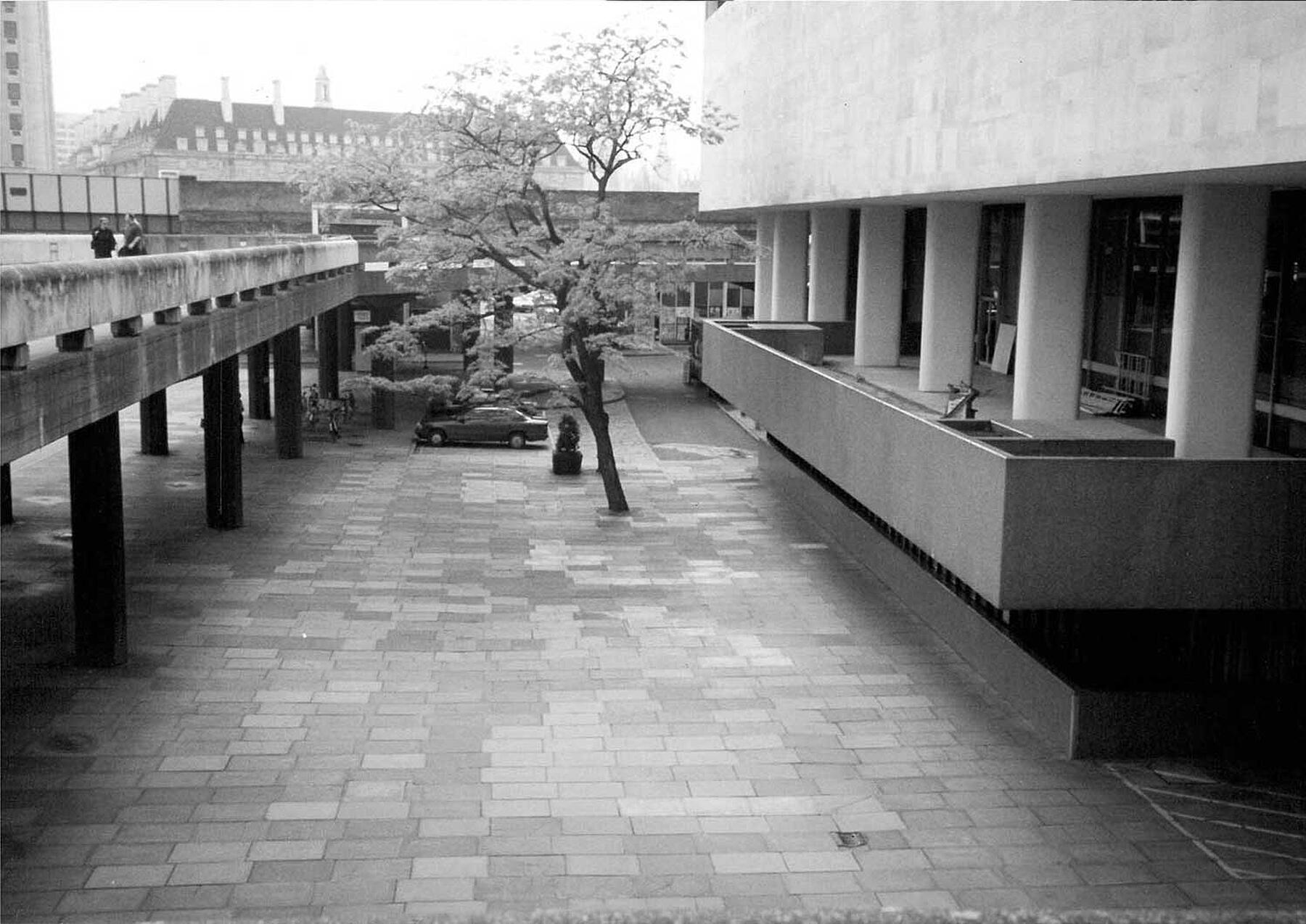
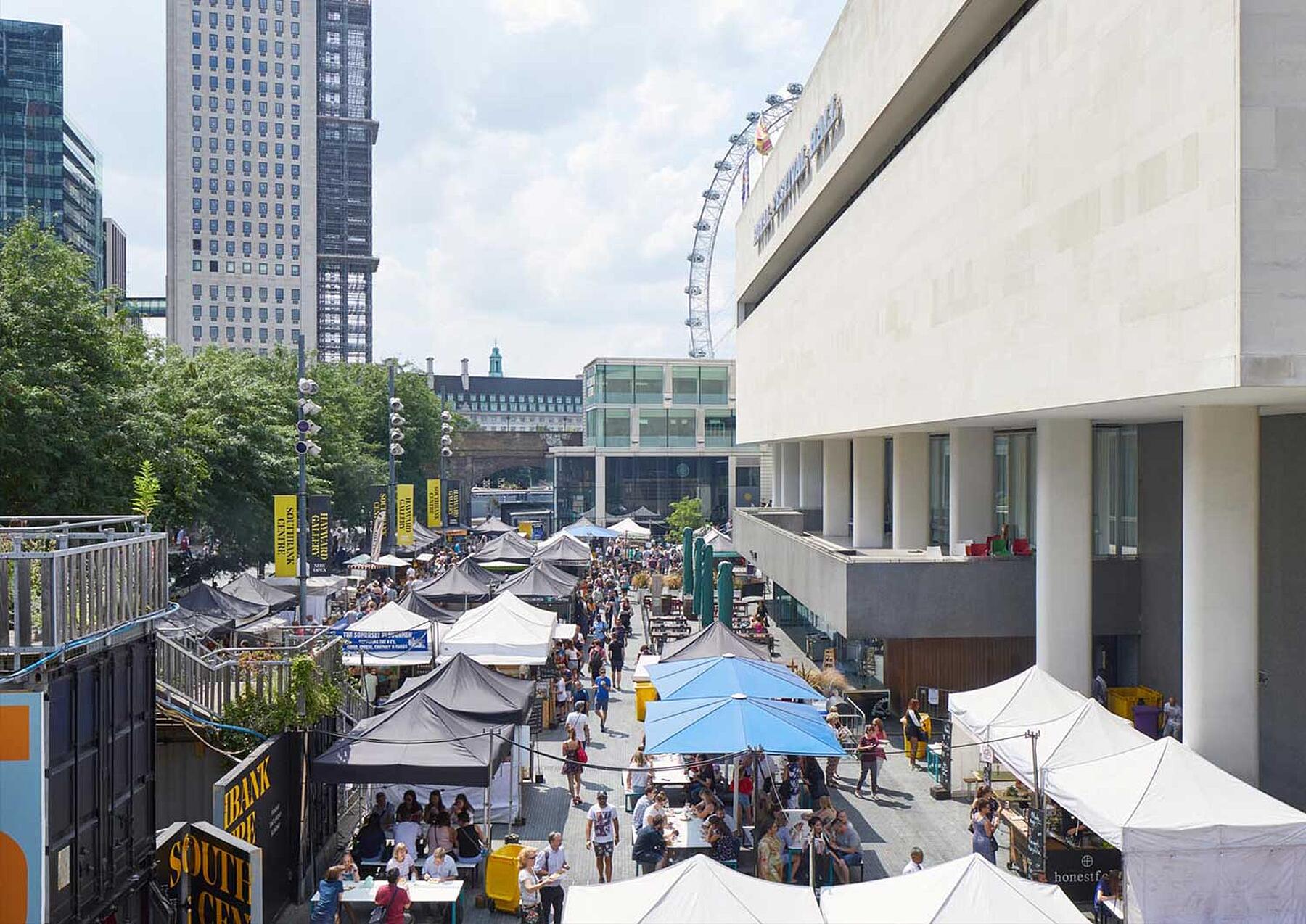
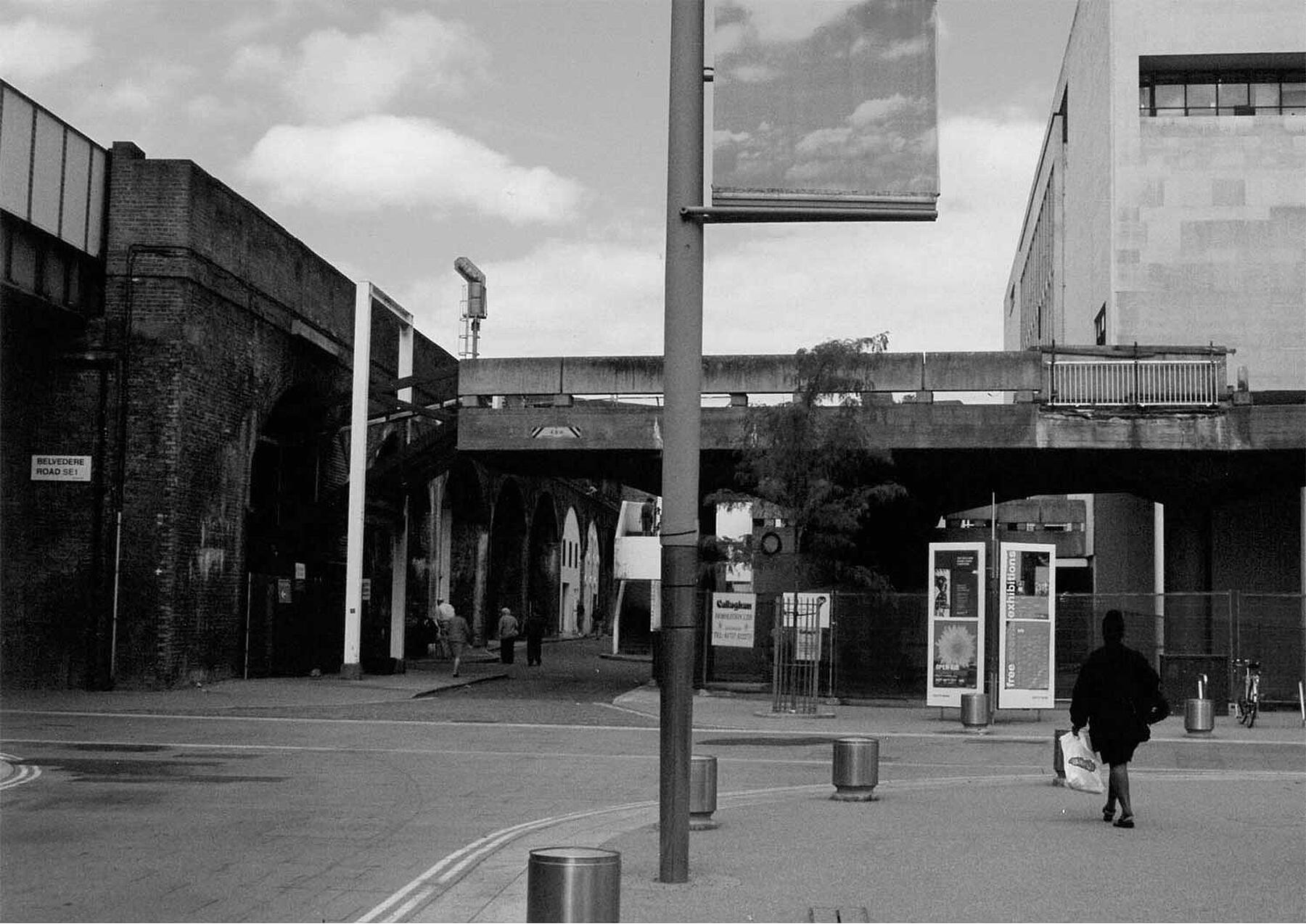
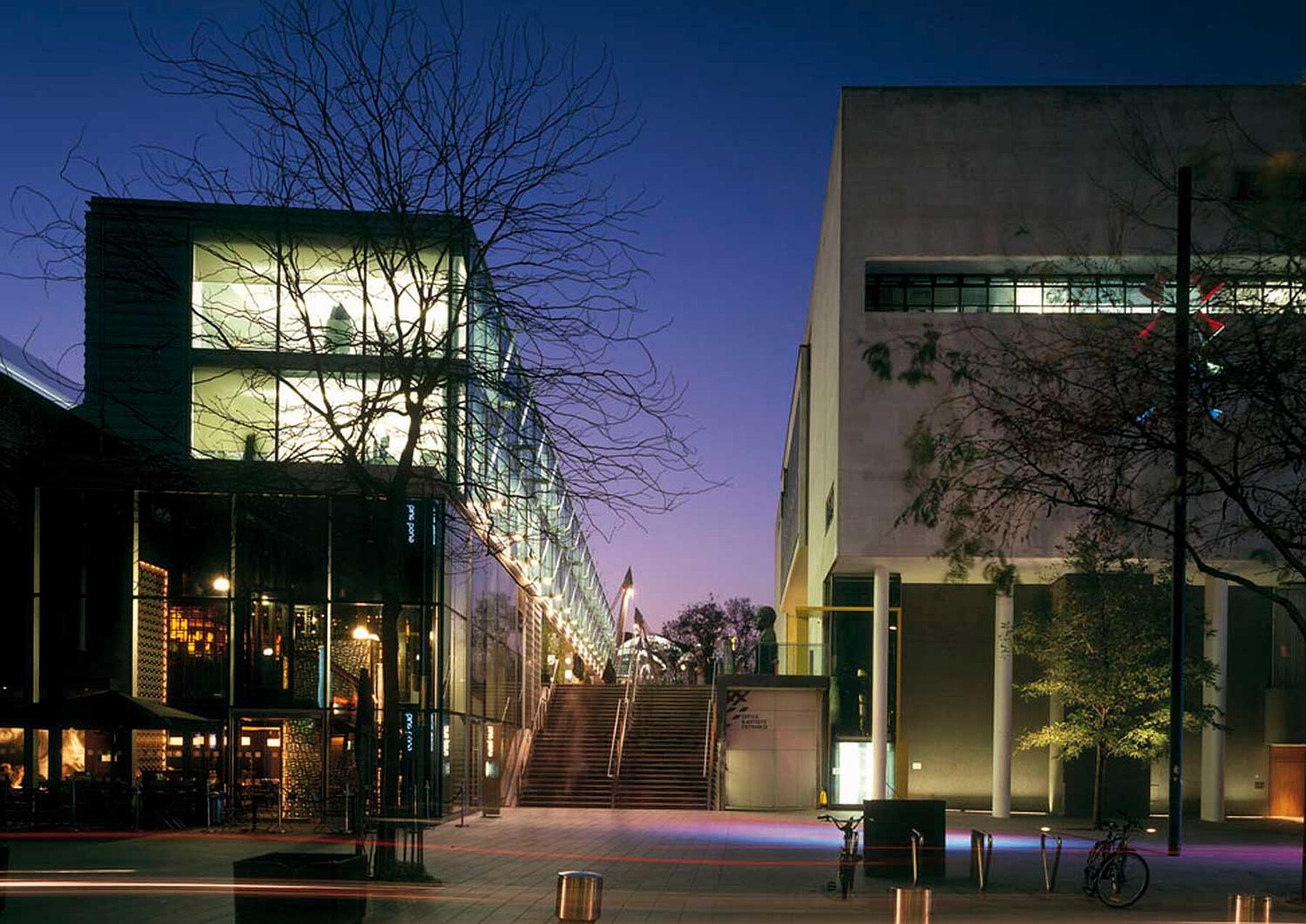
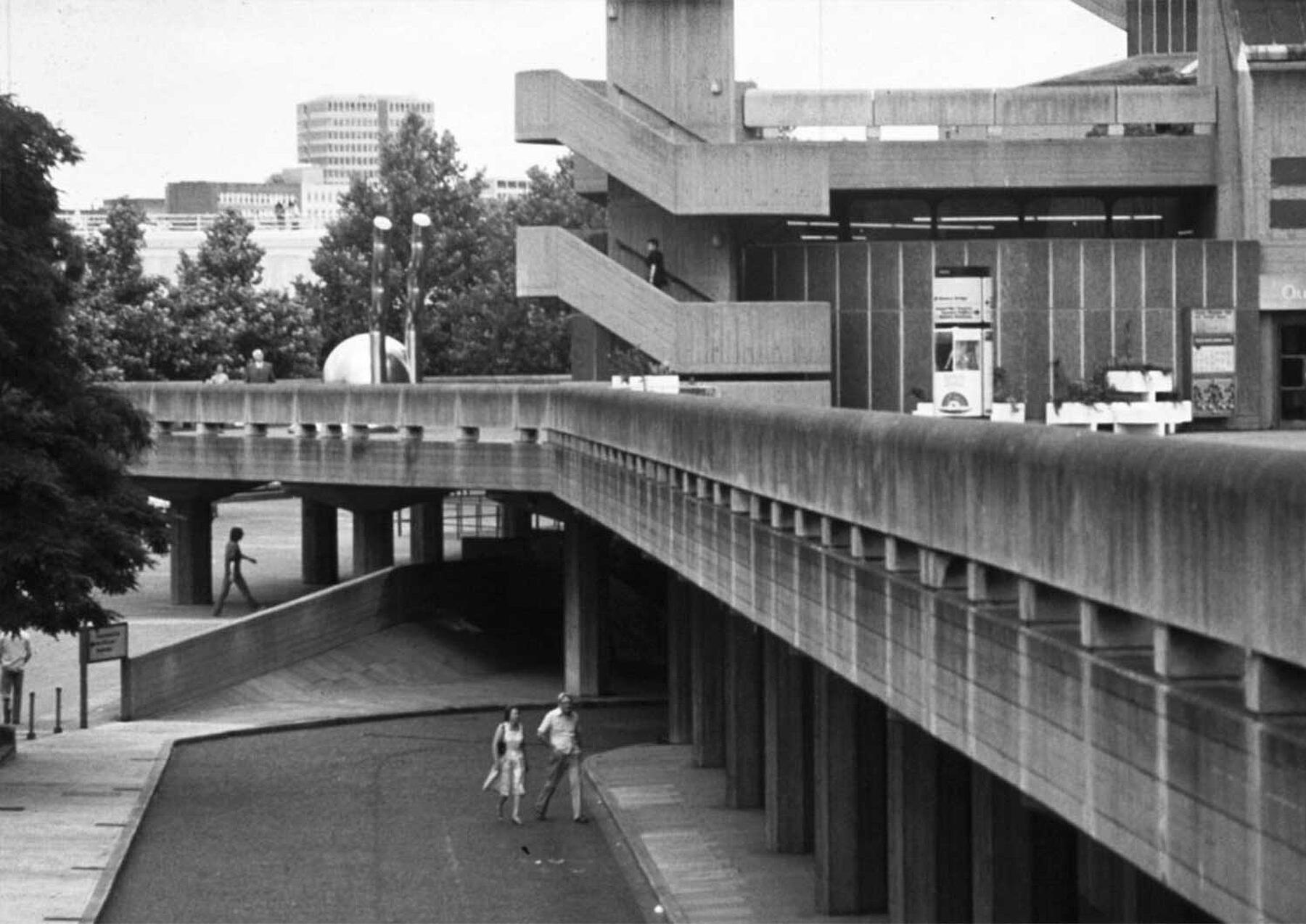
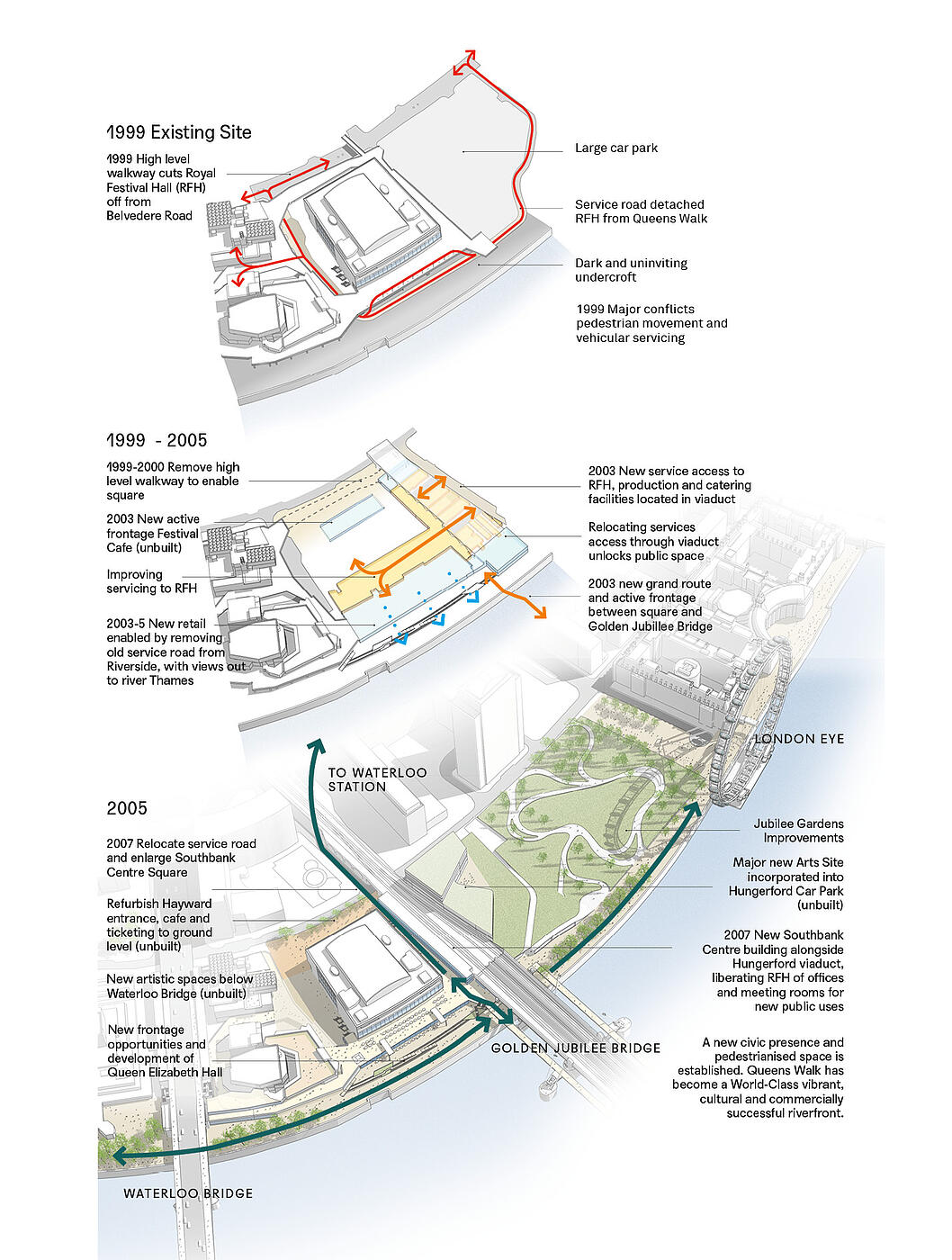
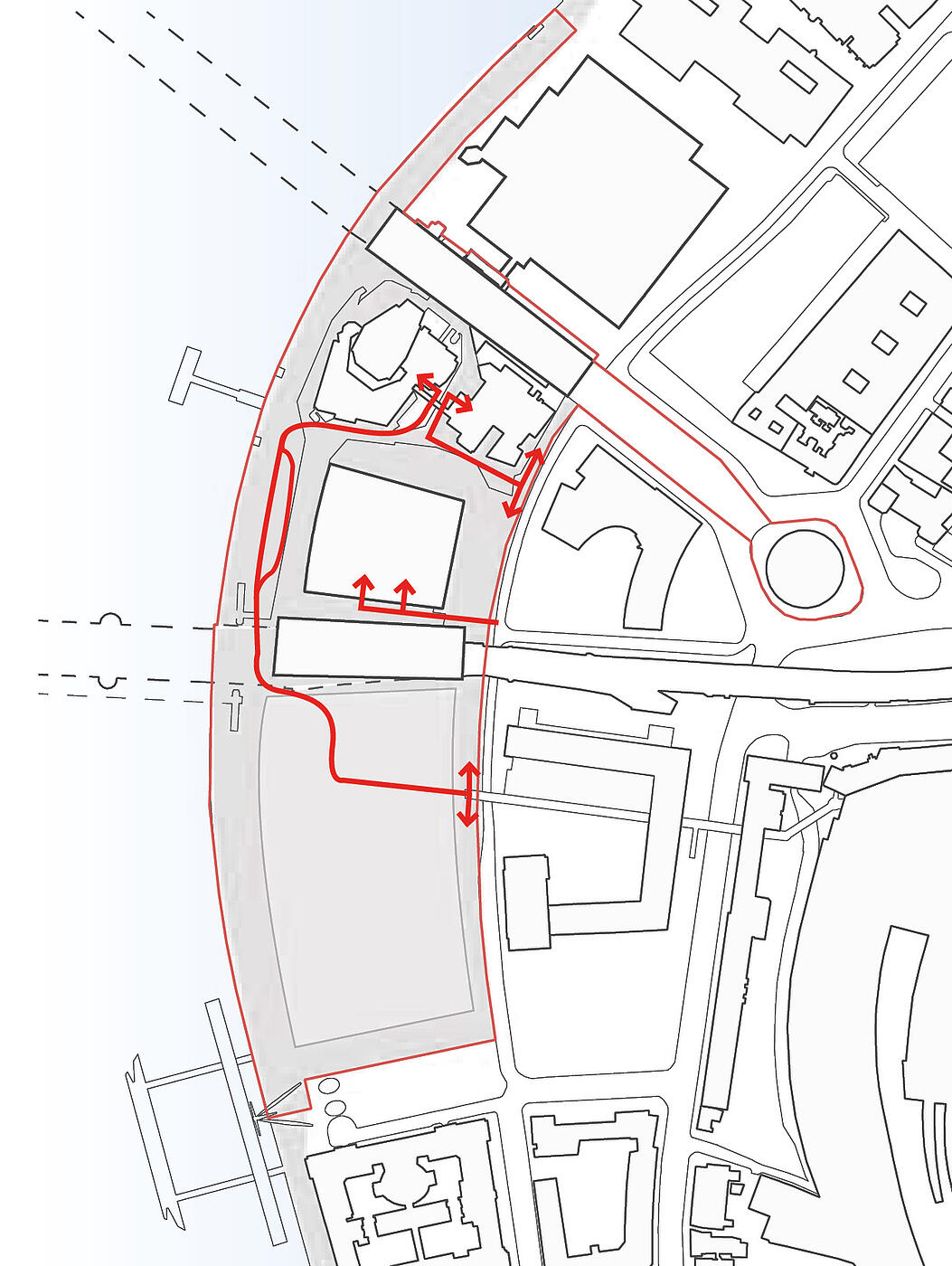
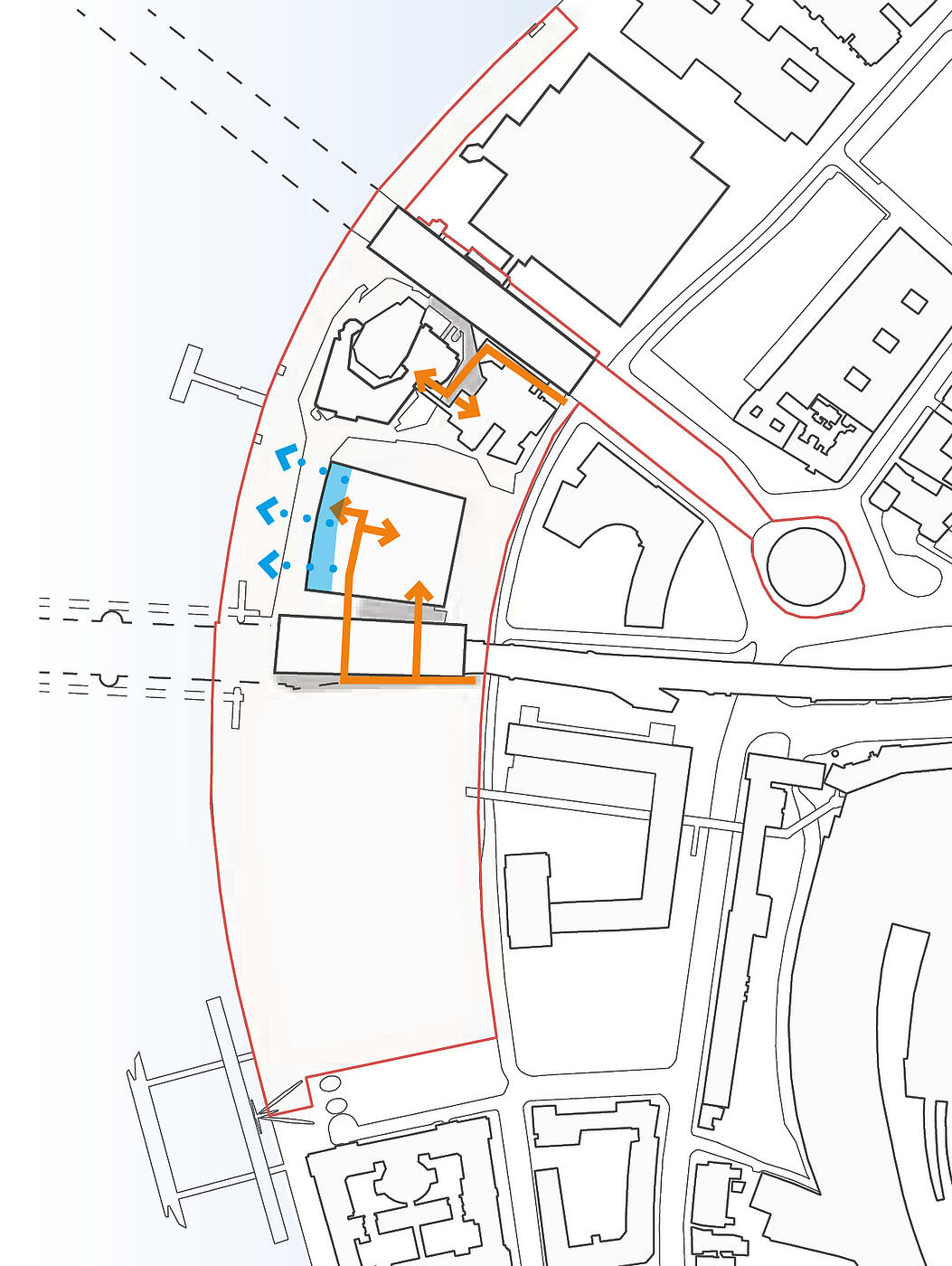
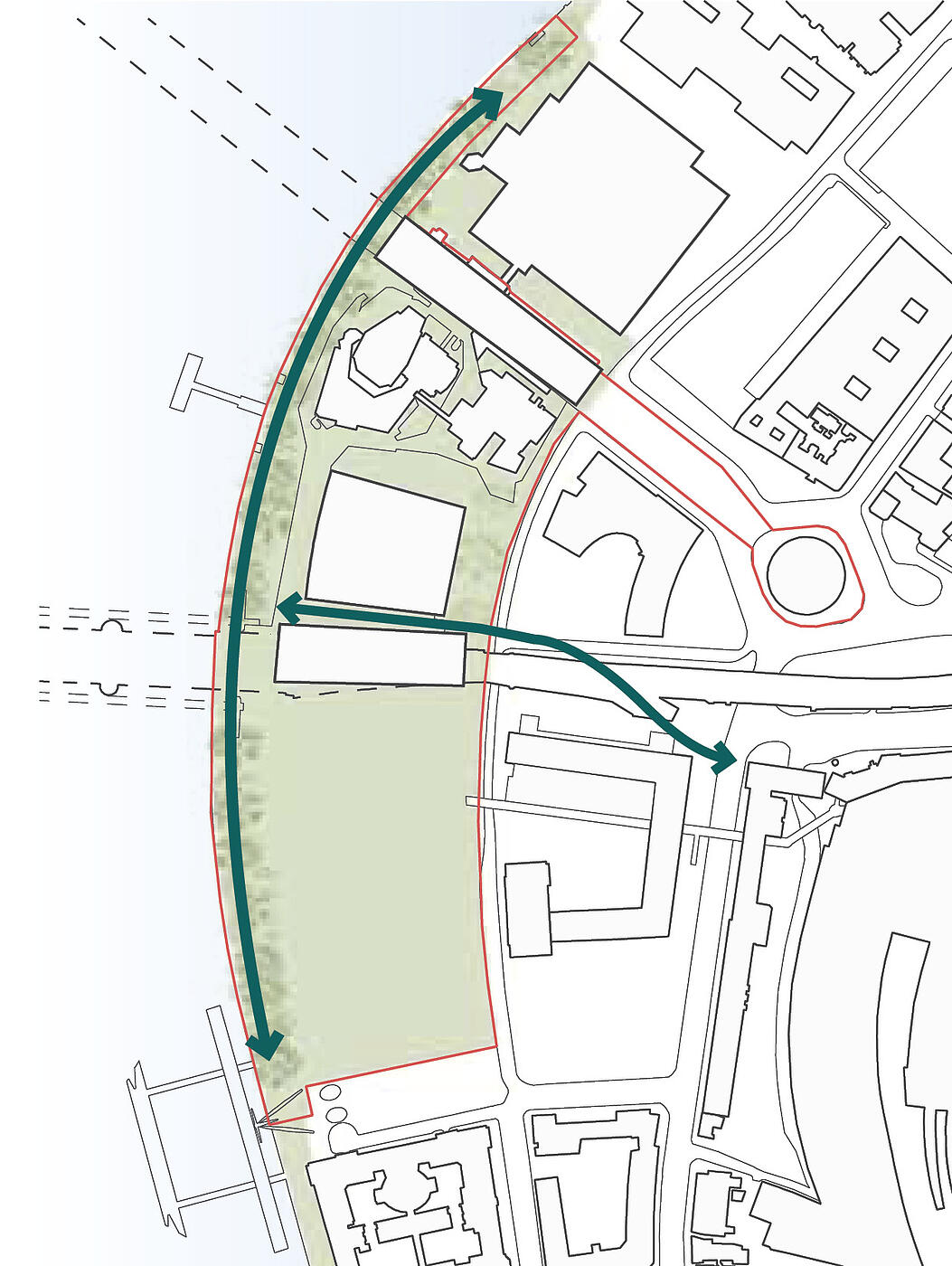
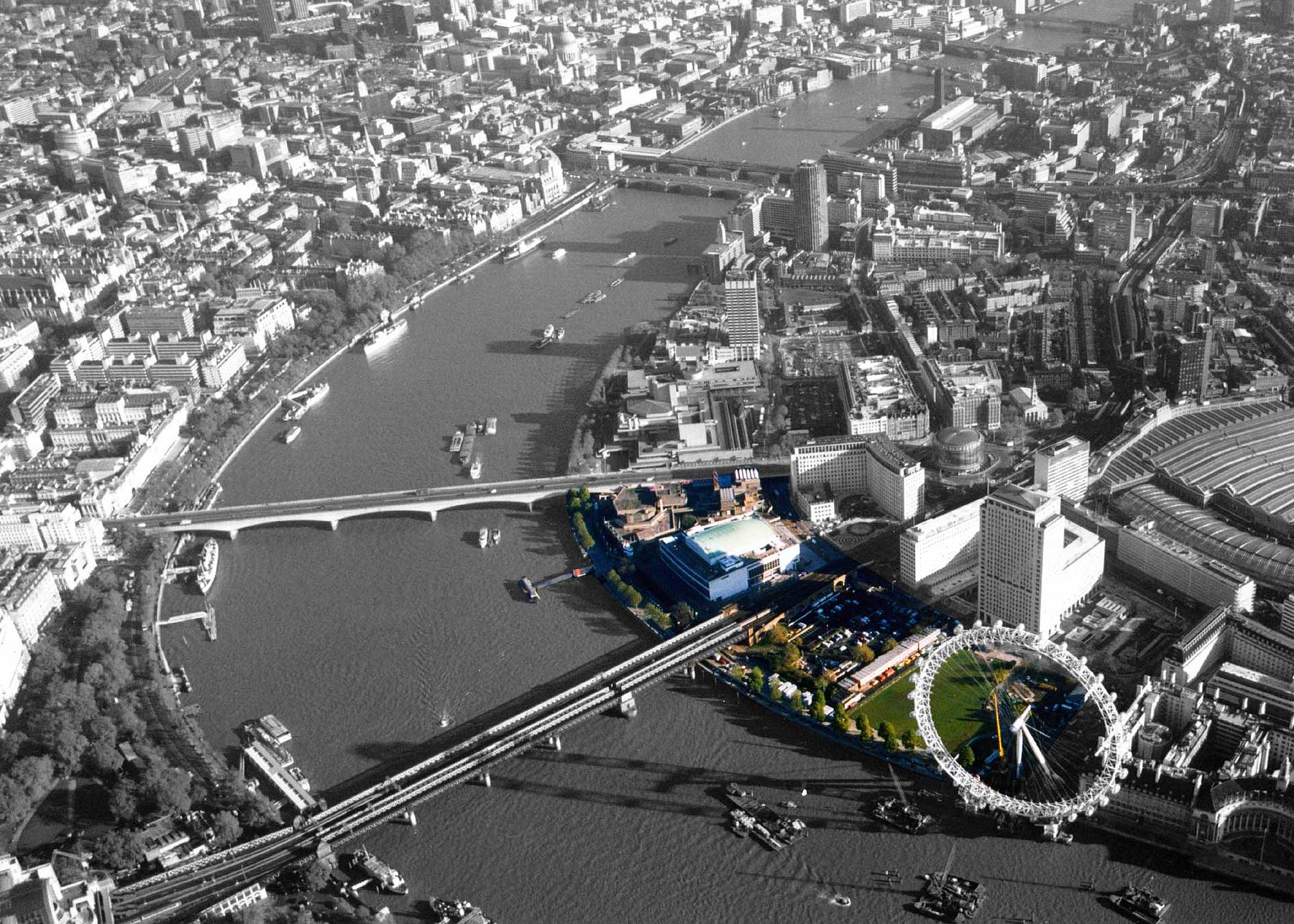
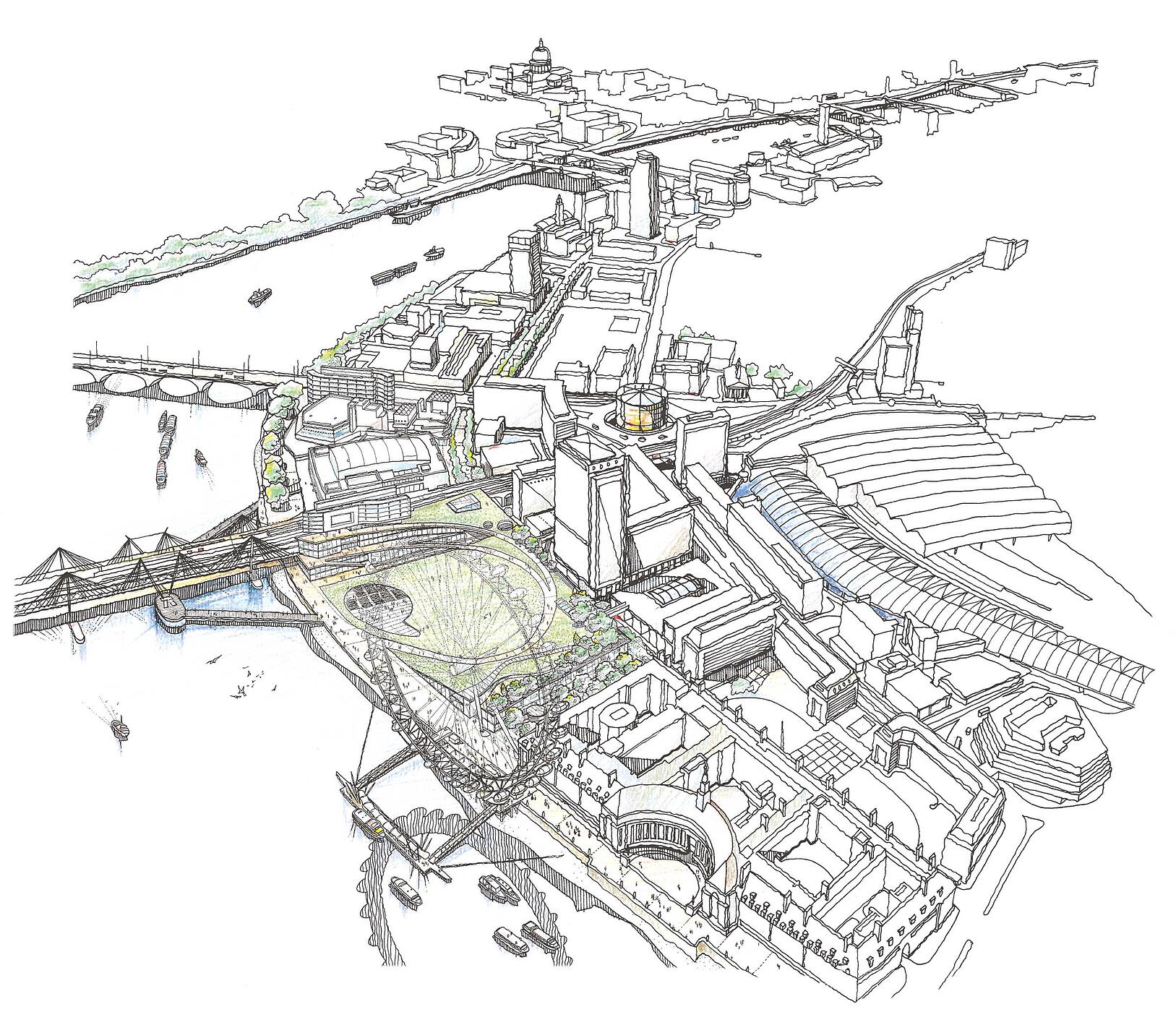
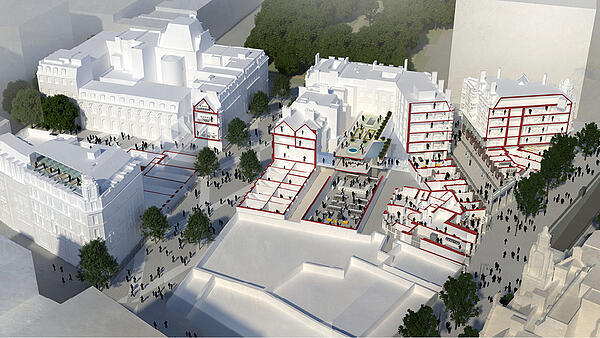
Alongside the realised projects, the masterplan explored a number of ambitious proposals that shaped the future direction of the South Bank. These included the comprehensive retrofitting of the Hayward Gallery, Queen Elizabeth Hall and Purcell Room, proposals for a new concert hall and expanded cultural facilities on the Hungerford Car Park site, the relocation and enhancement of the Southbank Skate Space, and a dramatic sloping landscape connecting Jubilee Gardens with the elevated Southbank Centre terraces. While not all of these proposals were ultimately realised, they established important strategic principles for accessibility, cultural programming, landscape and estate-wide connectivity, demonstrating the masterplan's breadth of ambition and its ability to respond to changing priorities without compromising the integrity of the overall vision.
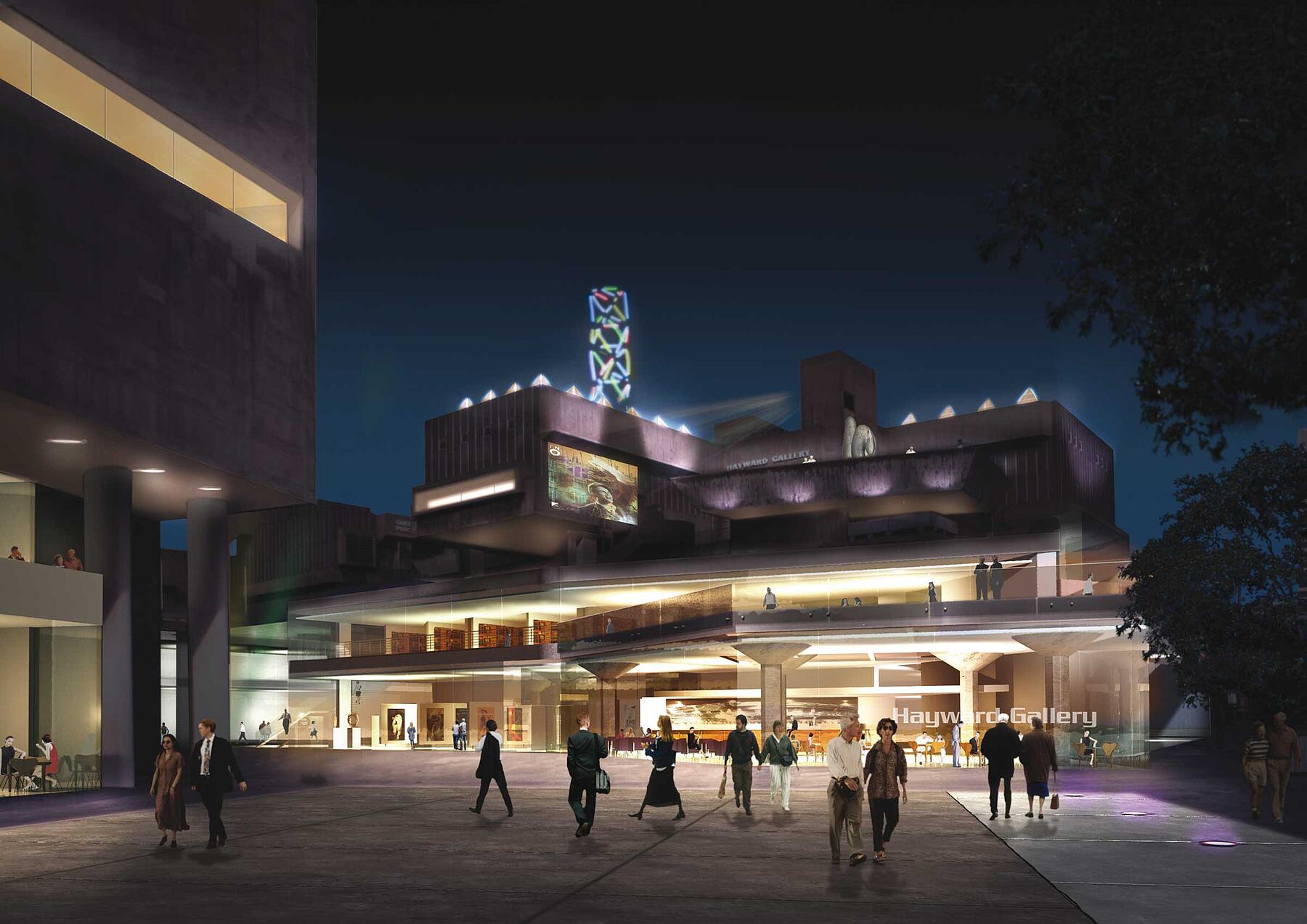
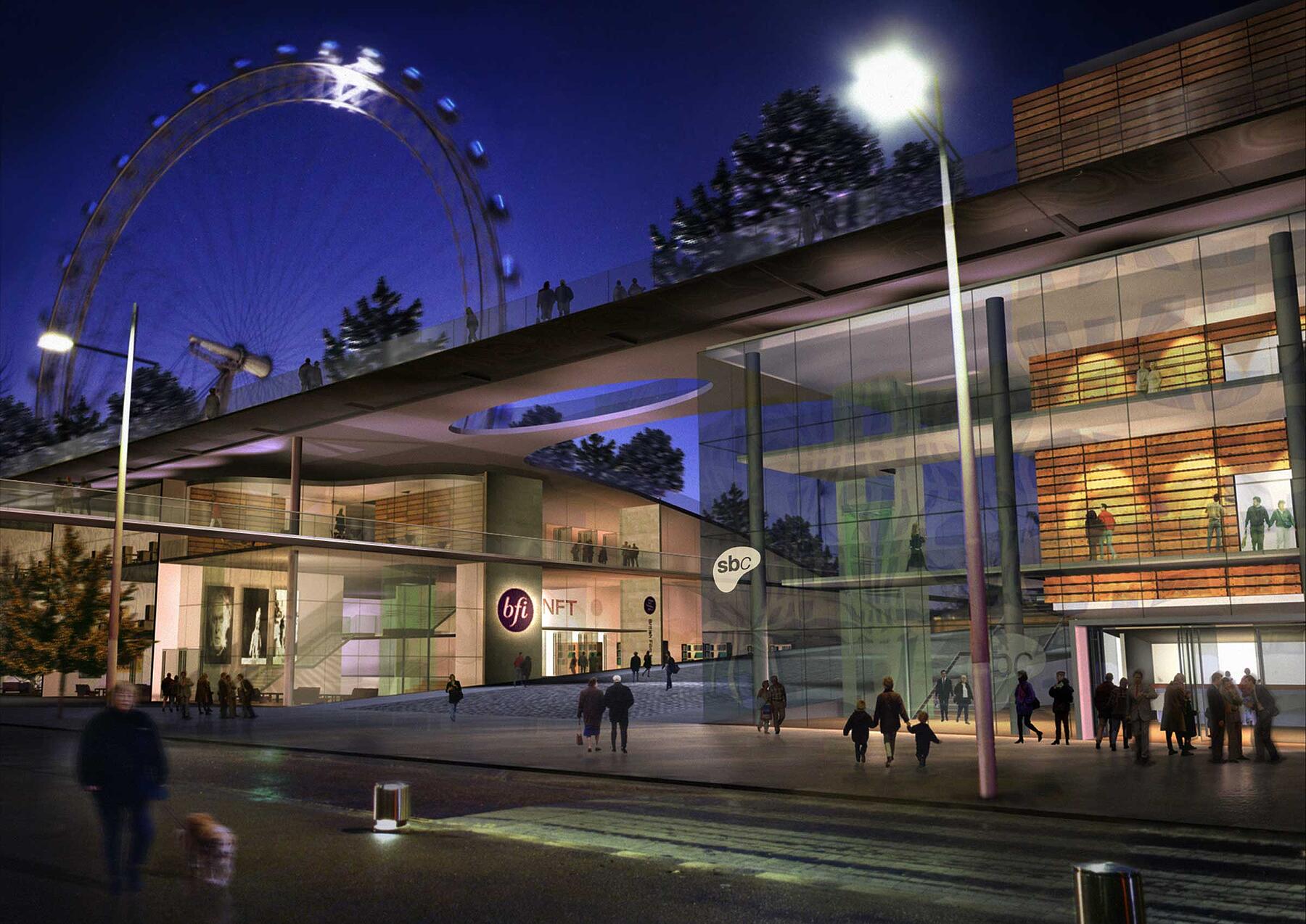
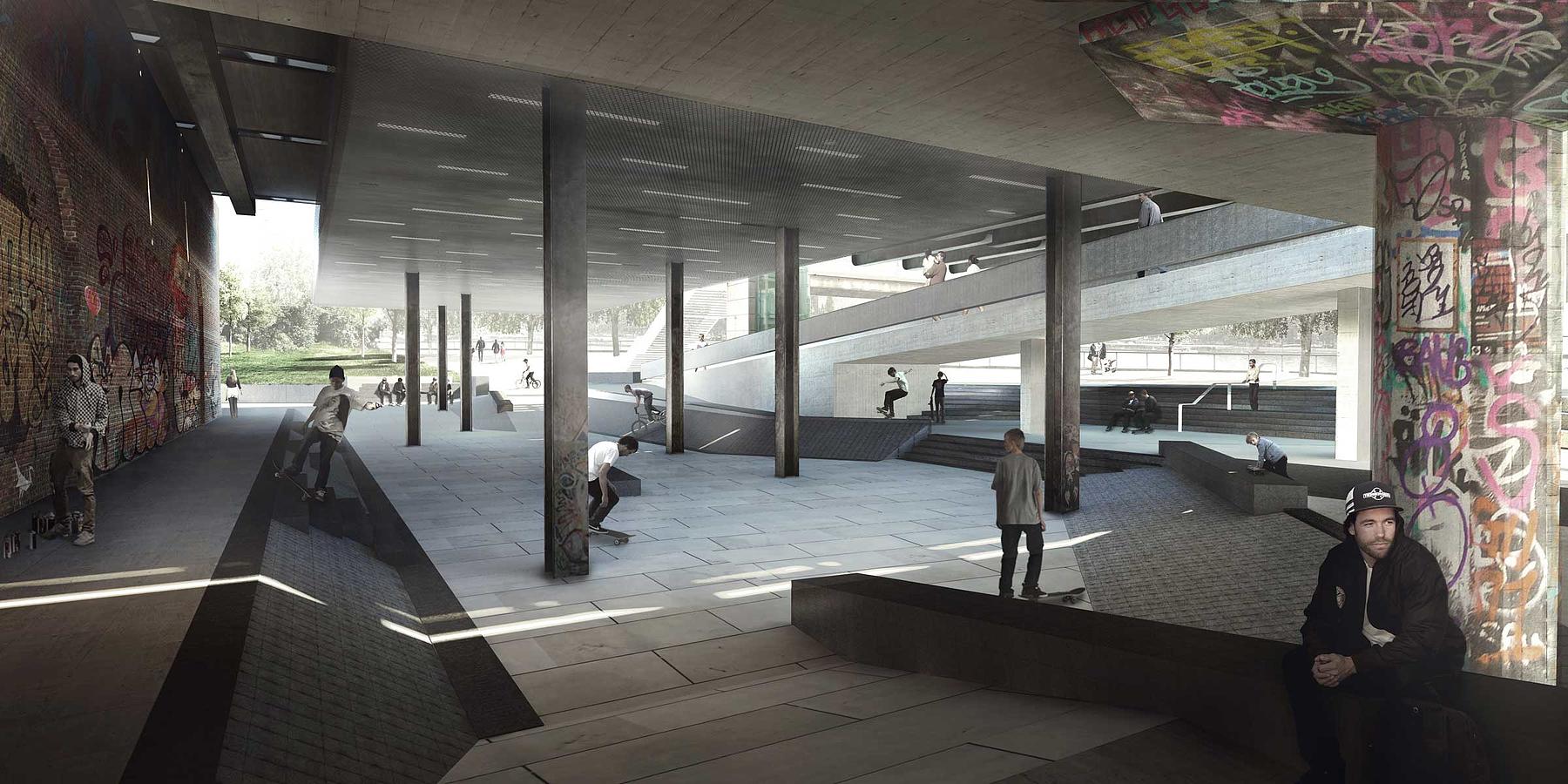
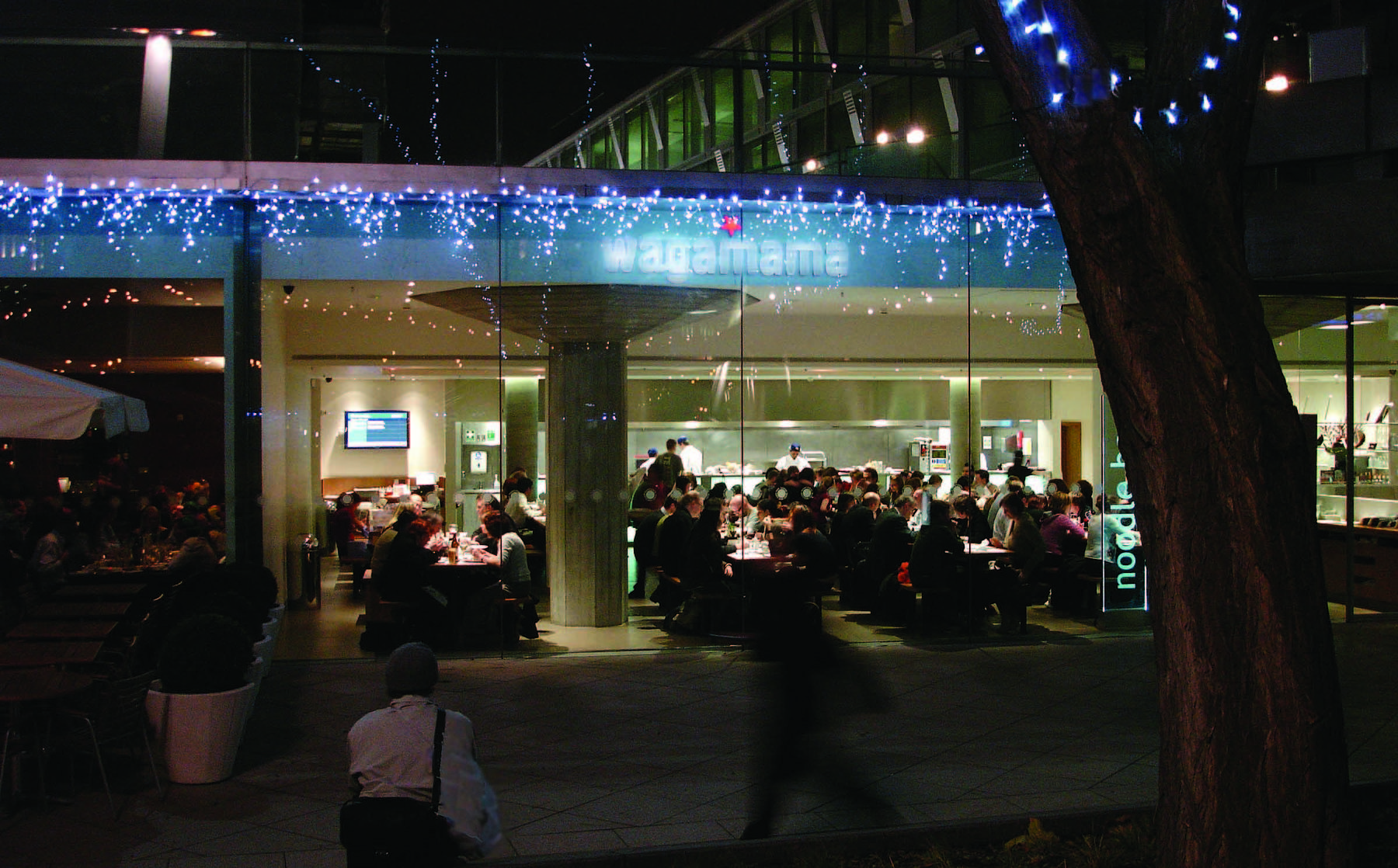
The enduring success of the Southbank Centre lies not in any single building, but in the cumulative effect of a coherent long-term strategy. Through the careful weaving together of architecture, landscape, movement and cultural infrastructure, the masterplan transformed one of London's most complex civic estates while allowing multiple institutions to remain fully operational. Its legacy is a vibrant, internationally recognised cultural destination whose continued evolution reflects MICA's belief that the most successful masterplans are those that provide a resilient framework for change rather than a fixed architectural outcome.
Team
Client Southbank Centre
Landscape Architects Gross Max
Structural Engineer Price and Myers
Services Engineers Max Fordham and Partners
Lighting Consultants Speirs and Major
Access Consultant David Bonnett Associates
Planning Consultant RPS Planning Plc
Pedestrian Movement Consultant Space Syntax
Since 1999 we have successively collaborated with a number architects, engineers and designers to deliver and plan each incremental step and development. These include:
Allies & Morrison
Arup Logistics
Max Fordham & Partners
West 8
Price & Myers
Gardiner & Theobald
Space Syntax
RPS
Grimshaw
Lunson Mitchenall
Haworth Tompkins
Awards
London Planning Awards Best Built Project
Five Years On 2014 (Royal Festival Hall)
RIBA Award 2008 (Royal Festival Hall)
Civic Trust Award 2008 (Royal Festival Hall)
Competition Winner 1999