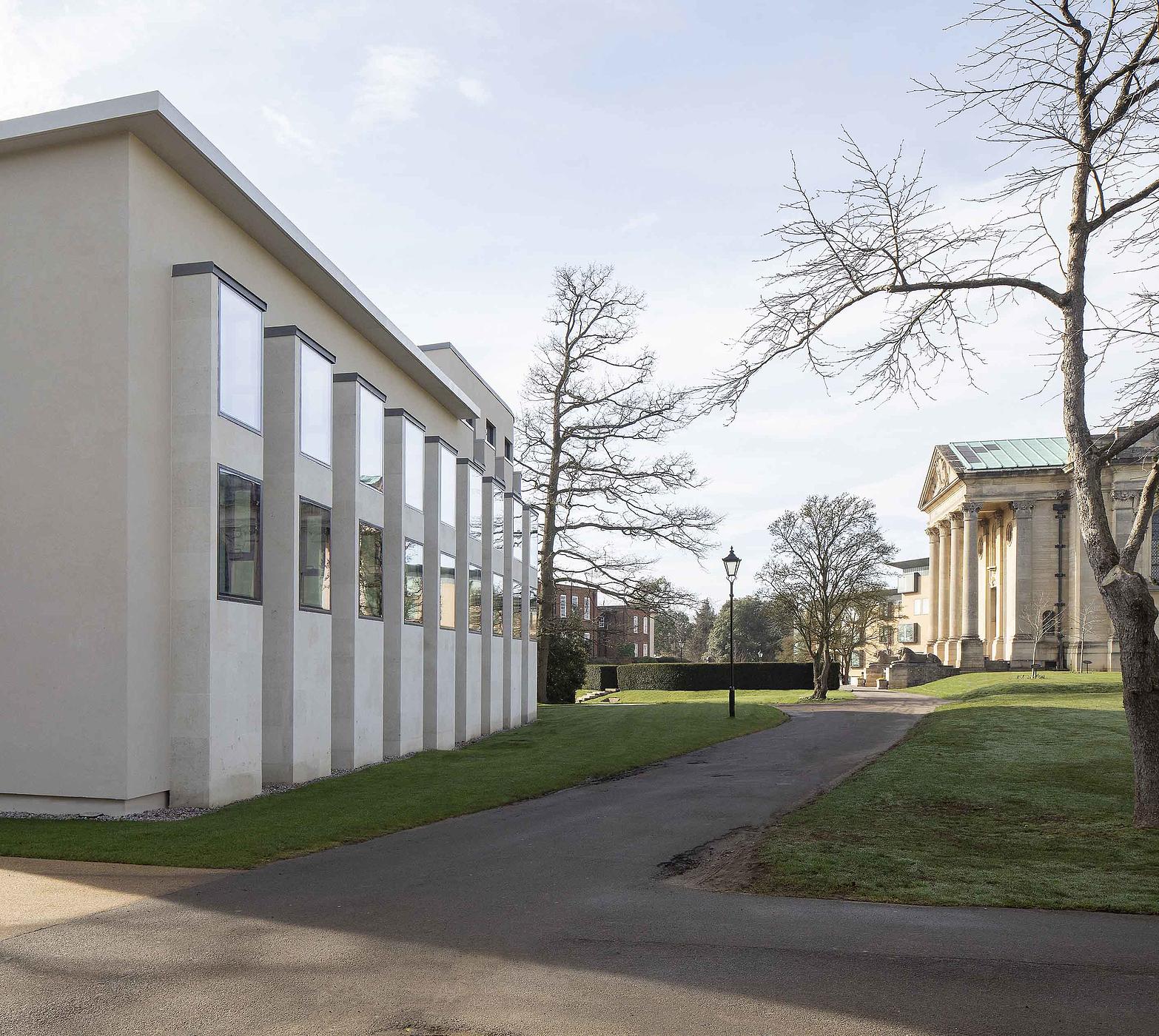
Cobham Boys' Boarding House, Stowe School
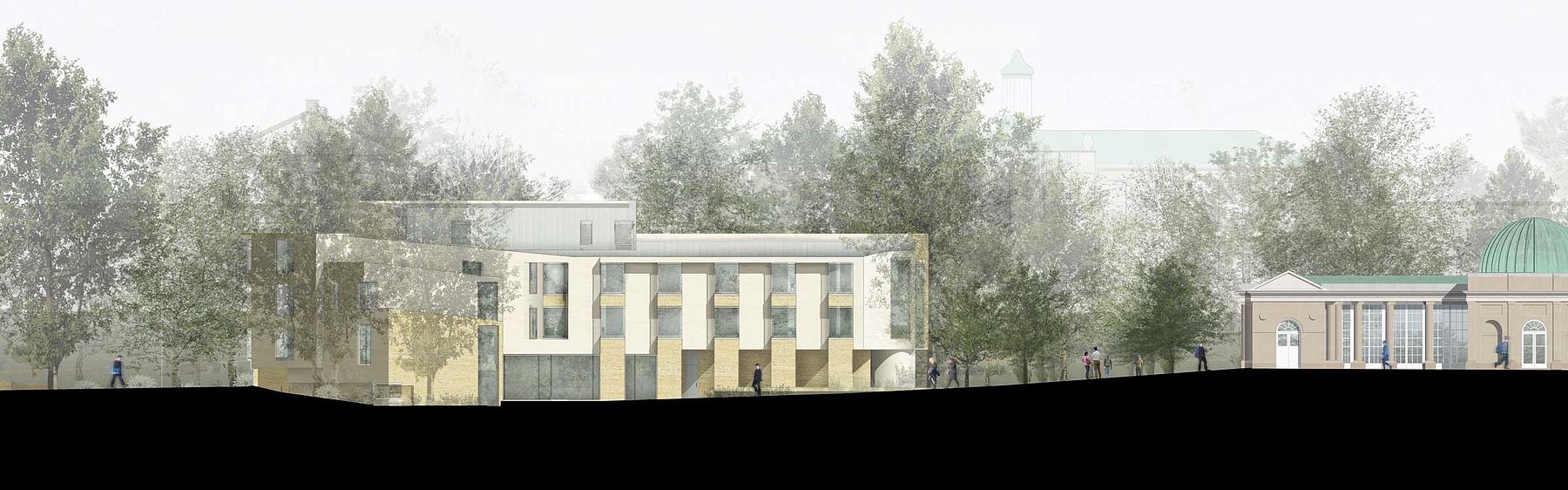
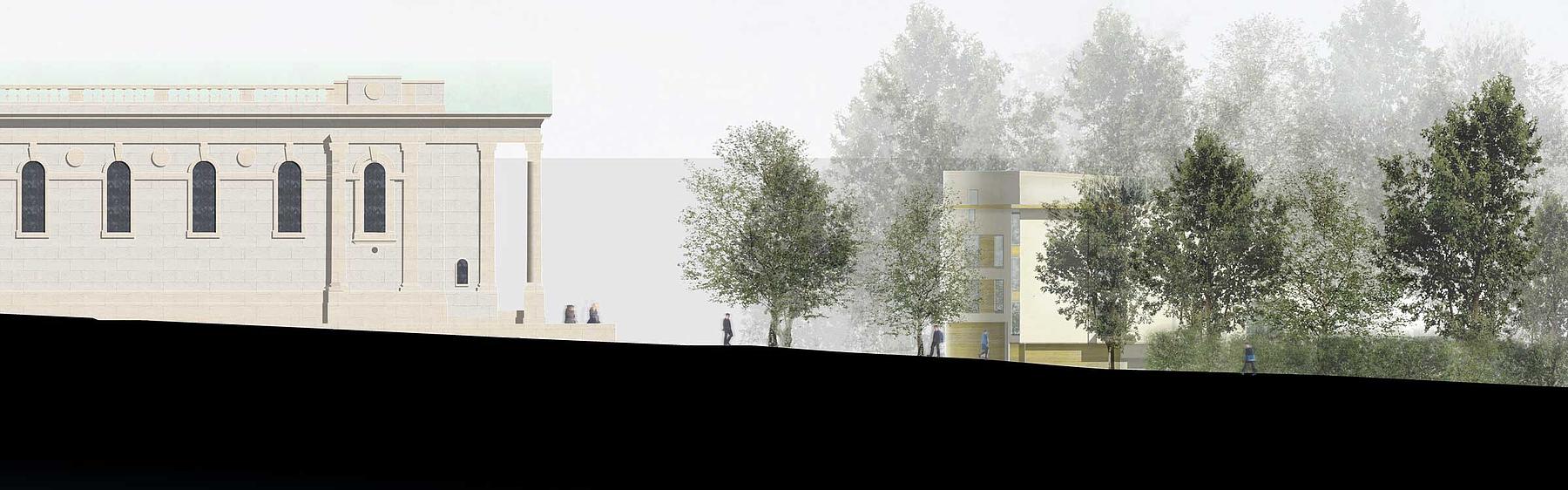
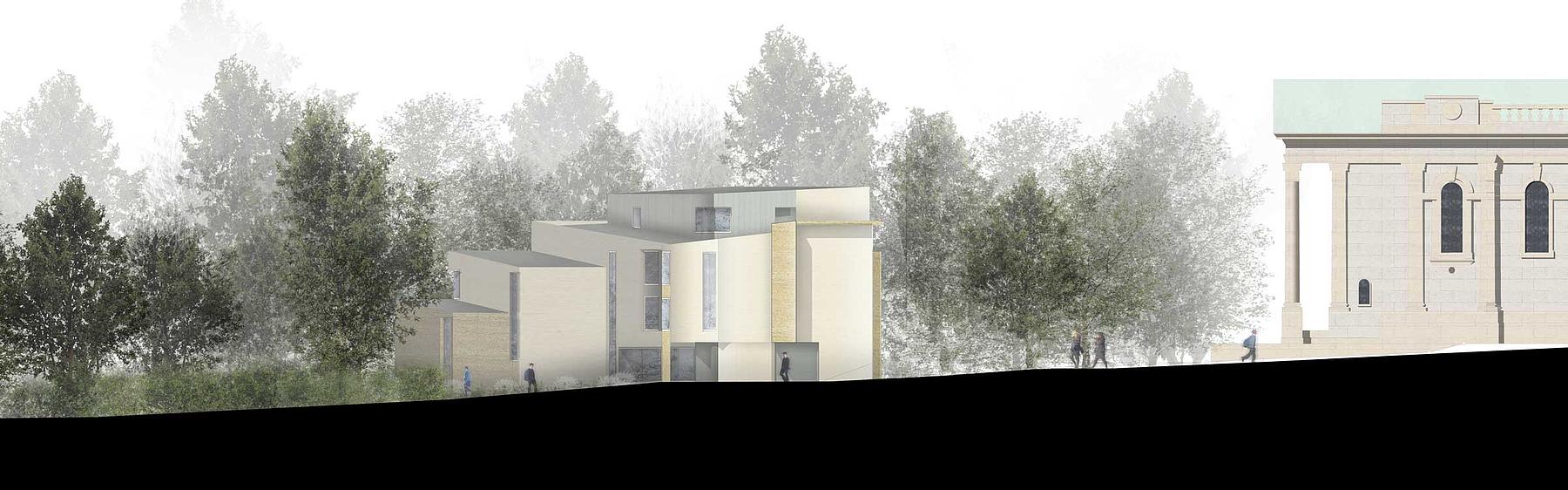
Framing the School Chapel, Cobham is the first purpose-built Boys’ Boarding House at Stowe in 25 years and developed as a complementary pairing to Queen’s and Stanhope Girls’ Houses completed in 2009.Client
Stowe School
Location
Buckinghamshire, UK
Size
1,650m2
Value
£5.6m
Dates
Nov 2014–2018
A Longstanding Partnership with Stowe School
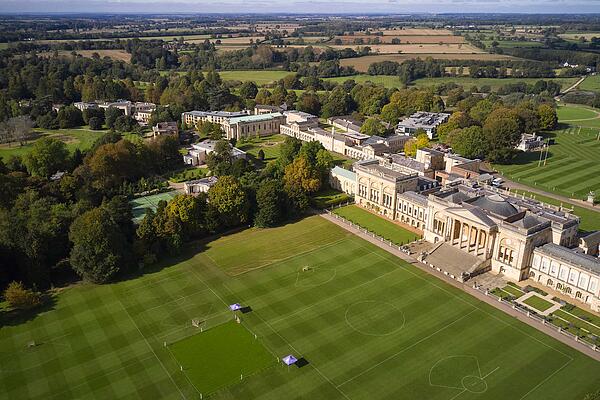
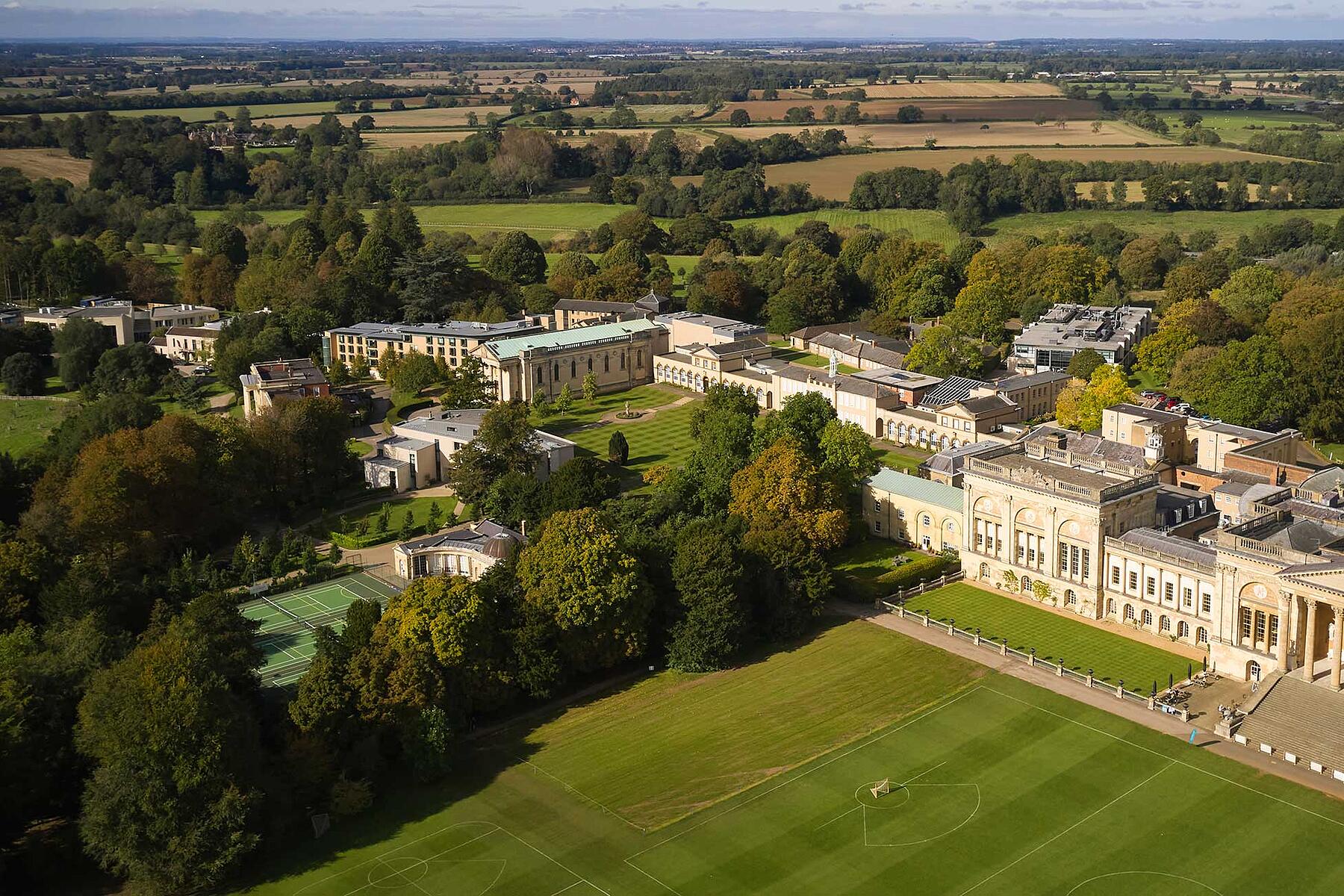
The Cobham Boys' Boarding House forms part of MICA's longstanding programme of work for Stowe School, contributing to more than twenty-five years of architecture, conservation, landscape restoration and estate masterplanning across one of Britain's most significant educational and heritage estates. As the first purpose-built boys' boarding house at Stowe for over twenty-five years, Cobham was conceived as the counterpart to MICA's earlier Queen's and Stanhope Girls' Boarding Houses, which sit diagonally across the Chapel courtyard. Together, the buildings establish a coherent family of contemporary boarding houses that frame one of the school's most important civic spaces while supporting Stowe's long-term vision for excellence in boarding education.
A Sensitive Response to an Historic Setting
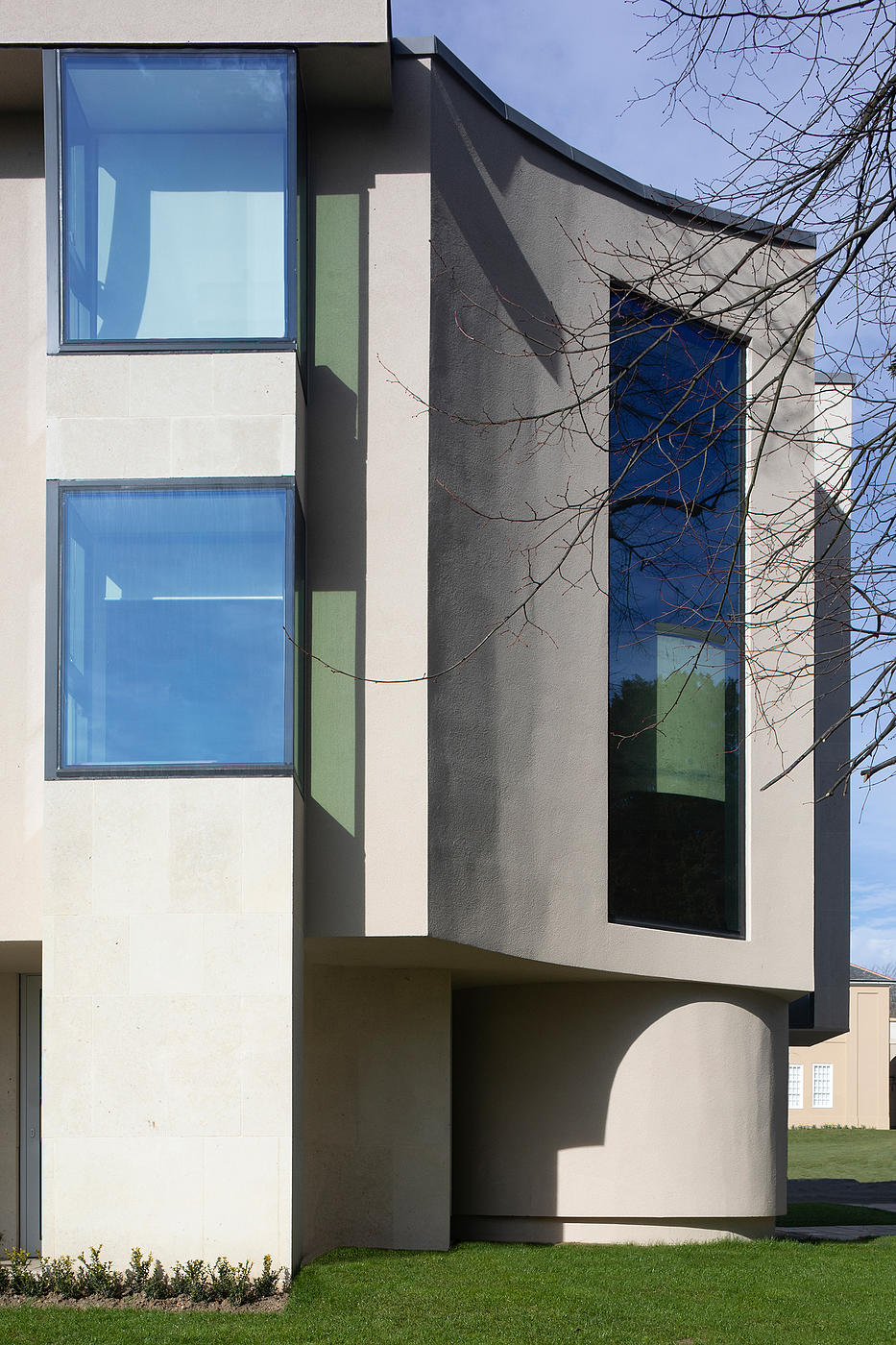
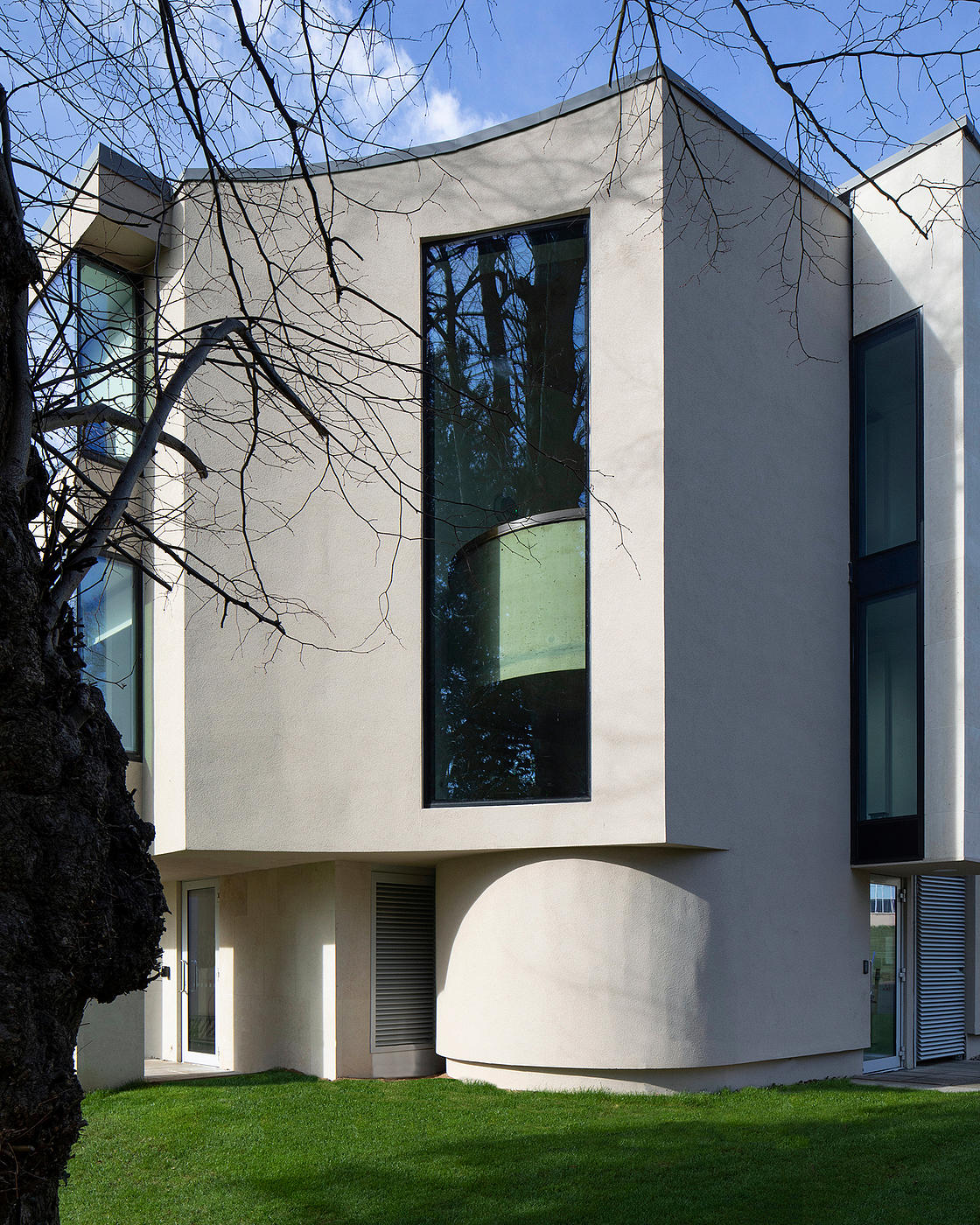
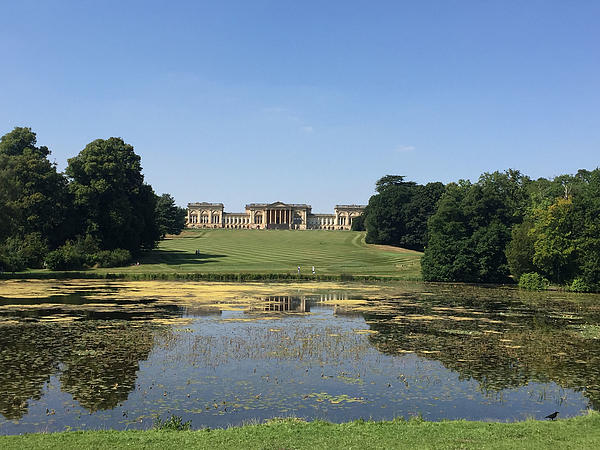
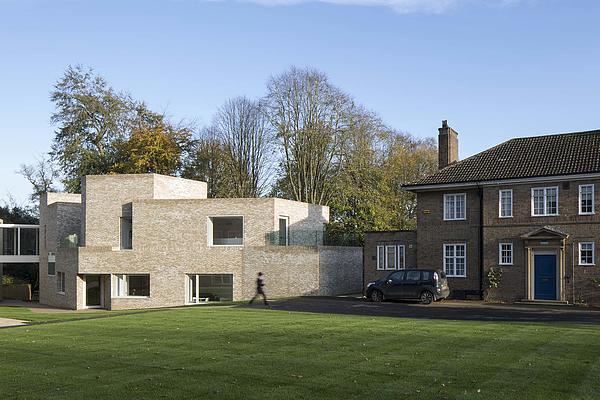
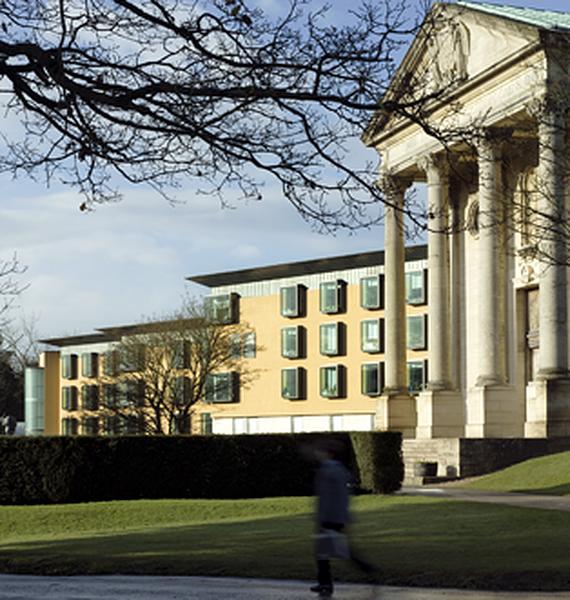
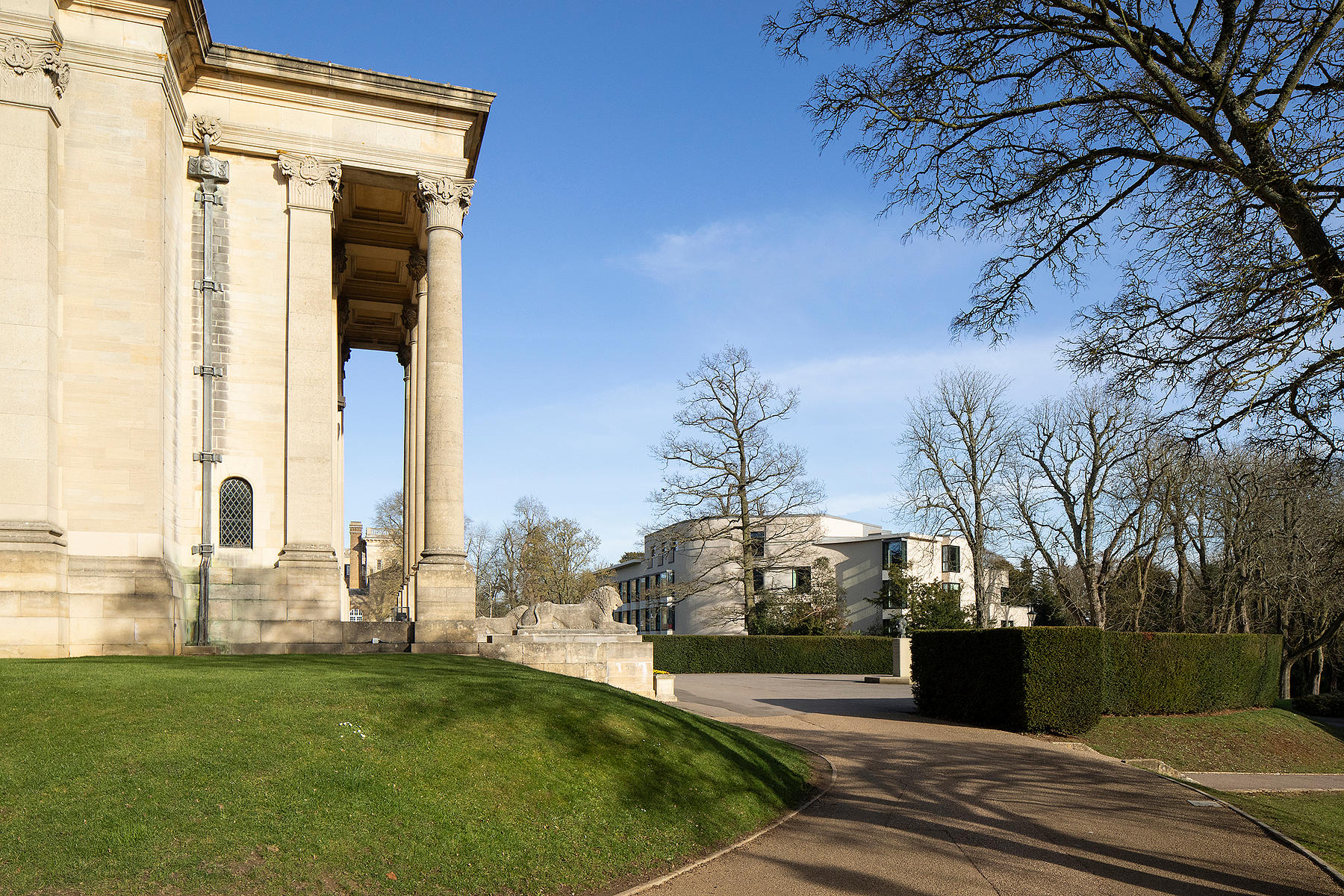
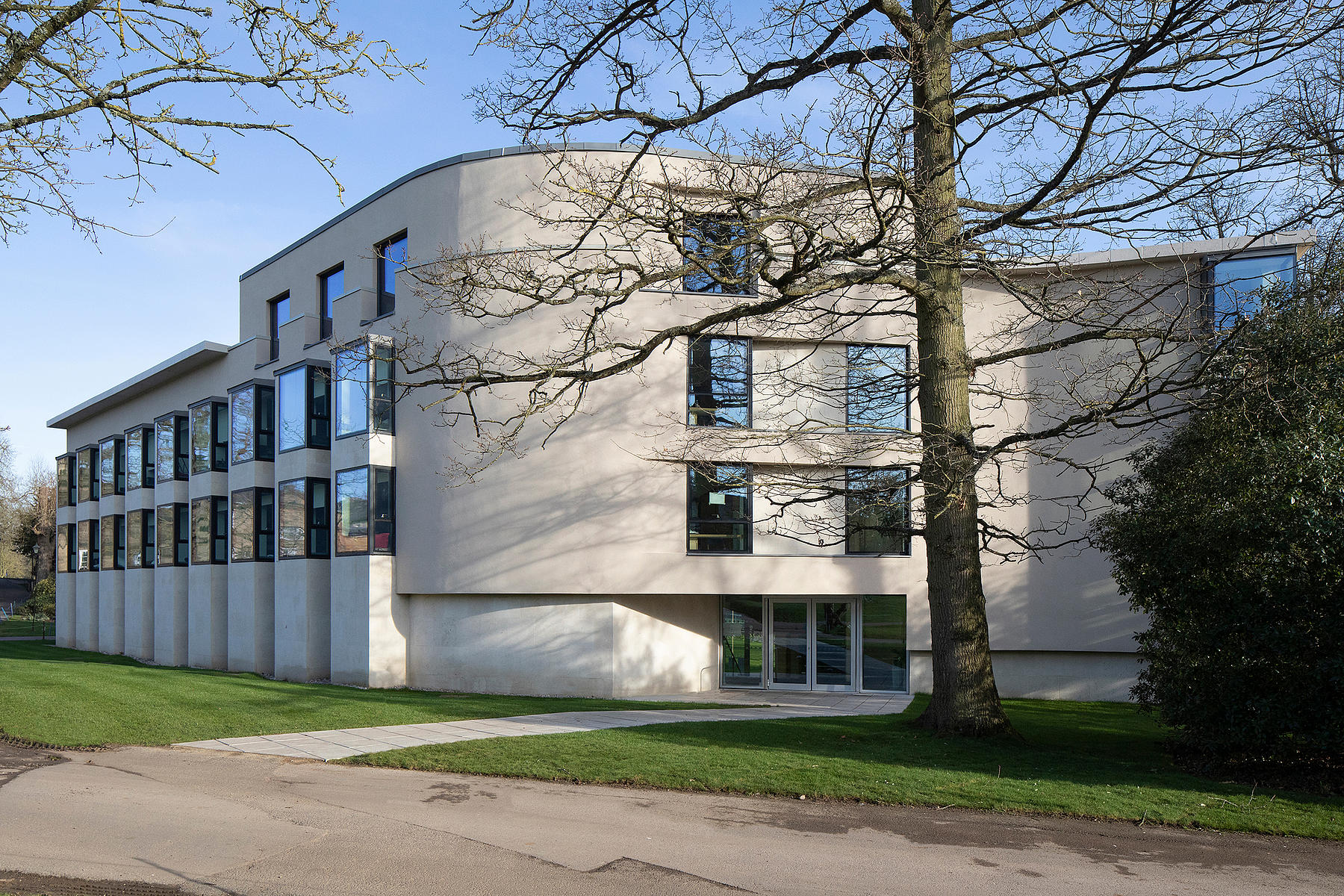
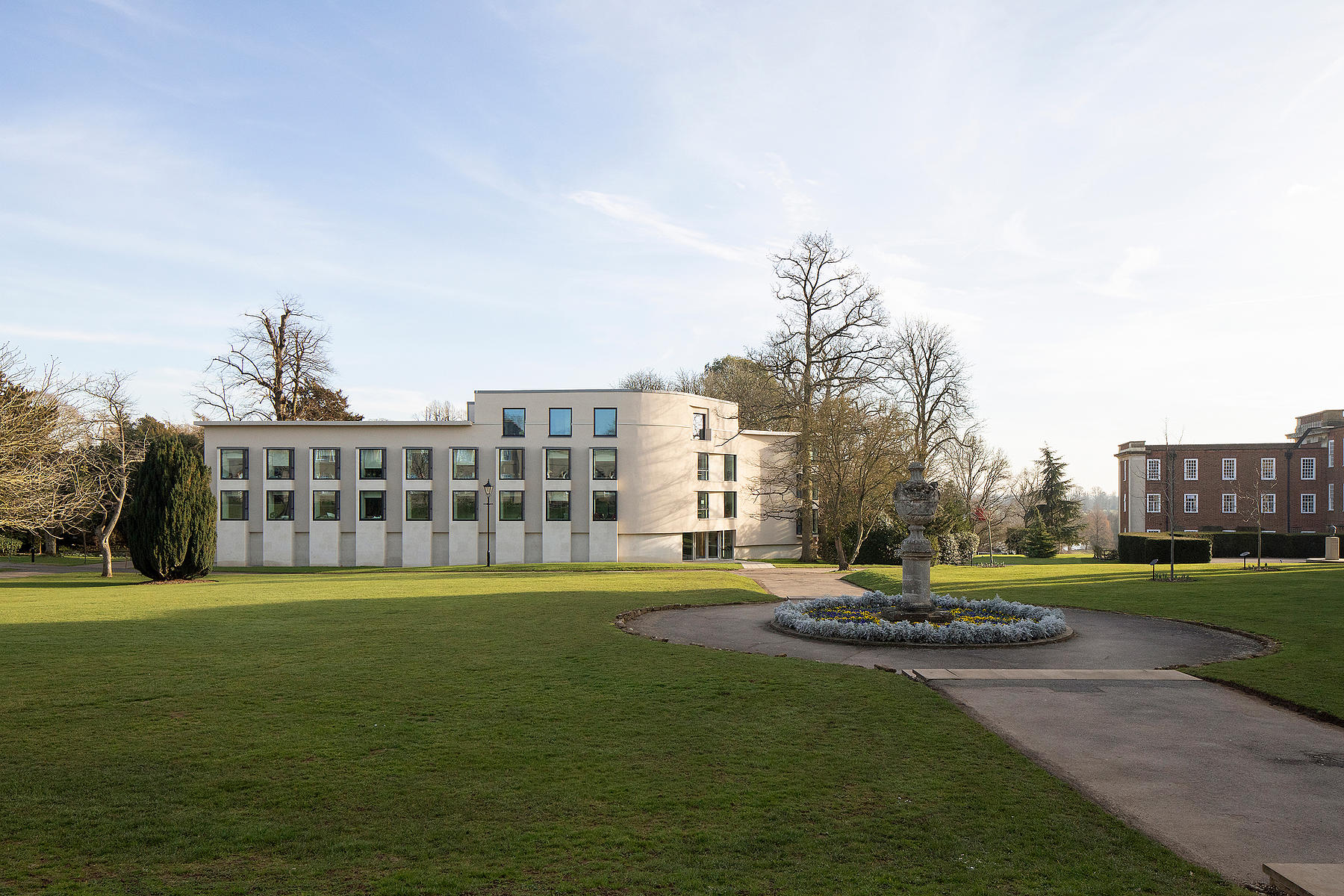
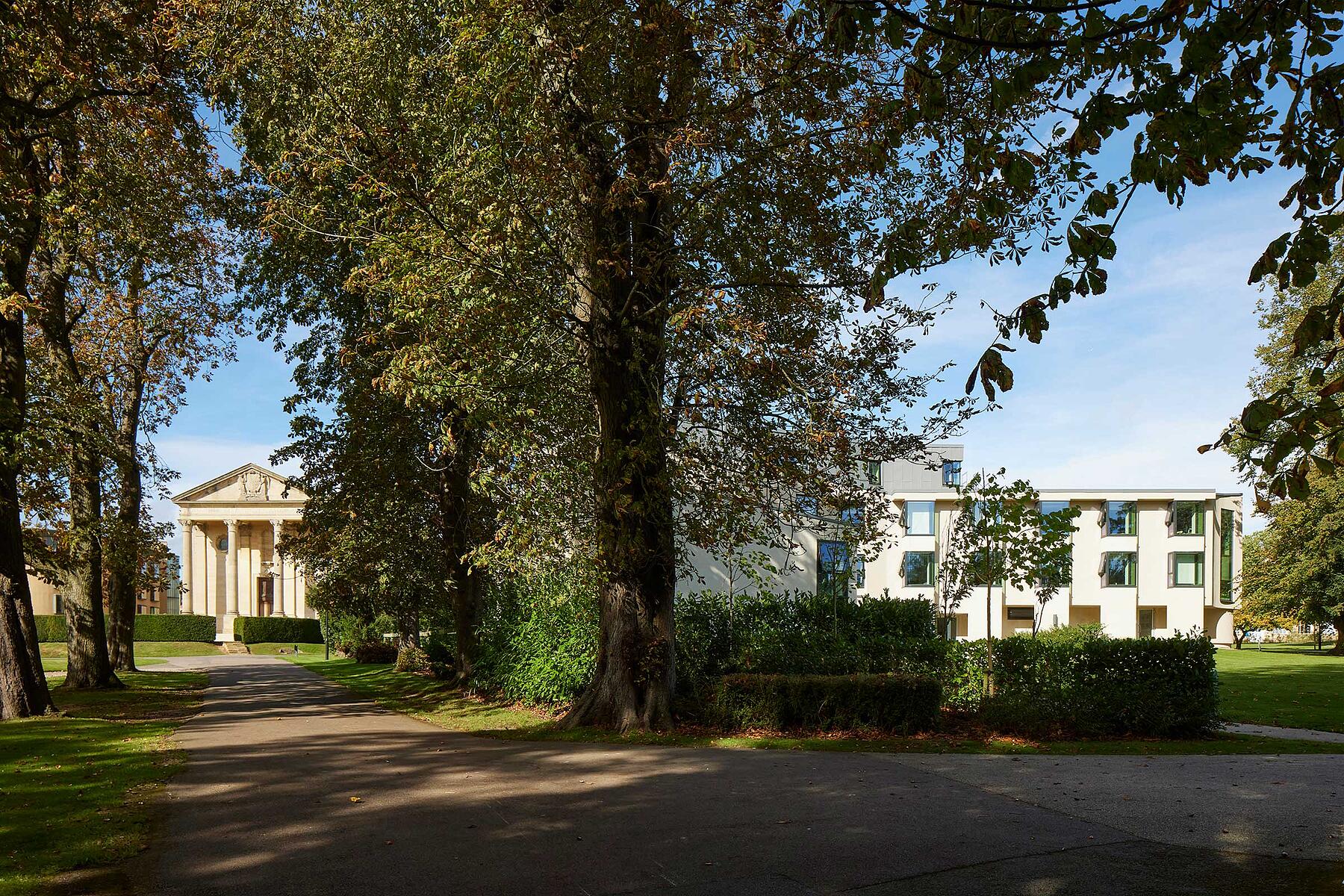
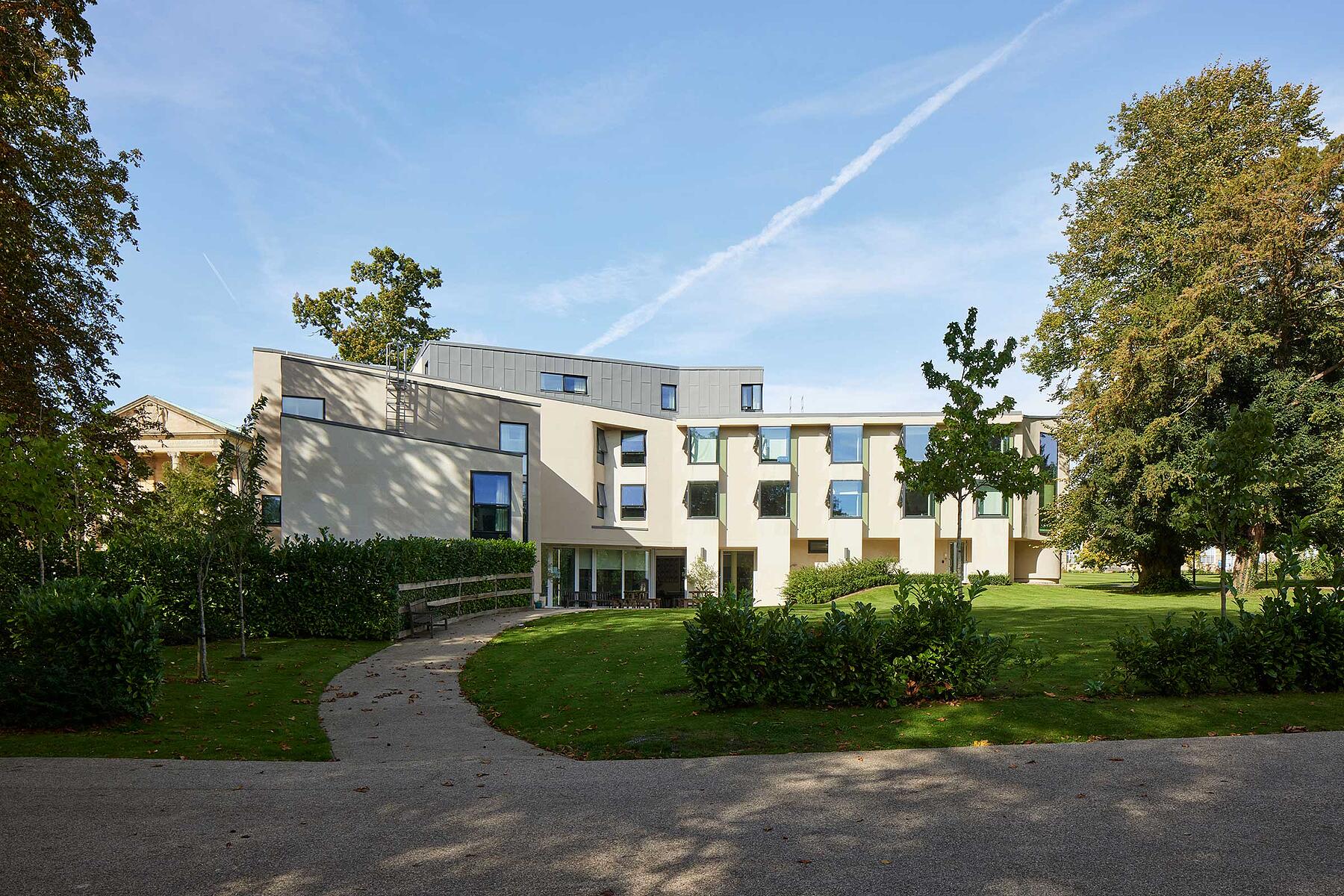
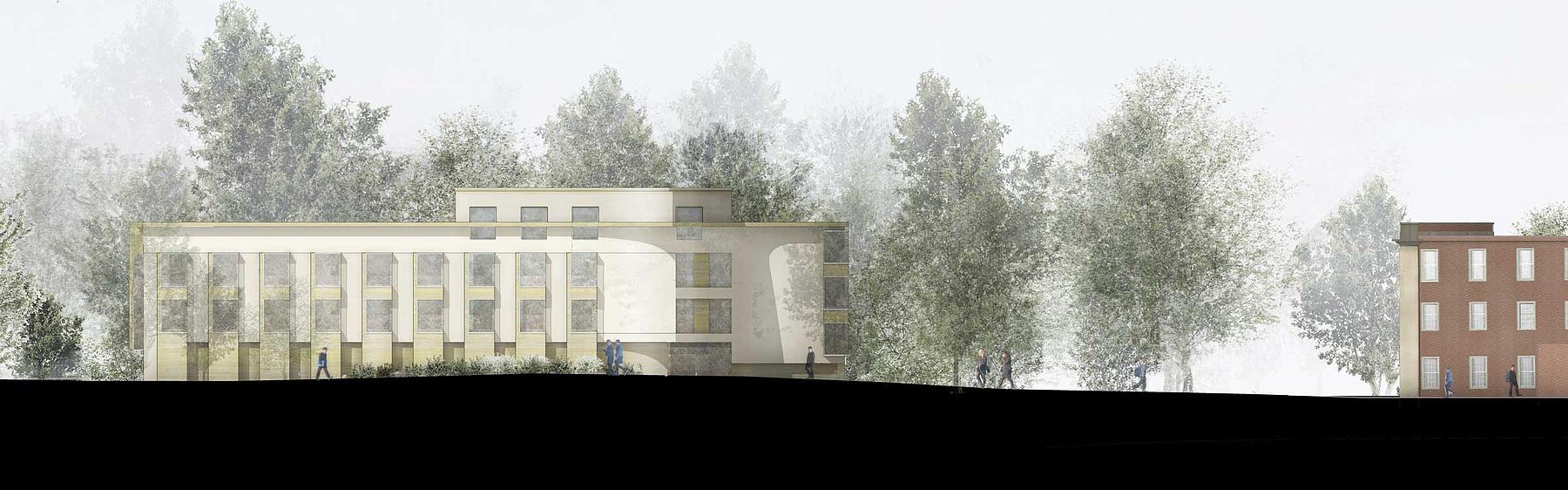
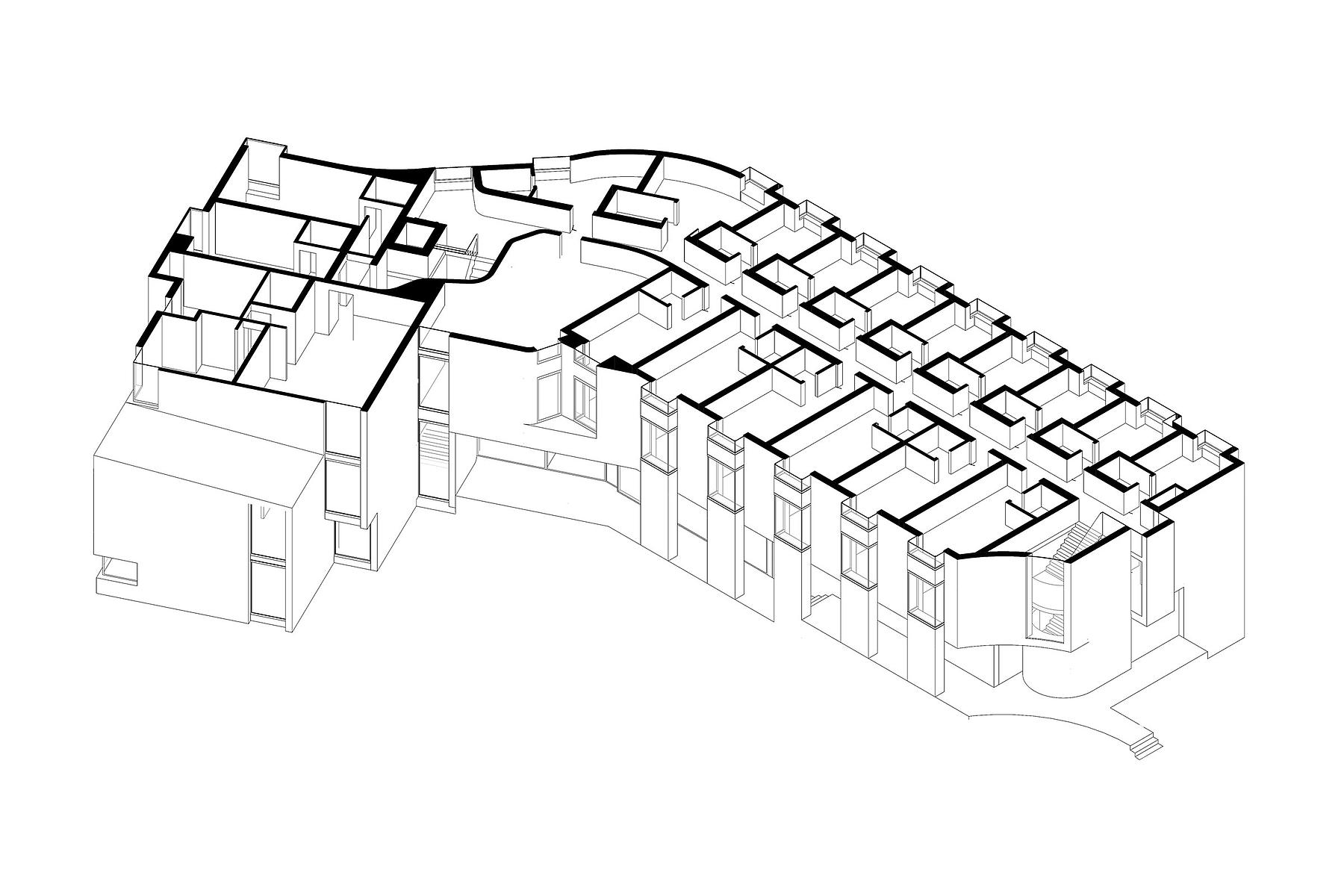
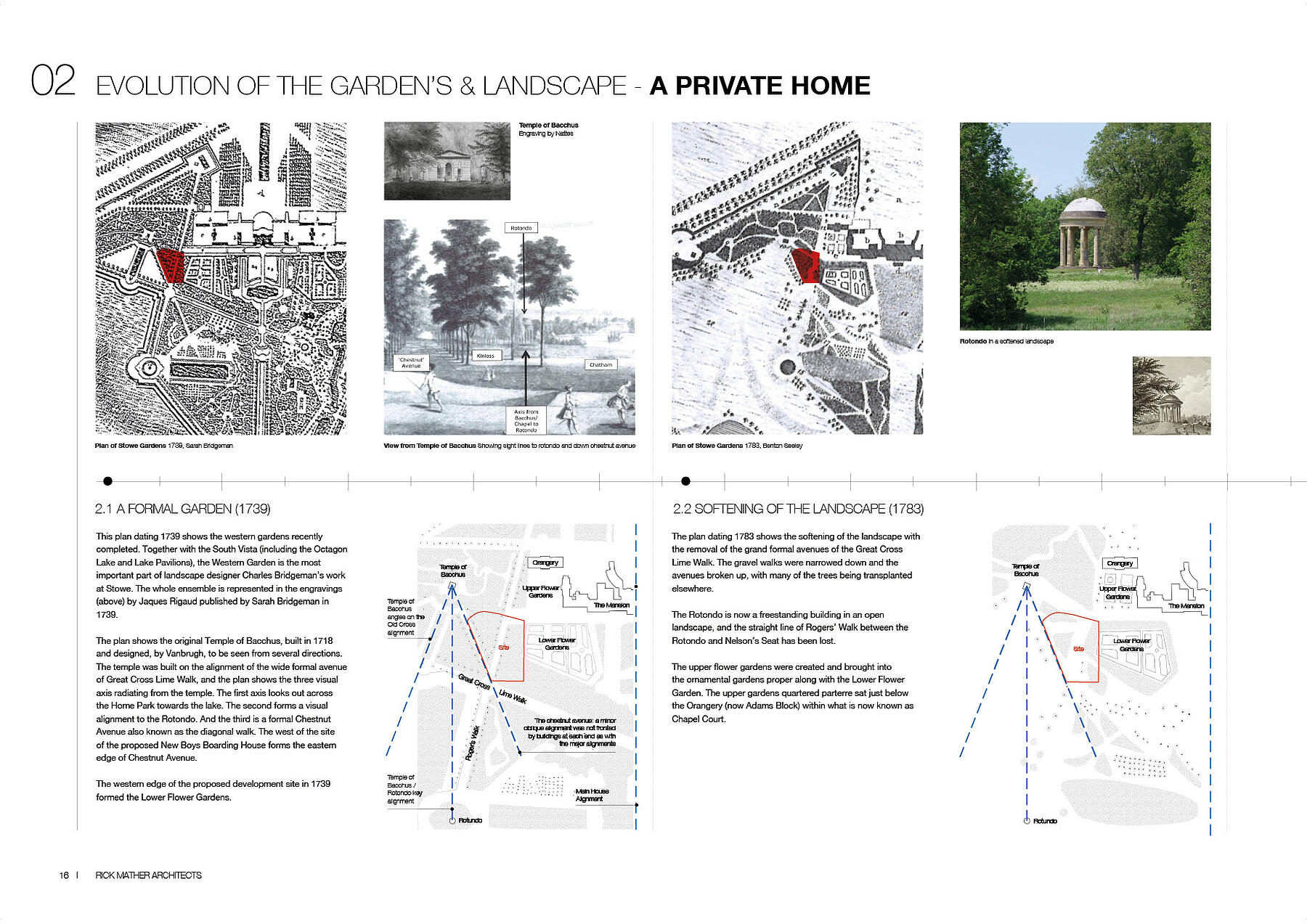
Set within the Grade I registered landscape of Stowe and framed by Robert Lorimer's Chapel, Clough Williams-Ellis's courtyard and the eighteenth-century Menagerie, the building occupies one of the most sensitive locations on the estate. The design responds to this remarkable context with a contemporary architectural language rooted in the proportions, materials and rhythms of the surrounding buildings. While sharing a common architectural language with Queen's and Stanhope, Cobham develops its own identity through a curving plan that embraces the woodland edge and creates a distinctive spatial presence overlooking the Chapel forecourt.
Designing for Living and Learning
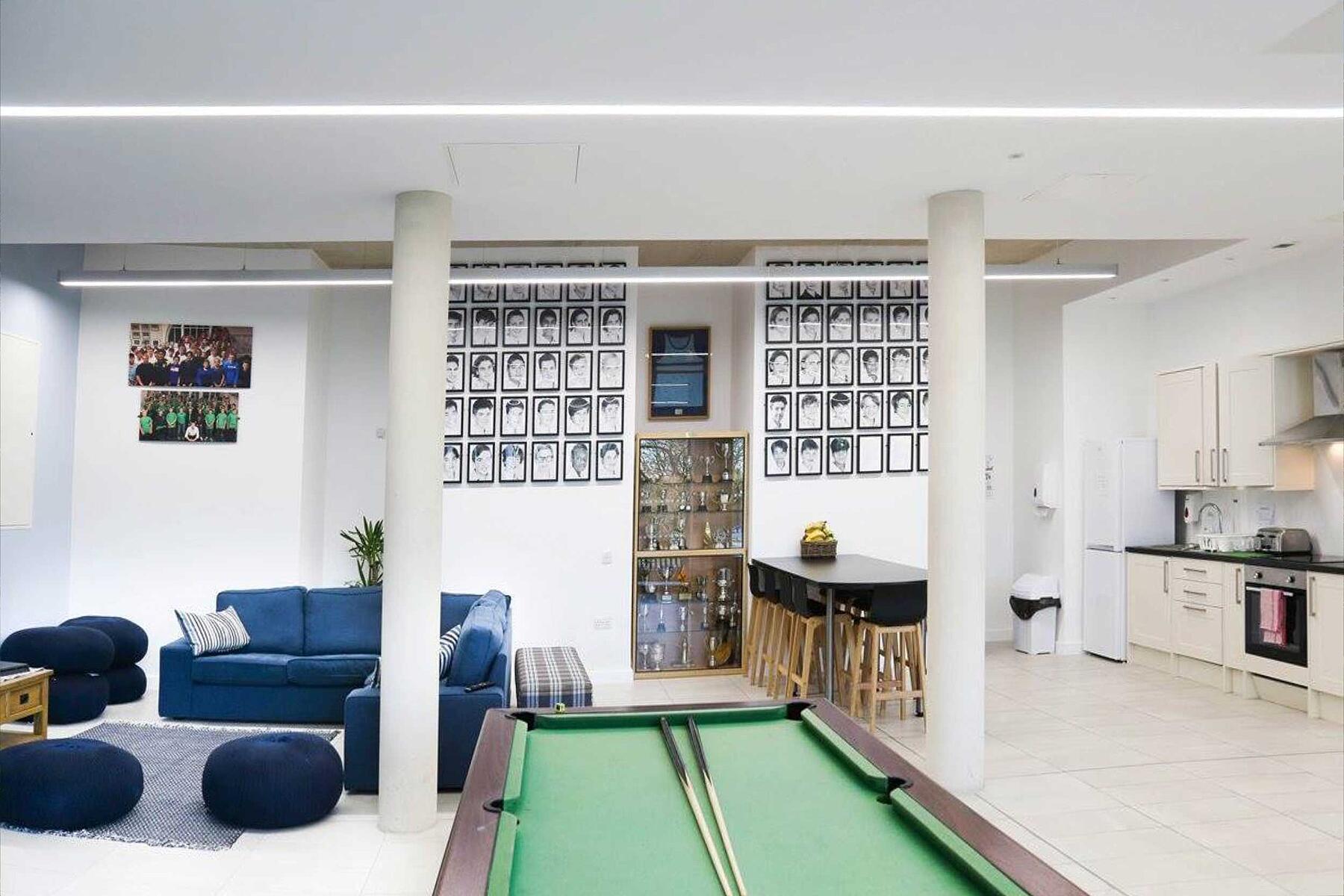
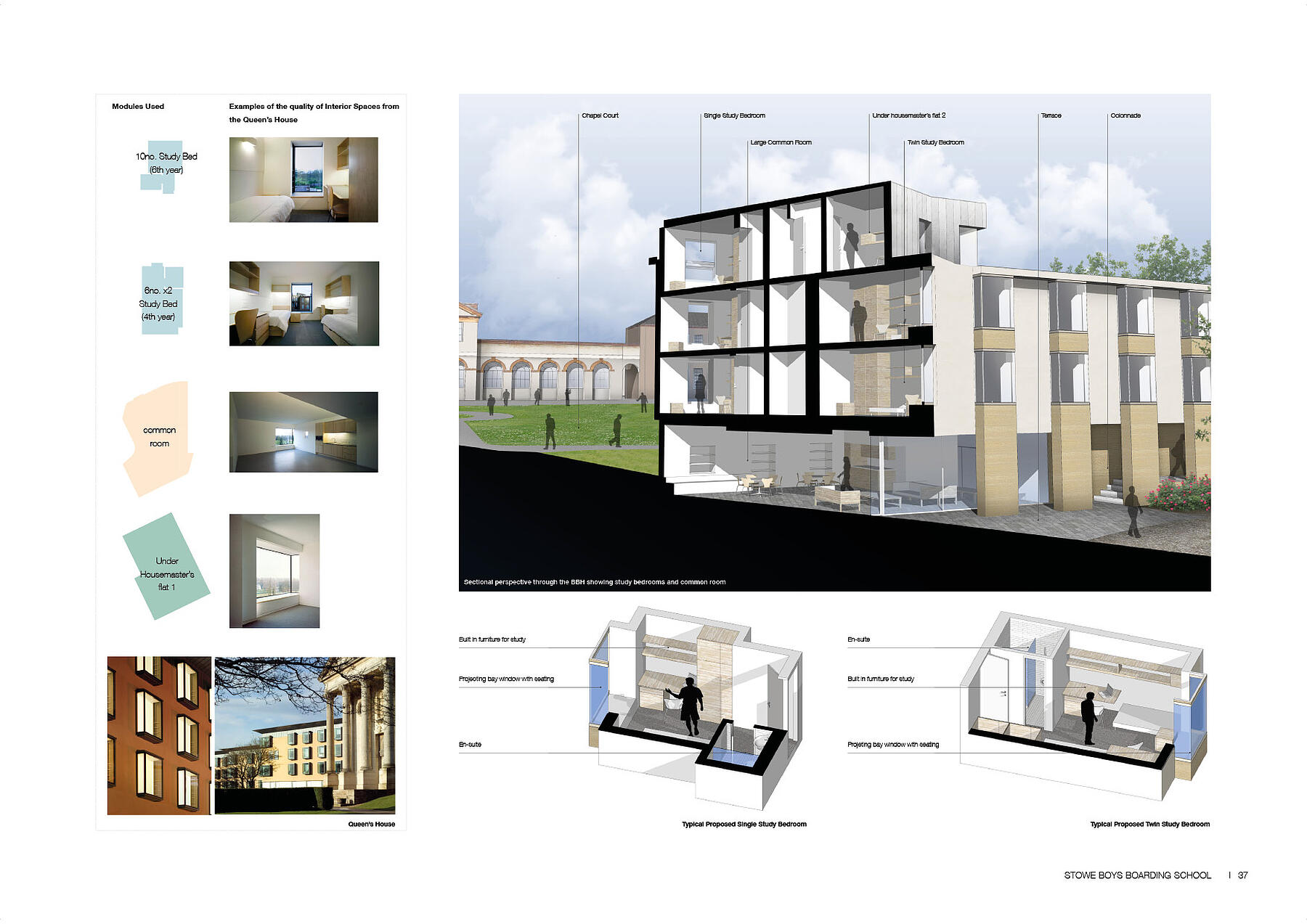
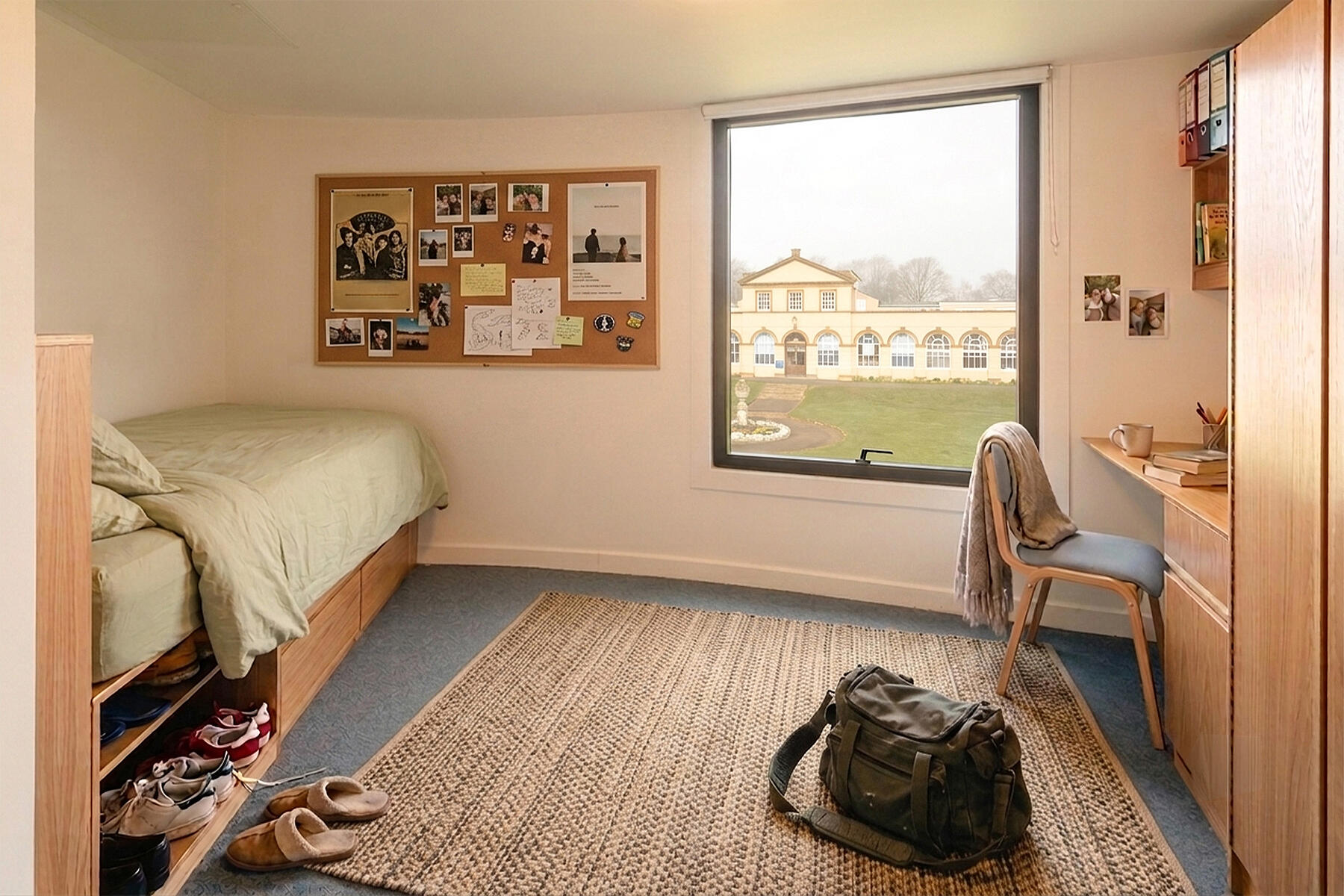
Designed around the principles of living and learning, the boarding house accommodates sixty pupils in a variety of room types alongside generous common rooms, social spaces, staff accommodation and landscaped gardens. The building fosters a strong sense of community while supporting privacy, independent study and pastoral care, recognising that the boarding environment plays an essential role in students' personal development, wellbeing and academic success.
Landscape as a Defining Element
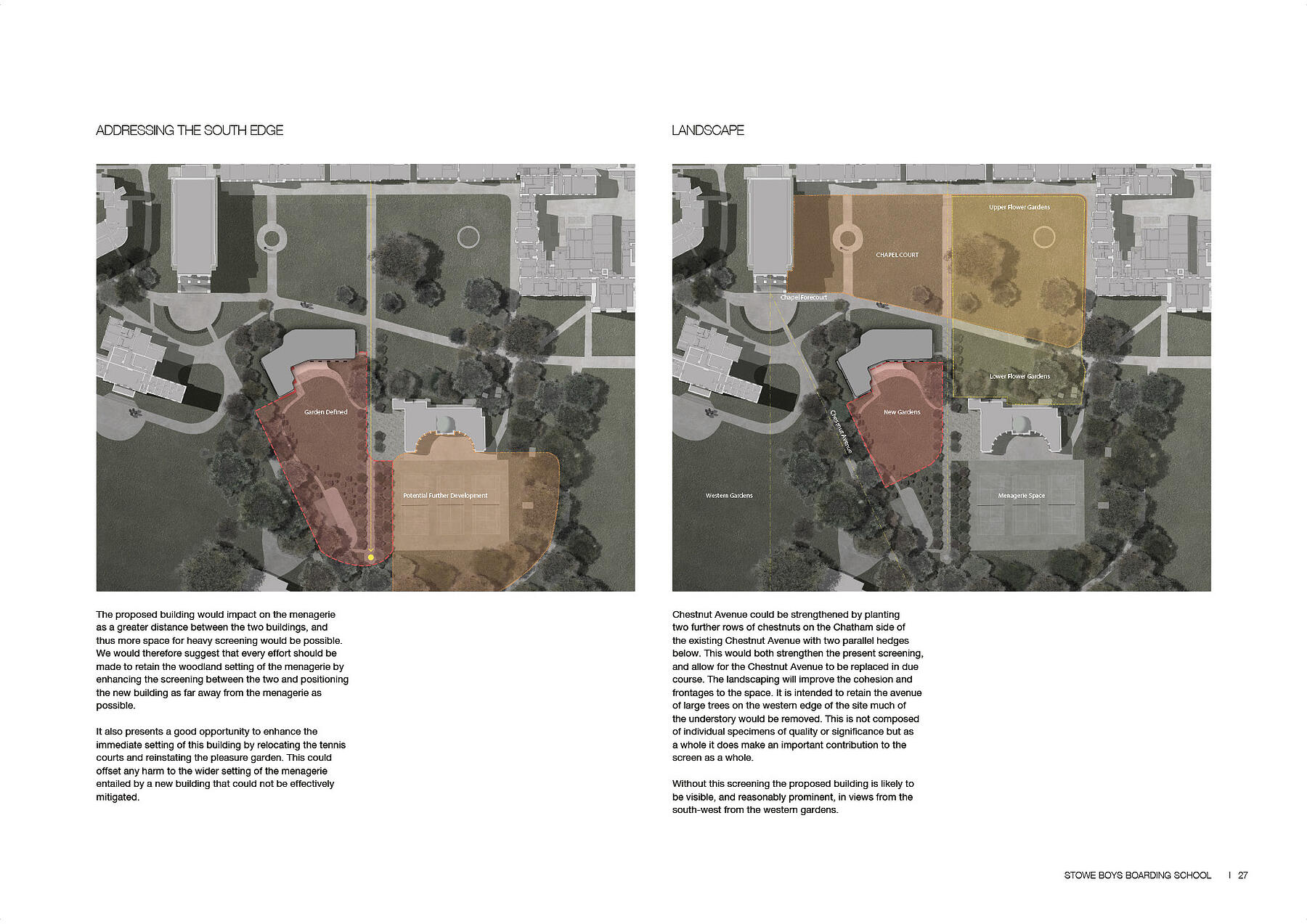
Landscape is integral to the project. The gently curving plan follows the edge of the historic tree belt, framing views of the Chapel and enclosing a new garden that reconnects the boarding house with the wider Stowe landscape. Developed in close collaboration with Historic England and the National Trust, the landscape proposals opened new pedestrian routes, restored important views and strengthened the relationship between the school campus and the historic gardens.
Balancing Civic Presence and Domestic Character
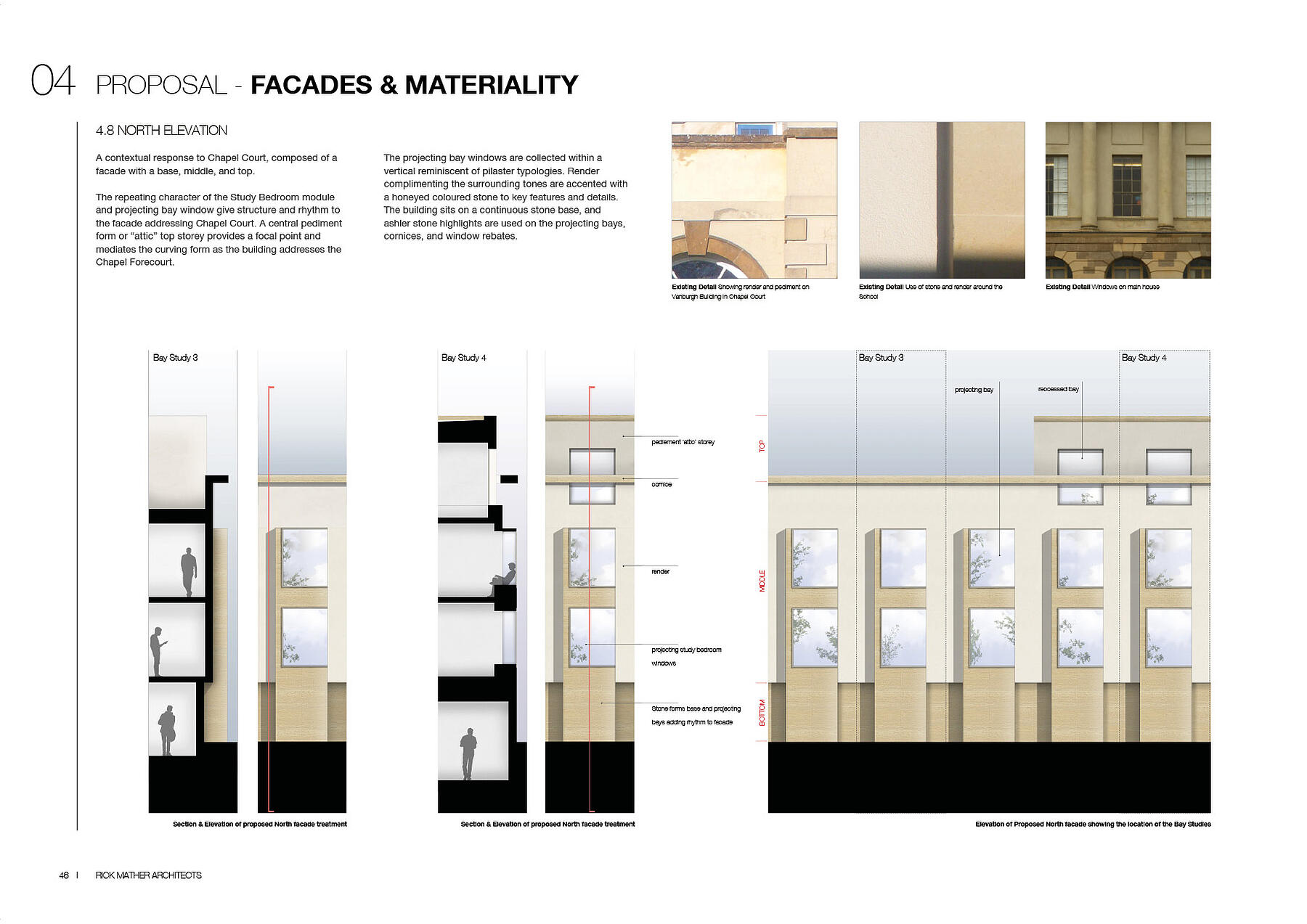
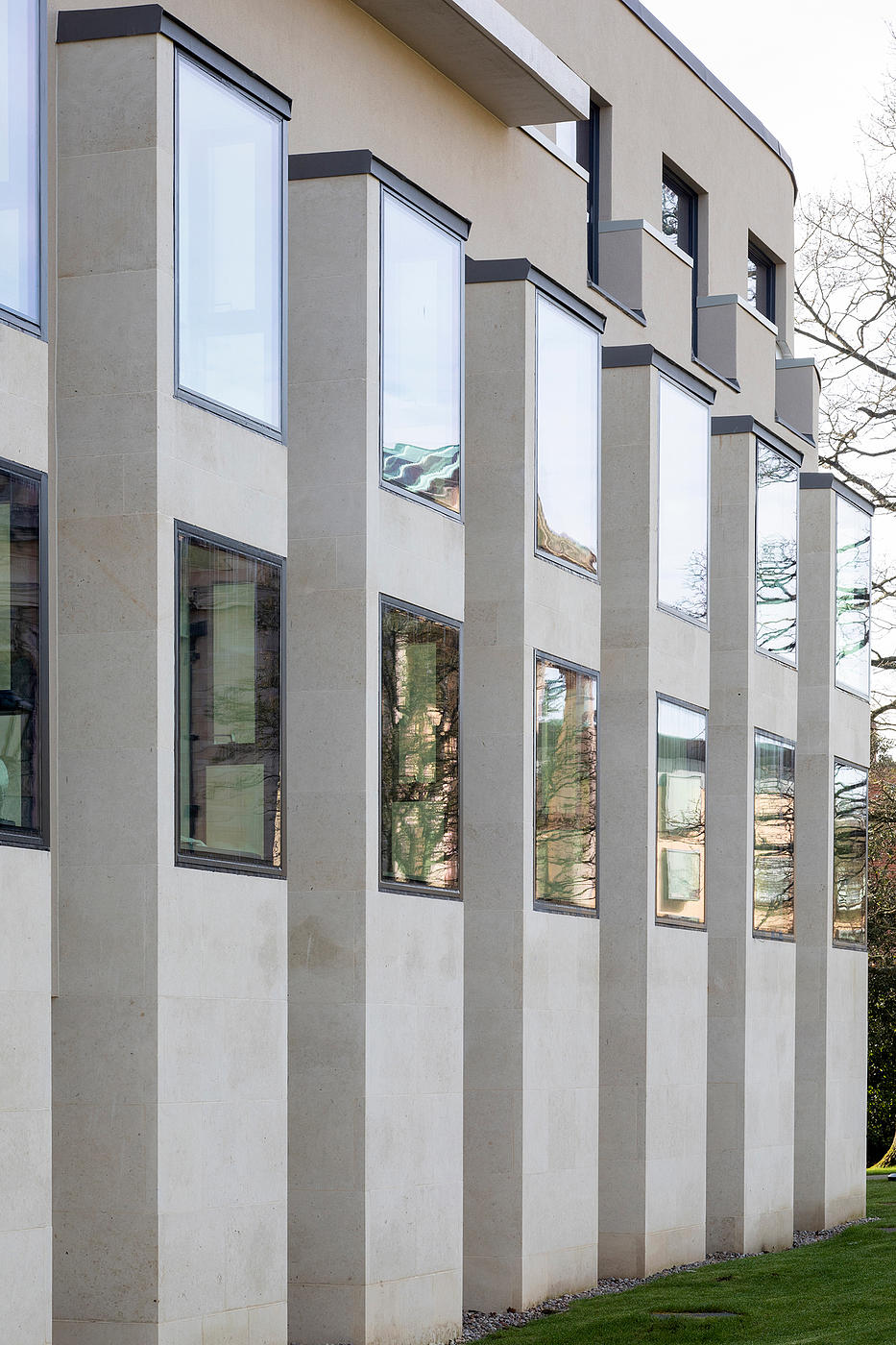
The architecture balances civic presence with domestic scale. A carefully modelled composition of projecting bays, stepped forms and generous glazing responds to the changing character of the site while creating light-filled interiors with strong visual connections to the surrounding gardens. Double-height common spaces and finely crafted concrete staircases provide moments of orientation and social interaction, creating an environment that is both inspiring and welcoming.
Sustainability and Environmental Performance
Environmental performance formed an integral part of the design. Cobham was connected to an upgraded energy centre serving the neighbouring boarding houses, while a highly insulated building envelope, high-performance glazing and carefully considered orientation reduced operational energy demand and created comfortable internal environments throughout the year.
A Holistic Vision for Boarding Education
The project demonstrates MICA's holistic approach to educational design, bringing together architecture, landscape, sustainability and pastoral care within one coherent vision. Developed through decades of collaboration with Stowe School, Cobham reflects a deep understanding of how boarding environments can support learning, wellbeing and community while contributing to the long-term stewardship of one of Britain's most celebrated educational estates.